A Kingdom, a Dream and Meat on a Pitchfork
Obinitsa · Setomaa · Estonia
A barn becomes a café. A farmyard becomes a kitchen. People who usually tend their fields are suddenly standing behind the counter, and at Harrõoro Farm a couple is laughing into the backlight — she holding a bowl, he holding two pitchforks with grilled meat hanging from the tines. Behind them, smoke drifts through the garden.
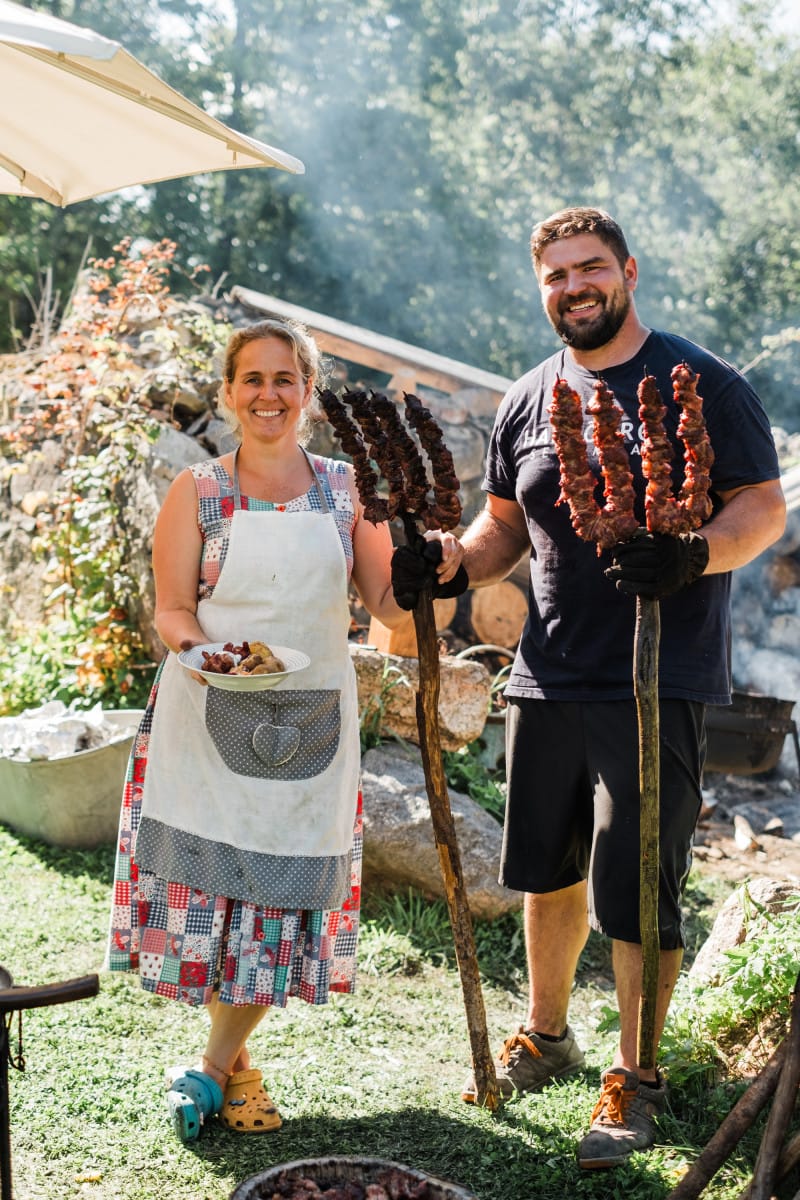
Pop-up café at Harrõoro Farm — © Helen Tulp
This is Seto Kostipäiv, the most beloved event in the region, and it lasts one weekend in August. The same people wear full folk dress at the festivals: embroidered headdresses, heavy silver chains. They wear it with pride, because their culture lives in it.
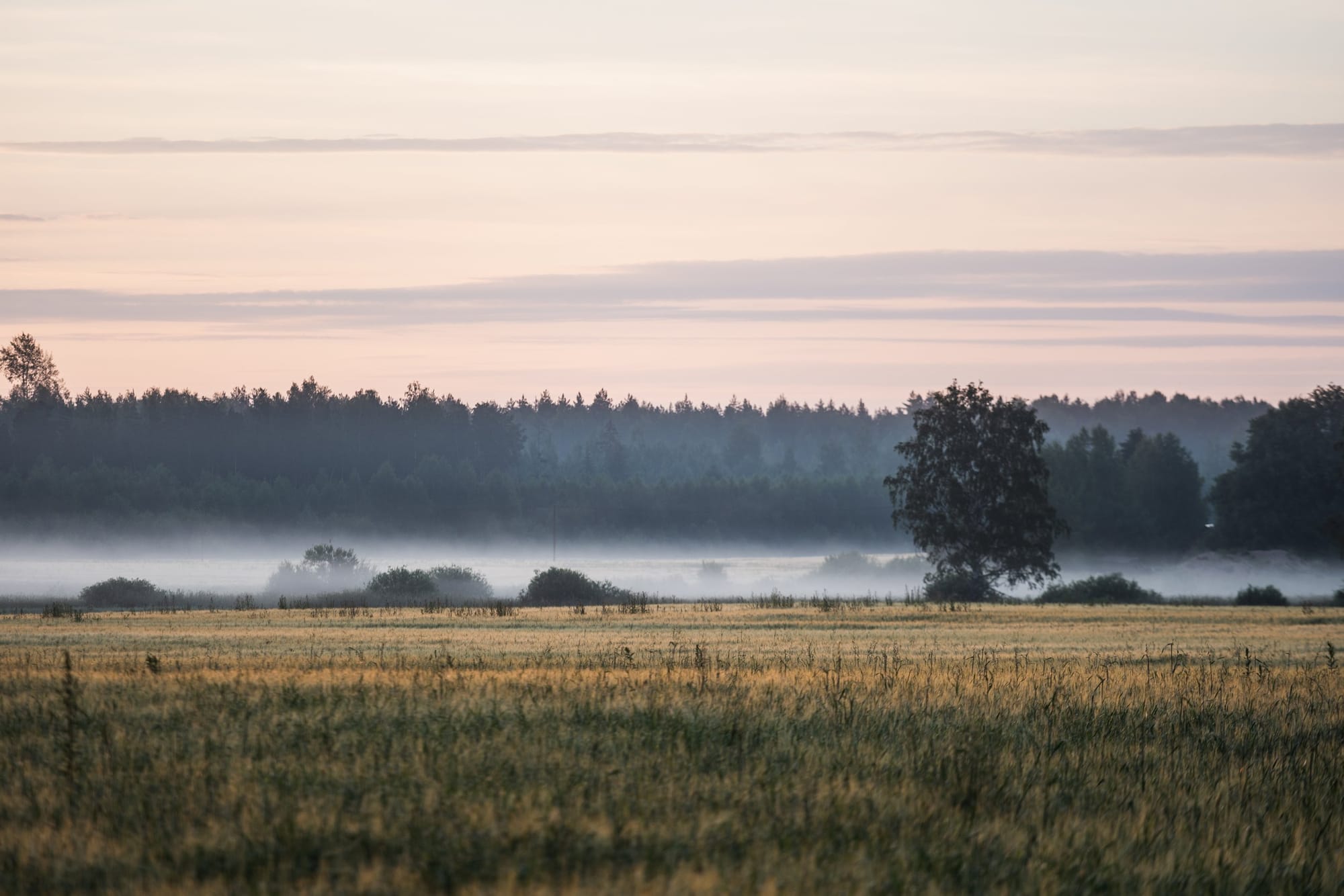
All of this takes place in Setomaa, in the far south-east of Estonia on the Russian border — forests, small fields and roads that wind up and down, in the hilliest part of an otherwise flat country.
And then there is the sauna. It works without a chimney: the fire burns beneath a pile of stones, the smoke drifts through the room for hours, and what gets heated is not the walls but the stones. For centuries this was where people washed, where children were born and where the dead were prepared. UNESCO has listed this tradition as intangible cultural heritage since 2014.
Above Lake Obinitsa, in a hundred-and-twenty-year-old building that was once a church and a school under one roof, two people from the world of the stage now run a small hotel with a restaurant and a smoke sauna. It is called Ilmaveere — on the verge of the world — and a cross stands in front of it, four storeys high, visible from far away.
The name fits more than the house. A border runs through here, and not only the one with Russia: between East and West, between the Protestant and the Orthodox world, between two ideas of where Europe stops.
It all began with a dream. A literal one.