The Island, the Farm
and the Man Who
Tells Stone Town
Chumbe Island · Fumba · Stone Town, Tanzania
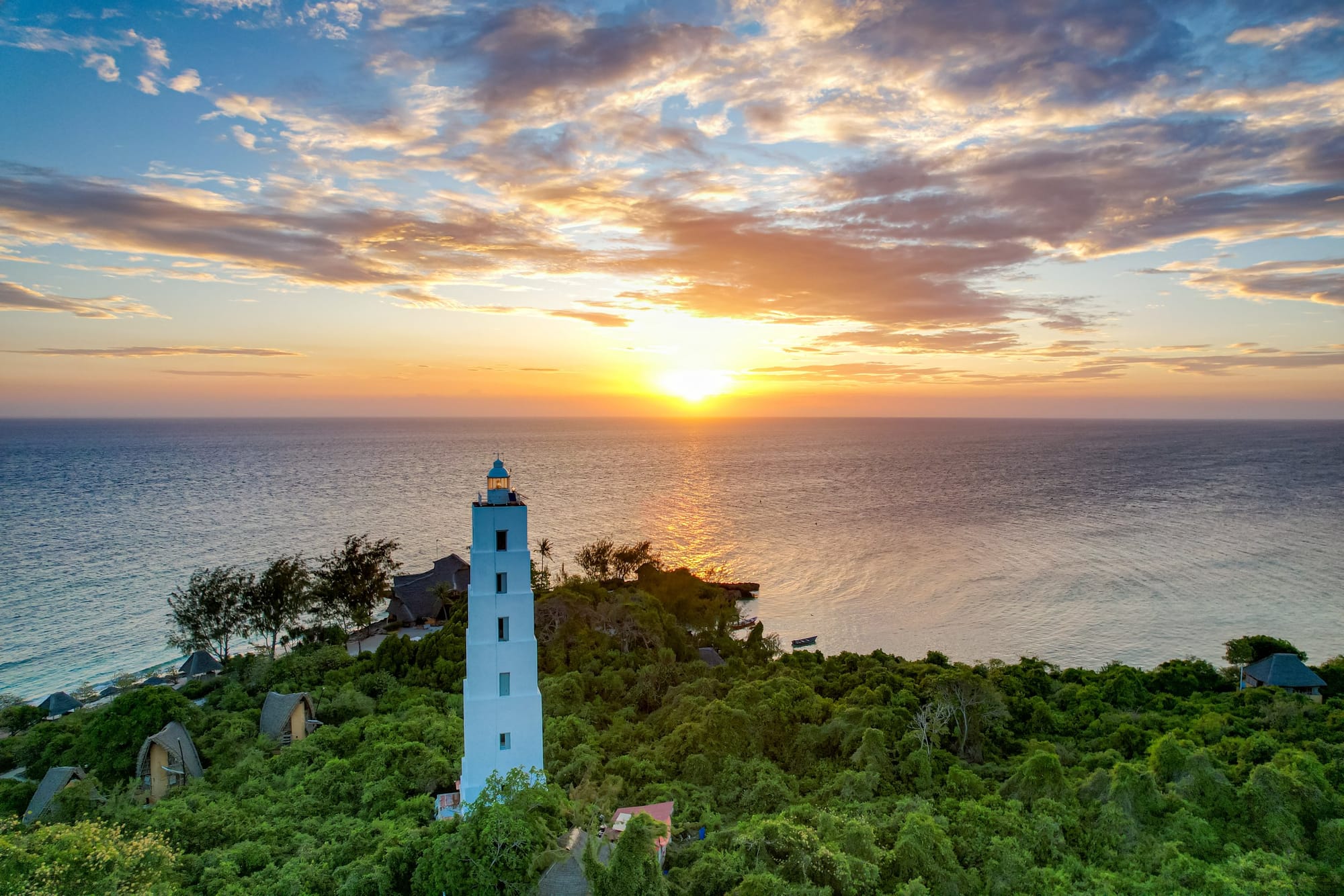
There is a moment on the boat, just after leaving Mbweni, when everything goes quiet. Not because anyone asks for it. Because Zanzibar is shrinking behind you and ahead of you there is nothing but water changing colour. After twenty-five minutes a small island slides into view, and above the trees stands a white lighthouse that has been warning ships for over a hundred years and is still in service. No village, no road, no row of hotels. Just the tower, the forest and seven roofs of palm leaves.
This story takes you to places where you get to know the people, the culture and the extraordinary nature of Zanzibar. To a coral island with seven bungalows and nothing else. To a farm where Zanzibari families sit on Sundays and eat from the same pots as you. And to a man who doesn't show you a city but tells it. Singular places and stories — the real Zanzibar.
Three places, three people, and between them a connection nobody planned.
On this island your night's stay pays for the snorkelling course of children who have never seen a reef. On the farm, locals sit in front of dishes they had almost forgotten themselves. And in Stone Town the best tour costs fifteen dollars — on principle. Why, the people here will tell you themselves.
The Luxury of Simplicity
On the entire island there is exactly one door and a few windows, and they belong to the lighthouse. Every other wall has decided to stay open. Your bedroom too. Instead, your bed sits on a sleeping platform upstairs, under a roof of makuti palm leaves, and one whole wall can be lowered. Then only a mosquito net hangs between you and every star of the southern hemisphere. Downstairs, a living room with handmade furniture, African art and a hammock wide enough to sleep in. The sea breeze makes air conditioning unnecessary, the water in your bathroom is rain from your own roof, the electricity comes from solar panels above your head.
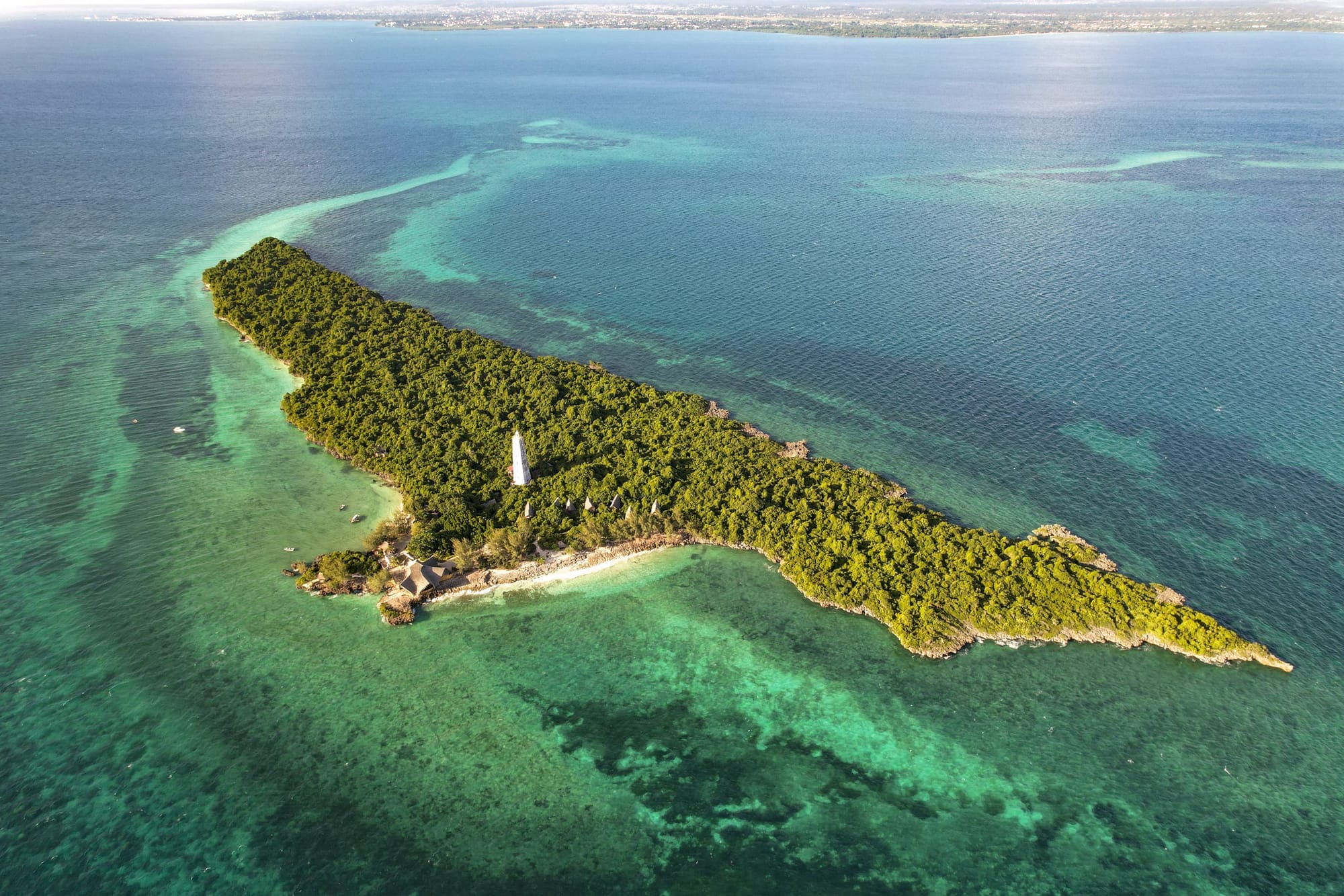
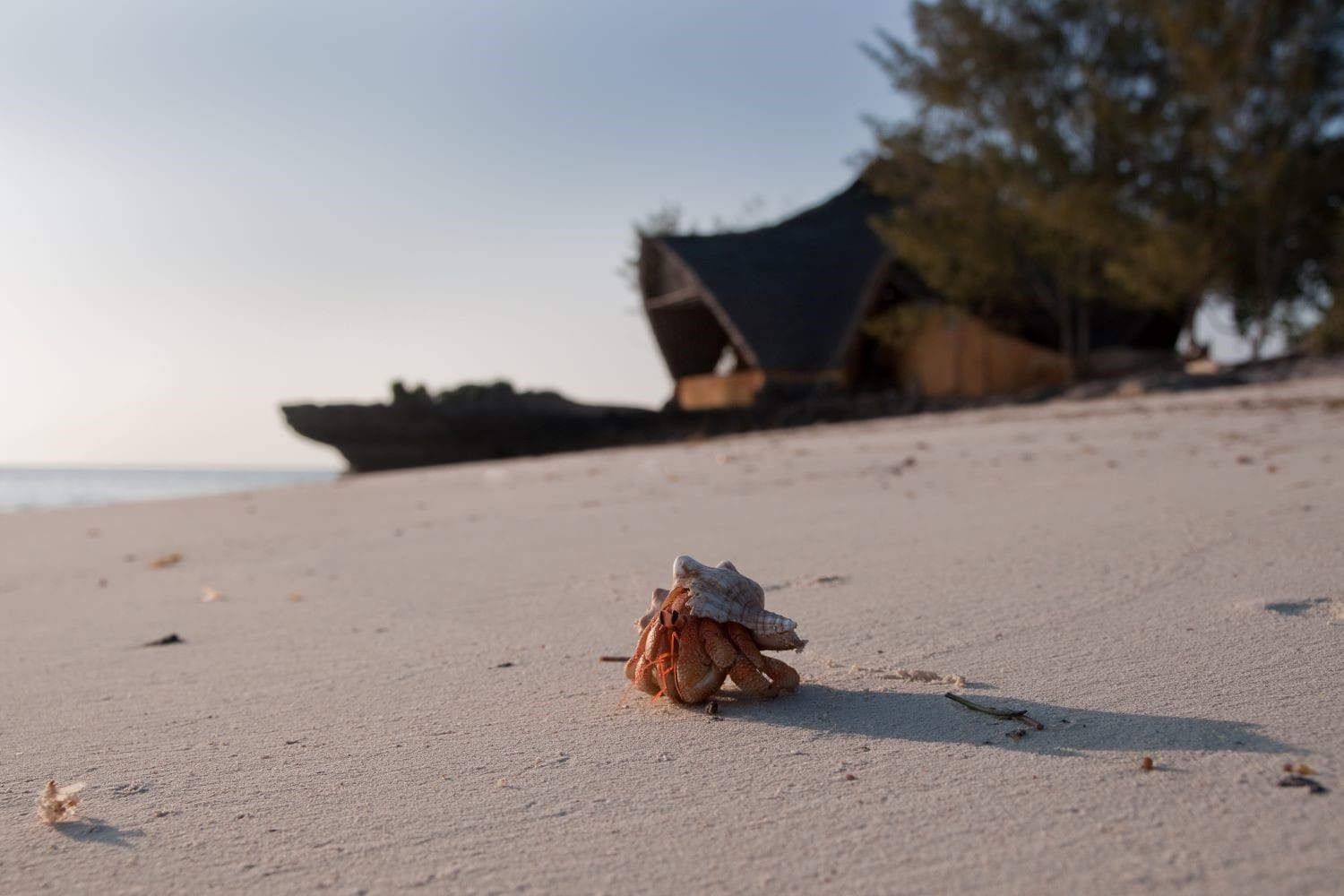
Seven roofs of makuti palm leaves in the forest, and between them nothing but beach — Photos: Kozanow Productions and Oskar Henriksson for Chumbe Island
What really makes this island, though, are the people who work here, and the matter-of-factness with which they let you into their world. You learn what Zanzibar is today and what it once was. Entirely in passing: over a meal, on a forest path, in the shade of a tree.
There is the baobab, which here is not simply a tree but pharmacy, landmark and keeper of stories in one; you are told what its bark is good for and why people stop in front of it. There are the mangroves, whose wood built the houses of the coast. There are the shrubs along the path that everyone here knows by name, because some grandmother once healed someone with them. And there is the food: largely Zanzibari, cooked by Zanzibari cooks, with vegetables from local suppliers. Ask, and you get the Swahili words too, for what is on your plate and for the bird that just flew past.
Culture here is not a scheduled item. It is in the building materials, in the fabrics the team wears, and in every conversation you have, if you only ask.
Luxury means something different here, but it is not one you give up. Full board, boat transfer, all meals and drinks except alcohol are included. The island takes a maximum of fourteen people at a time, and those fourteen are looked after by forty-five staff. That is probably the highest ratio of staff to rooms in Tanzanian tourism. Between beach and forest lie sun loungers and hammocks that nobody has claimed before you arrive. What is missing is the signal: there is one single spot with reception, in the education and visitor centre. Everywhere else you are offline, whether you like it or not.
People who come back from this island reach surprisingly often for the same word: magical. They speak of the luxury of simplicity, of deep contact with nature, of being part of a community although you only stay a few nights, and of genuinely feeling alone on an island you can walk around in an hour.
Richard Linney, who runs the island today, puts it like this:
“The magic of Chumbe is not something you simply see. You feel it: a rare sense of peace, connection and wonder that stays with you long after you have left.”
— Richard Linney, General Manager
Chumbe makes people slow down. You arrive with the noise and the pace of everyday life, and bit by bit, without noticing, you become quieter, more attentive and more present.
Jack Coupland, who is responsible for conservation on the island, describes what most people take away:
“The feeling I hear most often is hope. That projects like this exist and that they can do so much good for nature and for the community.”
— Jack Coupland, Conservation Manager
And you can watch that moment arrive:
“Usually it is on the first day, around sunset, after the activities, when everything starts to settle and they begin to feel that Chumbe is different.”
— Jack Coupland
A Woman, a Reef and a Word That Didn't Exist
In 1982 Sibylle Riedmiller came to Tanzania as an education planner. She stayed eight years, learned Swahili, learned to sail and dive, and spent her weekends snorkelling over the reefs.
That is where she witnessed dynamite fishing. Each blast destroyed at least ten square metres of reef; the fish that floated up belly first were only about three per cent of what died. The fishermen didn't understand her outrage, and there was a reason: hardly anyone had ever seen a coral. Very few people on the coast can swim, reefs did not appear in school lessons, and Swahili does not even have its own word for them; corals are called mawe na miamba, stones and rocks. Imagine the most biodiverse neighbour you ever had being taken for gravel all its life.
“The crucial question was: how do you get the government and the communities to care about something they knew so little about?”
— Sibylle Riedmiller, Founder
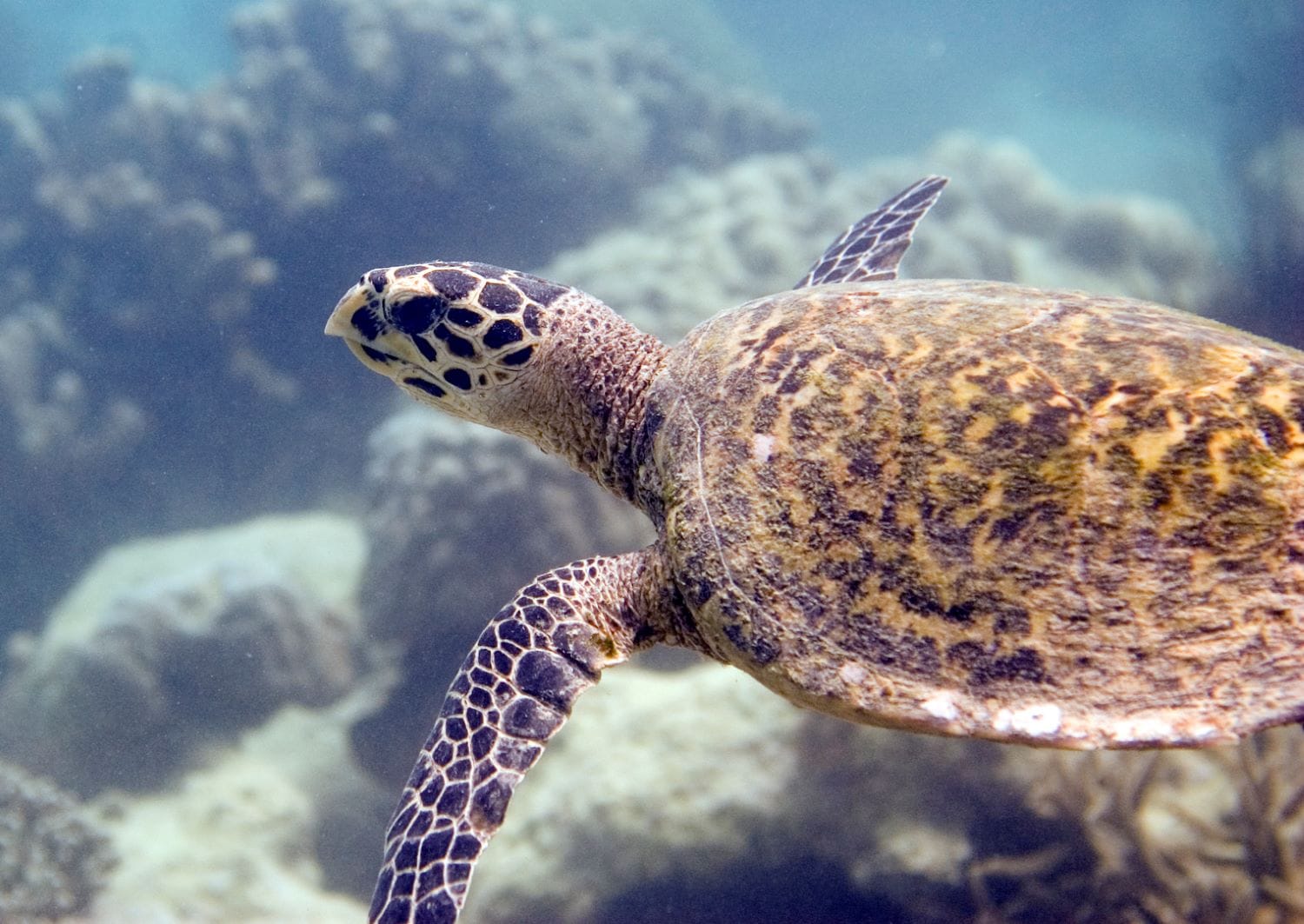
What Swahili has no word of its own for: mawe na miamba, stones and rocks — Photo: Oskar Henriksson for Chumbe Island
When Zanzibar opened up to tourism investment in the early nineties, she proposed a marine park: a no-fishing zone where stocks could recover, so that fishermen would experience the spillover effect themselves and schoolchildren would see with their own eyes what is down there. Financed through ecotourism.
The idea was hard to sell: the concept was unknown, and there were neither laws nor structures for it. So she did it as a private individual. In 1994 this became the world's first privately managed marine protected area.
Thirty years later Richard sits on the coast of Unguja in the evening, looking out at Chumbe. What he sees: the lights of the fishing boats, lined up along the edge of the protected zone. The border runs through open water and is visible to no one. Inside, nobody fishes; outside, people wait. And the fish, which know nothing of that border, eventually swim out. Fish biomass inside the reserve has more than tenfold increased, and the fish have grown larger. The most remarkable thing, though: after the outcry back then, the communities now ask of their own accord when the protected area will finally be extended to the east side.
What Awaits You on the Island
Seven bungalows, no more. That is deliberate, to avoid crowds, because nature cannot be protected with crowds. Richard puts it like this:
“Listing an area as a protected area without active planning does not mean you can take in hundreds or thousands of people a year without the pressure of unlimited tourism having consequences.”
— Richard Linney
Snorkelling is guided first, after that you may go on your own; you simply say where you will be so the rangers can keep an eye on you. During the day you walk with a ranger through the coral forest or, at low tide, across the tidal flats and up to the lighthouse. After sunset it's the coconut crabs, the largest land crabs in the world. They crack coconuts with their claws and have no time for daylight, which is why this encounter requires a torch and a little courage. Two nights is the right length; in a single day, Richard says, it gets hectic.
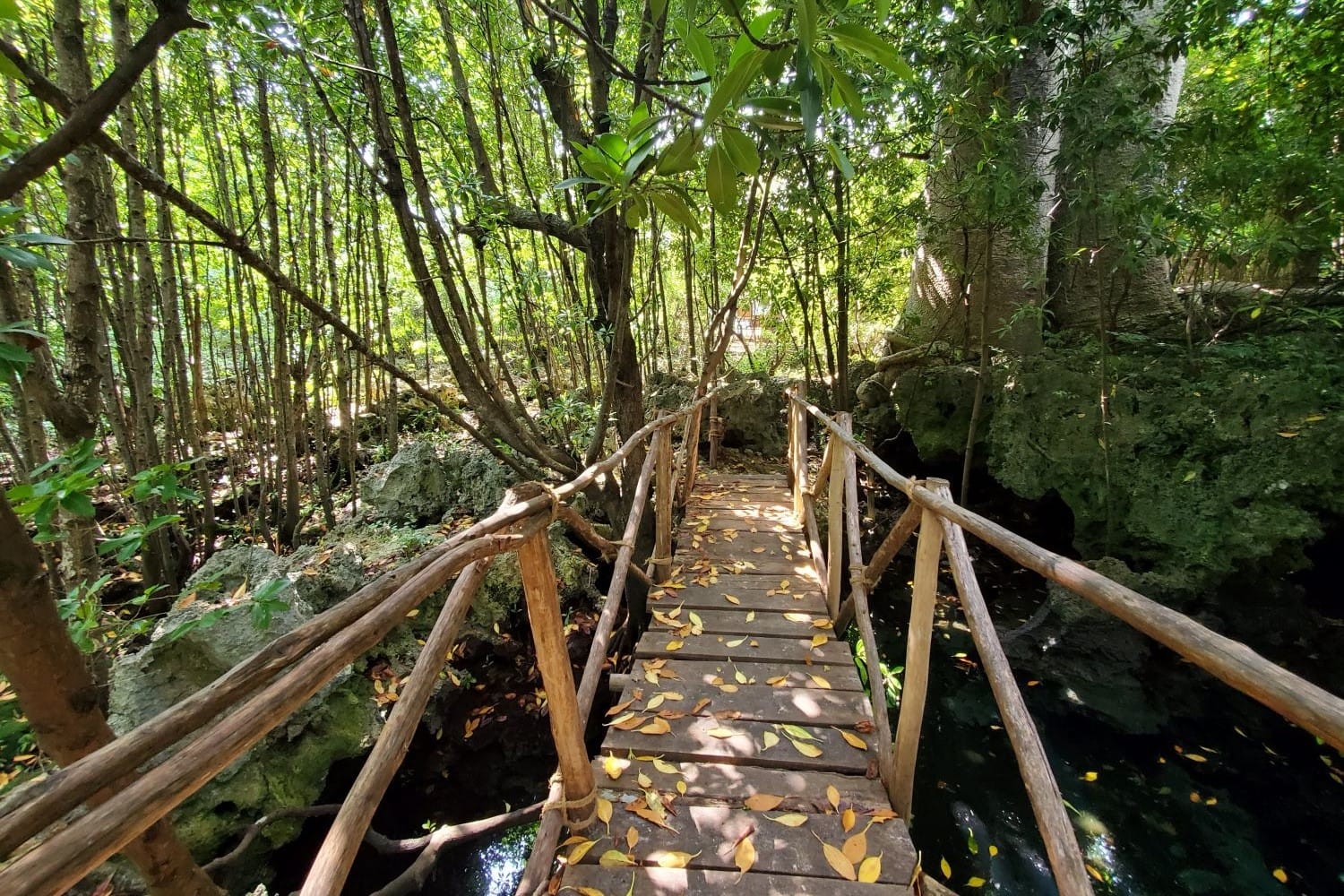
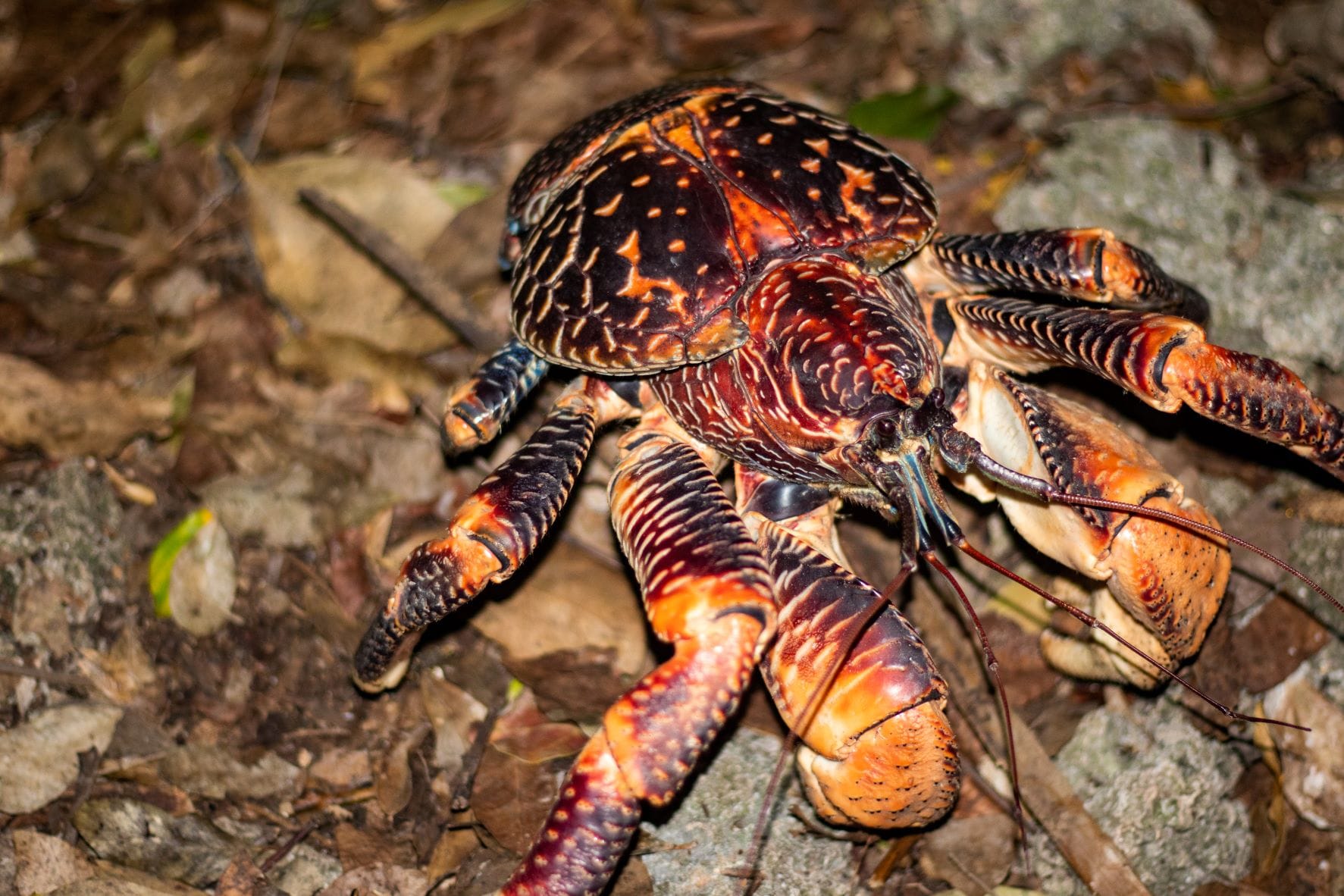
Through the coral forest by day, to the coconut crabs after sunset — Photo: Chumbe Island
The people who show you the island are almost entirely Tanzanian: 42 of 45 staff. Most rangers are former fishermen from the villages directly opposite. They speak the same language as the fishermen outside, and often they have known each other since childhood. One of them used to free-dive for octopus; today he uses the same skill to pull crown-of-thorns starfish from the deepest parts of the reef. Two have been there since the founding: Aly, responsible for maintenance, and Omar, the head ranger. In the evening, when the day cools, you get stories only someone can tell who has known this reef for thirty years.
The centre of all this is the former lighthouse keeper's house, which today holds the education and visitor centre. On other days, school classes arrive here from the mainland, along with students, community groups and teachers. They first learn how a mask fits, then go into the water with a life jacket, because very few of them can swim. For almost all of them it is the first reef of their lives. It costs the participants nothing. It is paid for out of what you transfer for your nights.
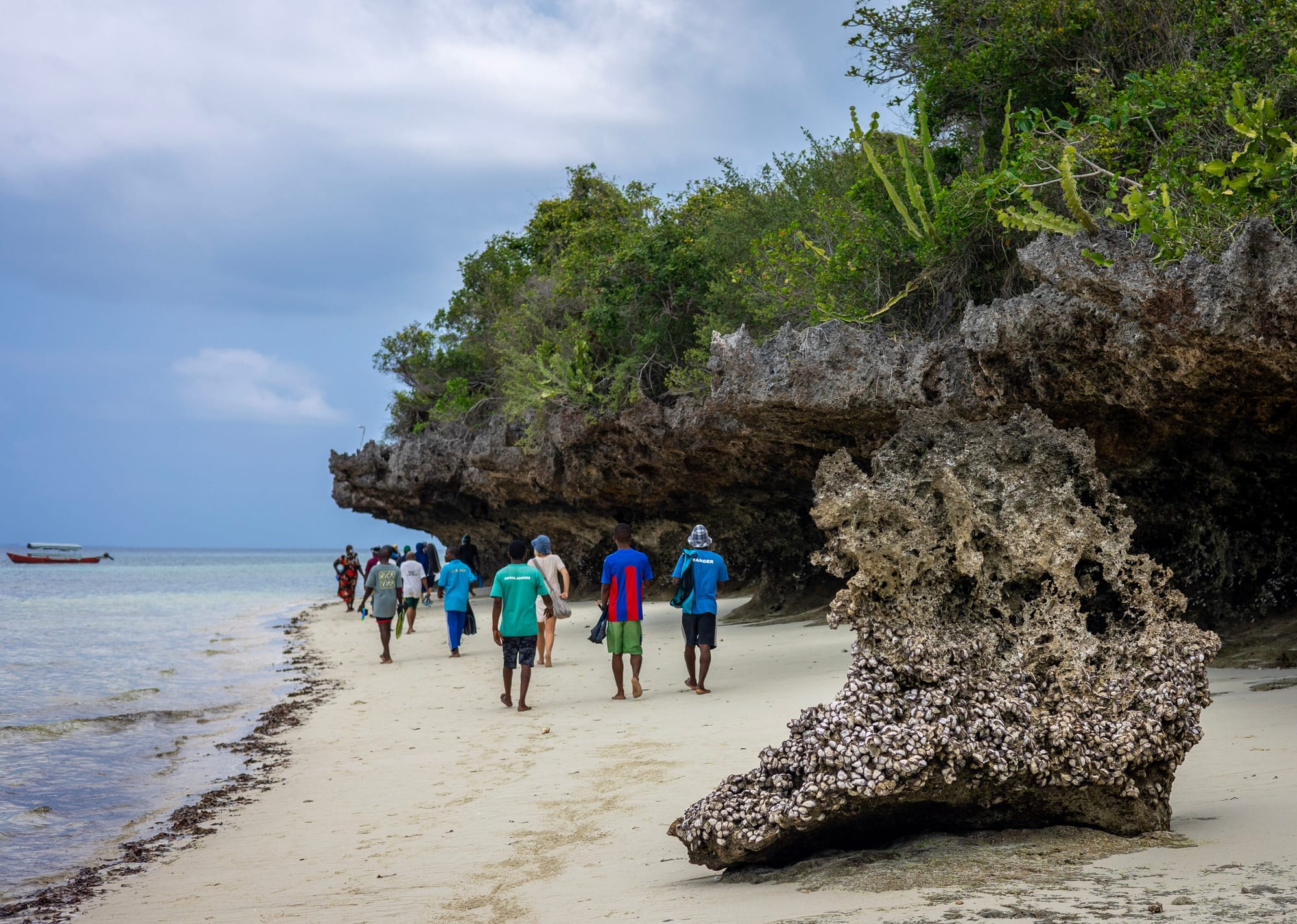
For almost all of them it is the first reef of their lives — Photo: Amalie Boge for Chumbe Island
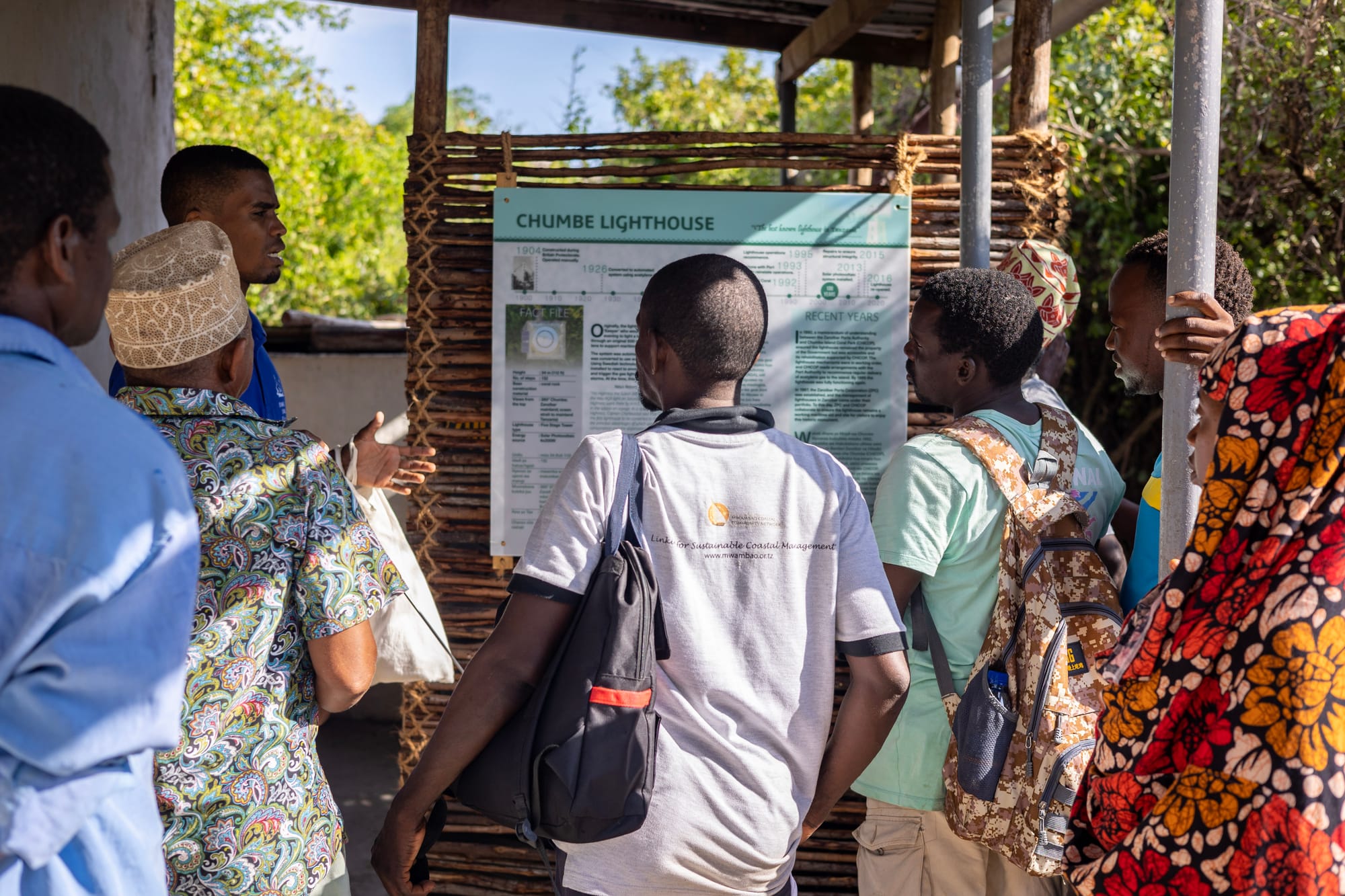
Lessons in the former lighthouse keeper's house — Photos: Amalie Boge and Adam Moore for Chumbe Island
And then there are the soaps in the bathroom. They come from a women's group in the north of Zanzibar, and have done since the beginning, thirty years now; the shampoo beside them is also made on Zanzibar. Small decisions like these are the real difference. Because on an island where hotels import most of their food, the question of where something comes from is no side issue.
Which brings us twenty minutes' drive south of Stone Town, to the Fumba peninsula.
Practical Information — Chumbe Island
Best time to go
Dry seasons June to October and December to February.
Getting there
Boat from the beach in front of Mbweni Ruins Hotel, meeting point 9:30, departure 10:00, crossing 25 minutes.
Cost
Day visit around 90 to 100 US dollars. Overnight stays in the premium segment including boat transfer, full board and activities, excluding alcohol. Two nights recommended, checkout 9:00.
Booking
Sundays Among the Beds
There are places where people live in rhythm with nature. Who accept that rhythm instead of overruling it, and make something out of it that they share with others. Msonge is one of them.
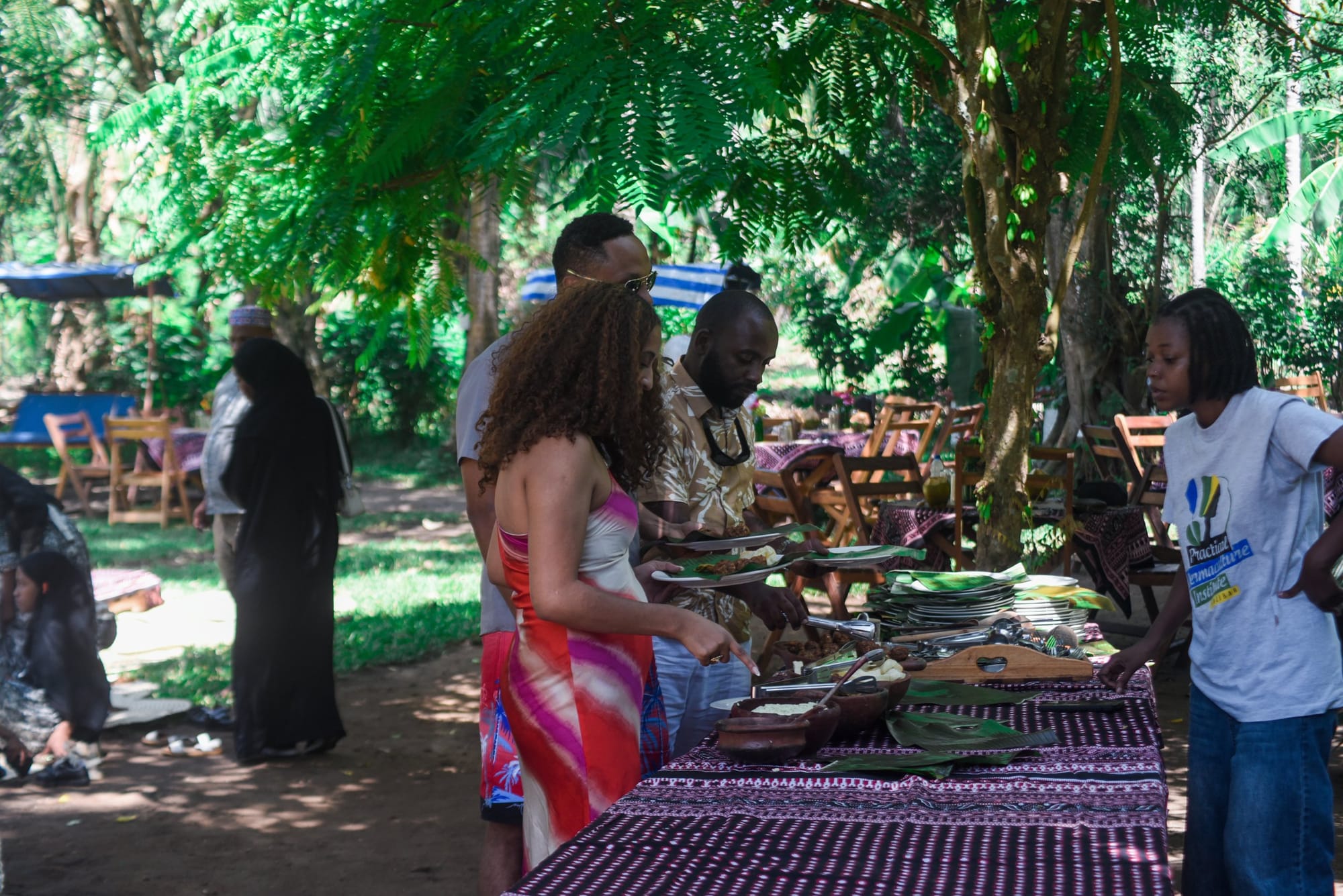
Sunday at the buffet: Zanzibari families and travellers at the same tables — Photo: Msonge Organic Family Farm
You are welcomed with a coconut, freshly opened. It smells of wood fire and lime. Large clay pots, wrapped in banana leaves, stand on wooden boards. You take a plate, pile it high and sit down at a table between fruit trees and vegetable beds. Somewhere Taarab is playing, the music of the Swahili coast: sung poetry accompanied by a small orchestra in which Arab, Indian and African influences come together, as they do in almost everything on this island.
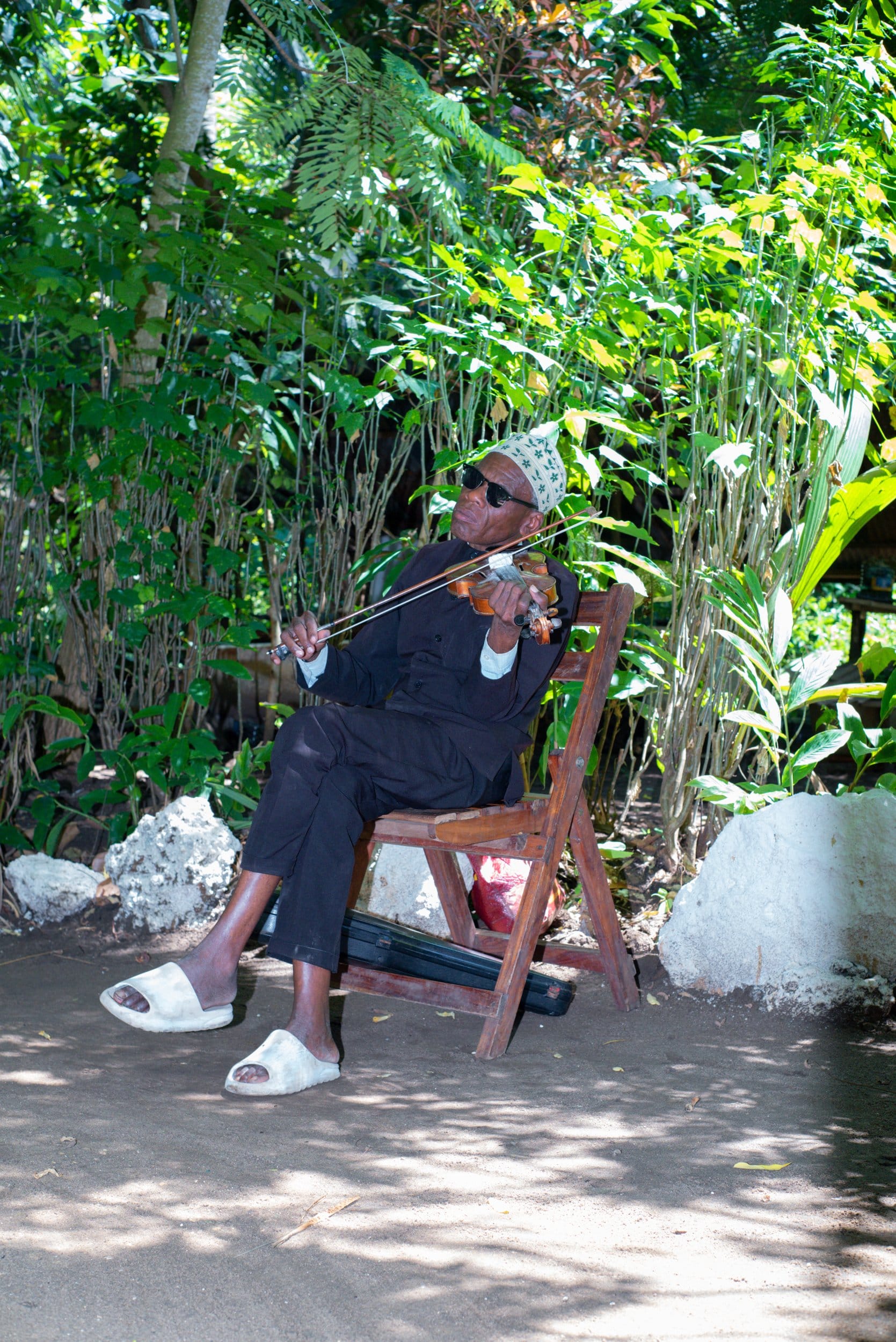
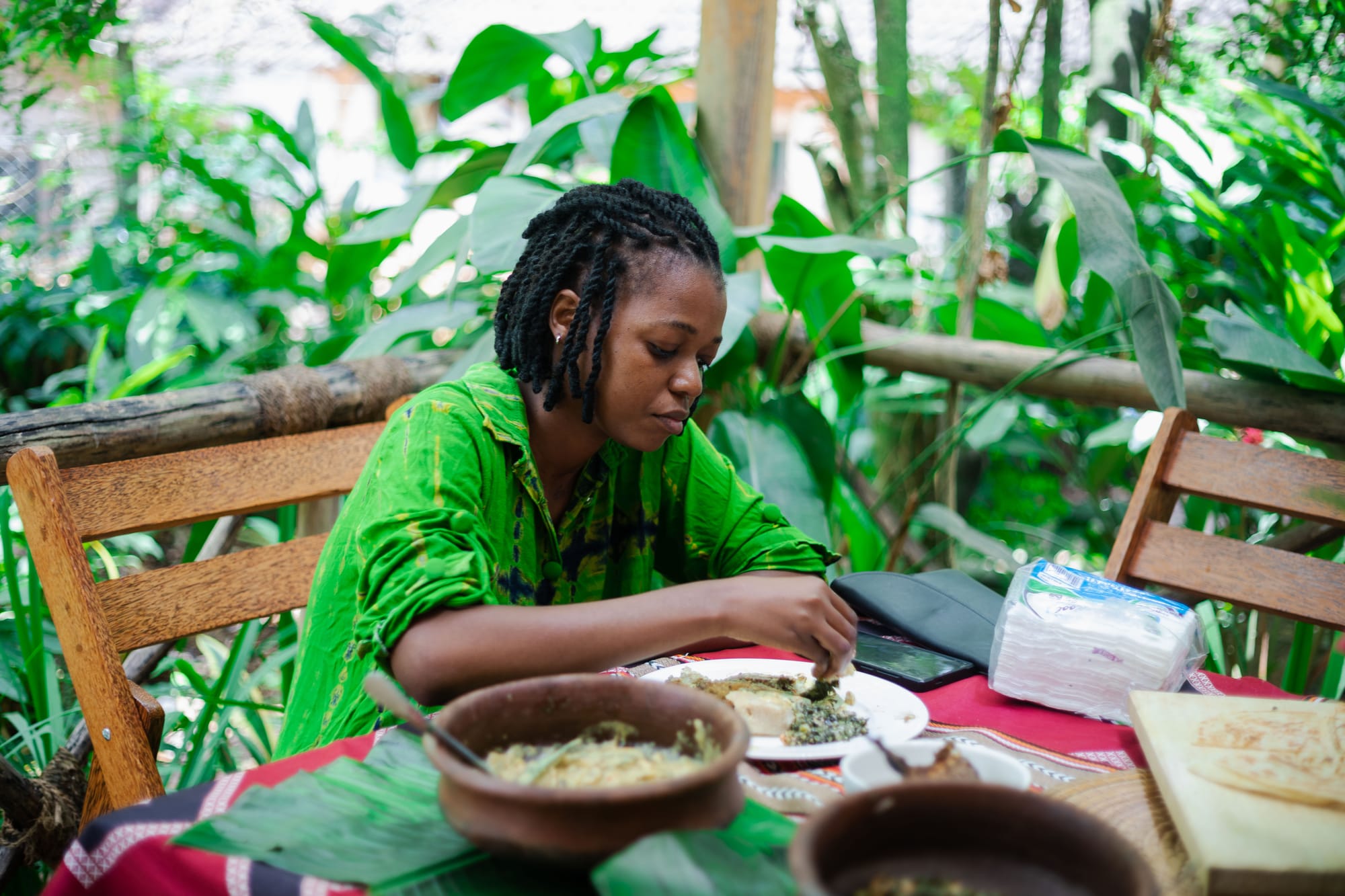
Taarab from next door; eating happens between fruit trees and beds — Photo: Msonge Organic Family Farm
The buffet has three courses and every bit of it grew on the land around you. First the starters, entirely plant-based. Then the main dishes with fish, chicken and coconut, and a row of sides. At the end Vipopoo, coconut sweets and tea of ginger and lemongrass. Afterwards you can walk the fields and see where what you have just eaten was standing not long ago.
What is magical about this Sunday is not the food, good as it is. It is who sits there. Zanzibari families spending their day off together. Travellers who have heard of it. All at the same tables. Some of the dishes are so old that even locals no longer know them. They sit there and remember something they have not eaten in years.
Nuru says that at these tables she notices again and again how much Africa is connected through food. Much of what comes to the table here resembles what travellers from other parts of the continent know from home.
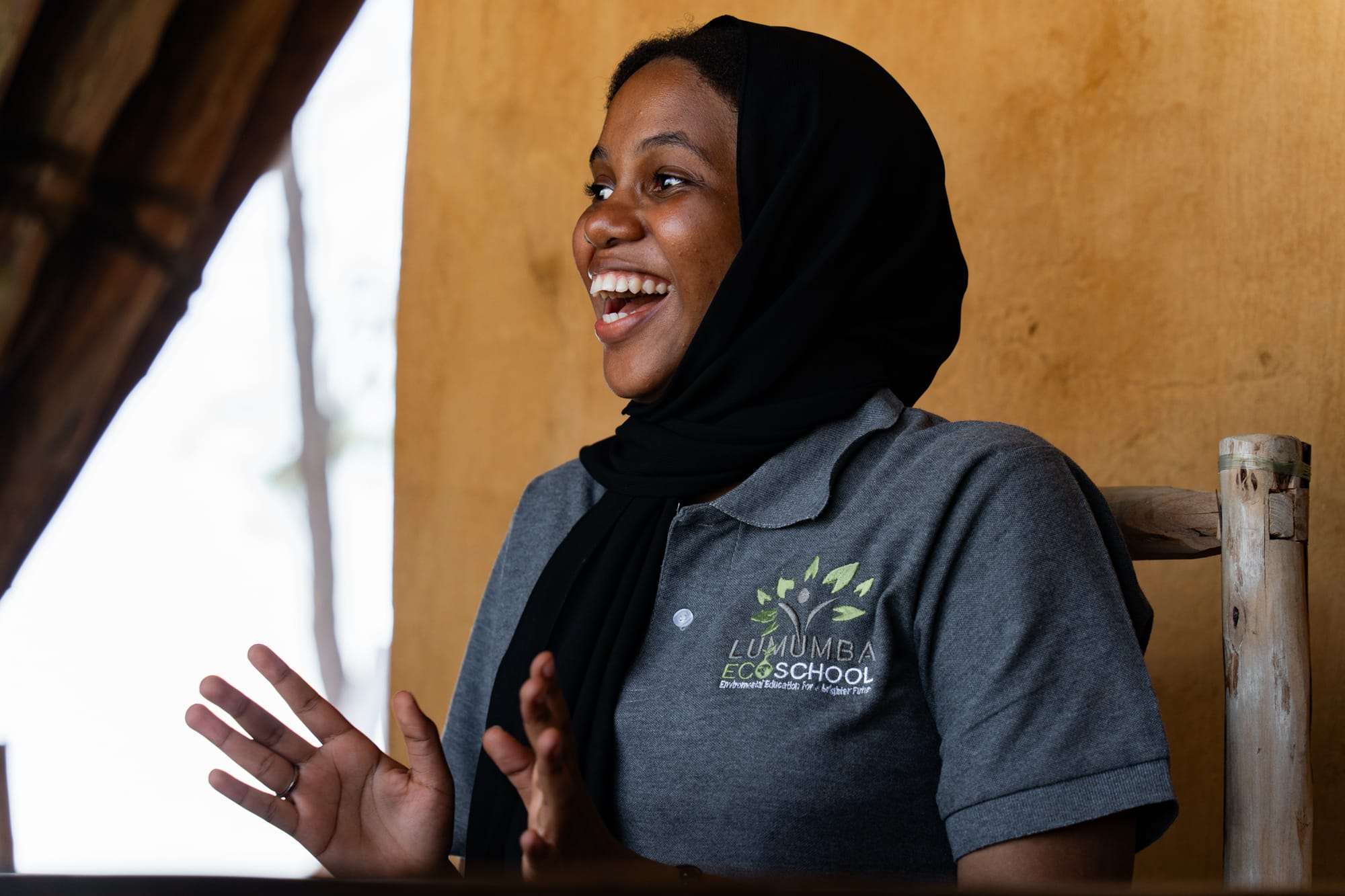
Nuru, the third generation on the farm, helps run it and says this about those afternoons:
“What I love most is seeing people slow down. They arrive as guests, but by the end of the afternoon they often feel like they have experienced something personal.”
— Nuru, Msonge Organic Family Farm
Mama Pakacha
The farm is called Msonge and has belonged to the same family since 1957. Back then Abdallah Juma bought it together with his brothers, a coconut plantation with orange and lime trees. Synthetic fertiliser and pesticides were never used here; since 2000 the farm has been certified organic, since 2015 a permaculture farm. What has stayed, Nuru puts like this:
“Msonge is much more than a farm to us, it is our family home, our heritage and a place where we can share our passion for organic farming, food and Zanzibari culture.”
— Nuru
It is run today by Dr Mwatima Juma, the seventh child of Abdallah Juma and Nuru's mother. Her father took her out to the fields as a girl; in 1995 she earned her PhD in crop physiology. She then worked at Zanzibar's ministry of agriculture and later for the International Fund for Agricultural Development. After retiring, she took over the farm.
On Zanzibar she is known by a different name: Mama Pakacha. Pakacha are the woven baskets of coconut leaves in which the vegetables are delivered. She wanted deliveries that left no waste at all, so the vegetables went into baskets that grow on the farm anyway; anyone who has no further use for them lays them in the beds as mulch. Organic is not a surcharge here either: Msonge charges the same as the local markets and delivers on top.
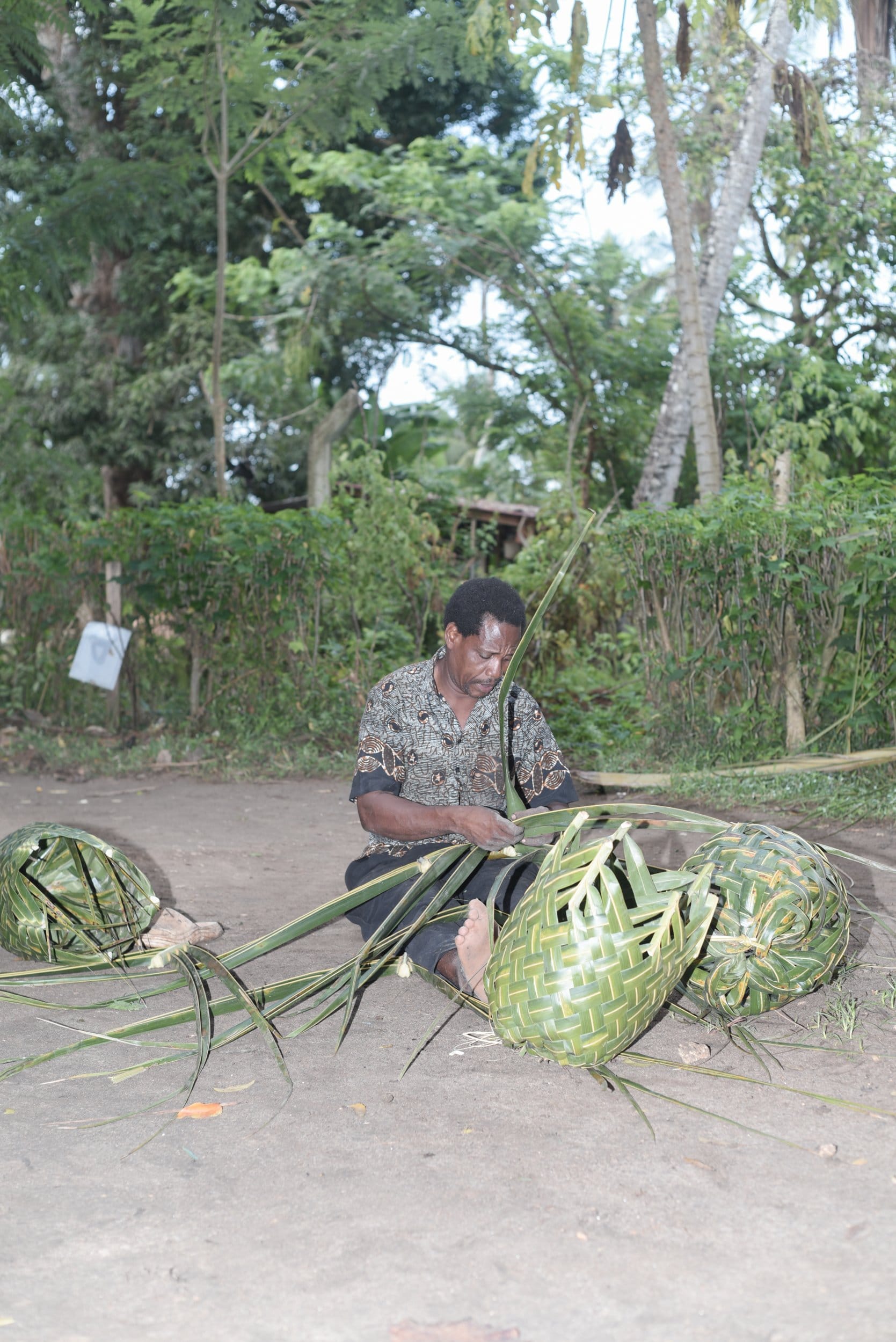
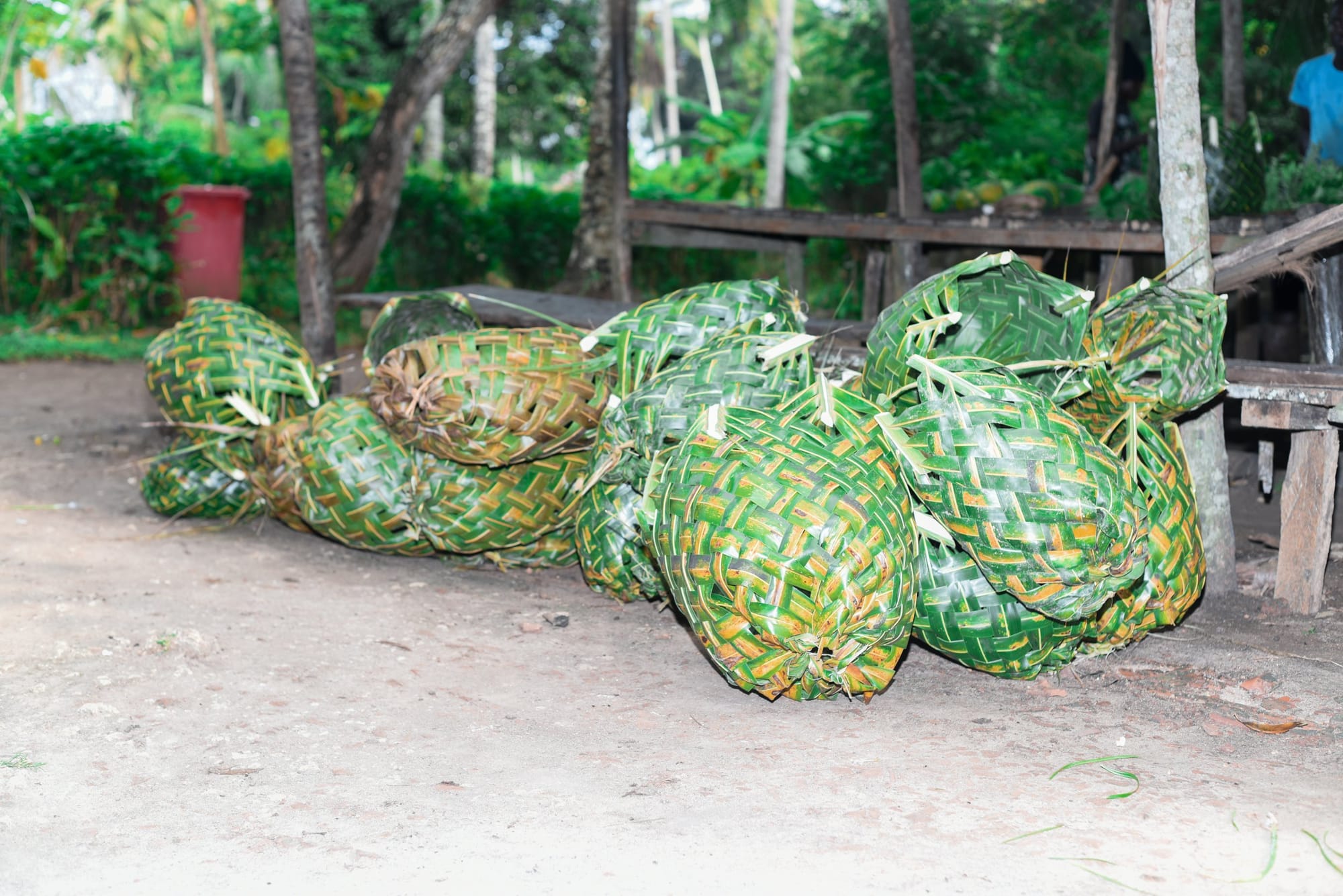
Woven from coconut leaves, later mulch in the beds — Photo: Msonge Organic Family Farm
Behind it stands a conviction that is uncomfortable and simple at once: it makes no sense for hotels to import most of their food while the island's farmers stay poor. Buying locally keeps the money on the island and the culinary heritage alive.
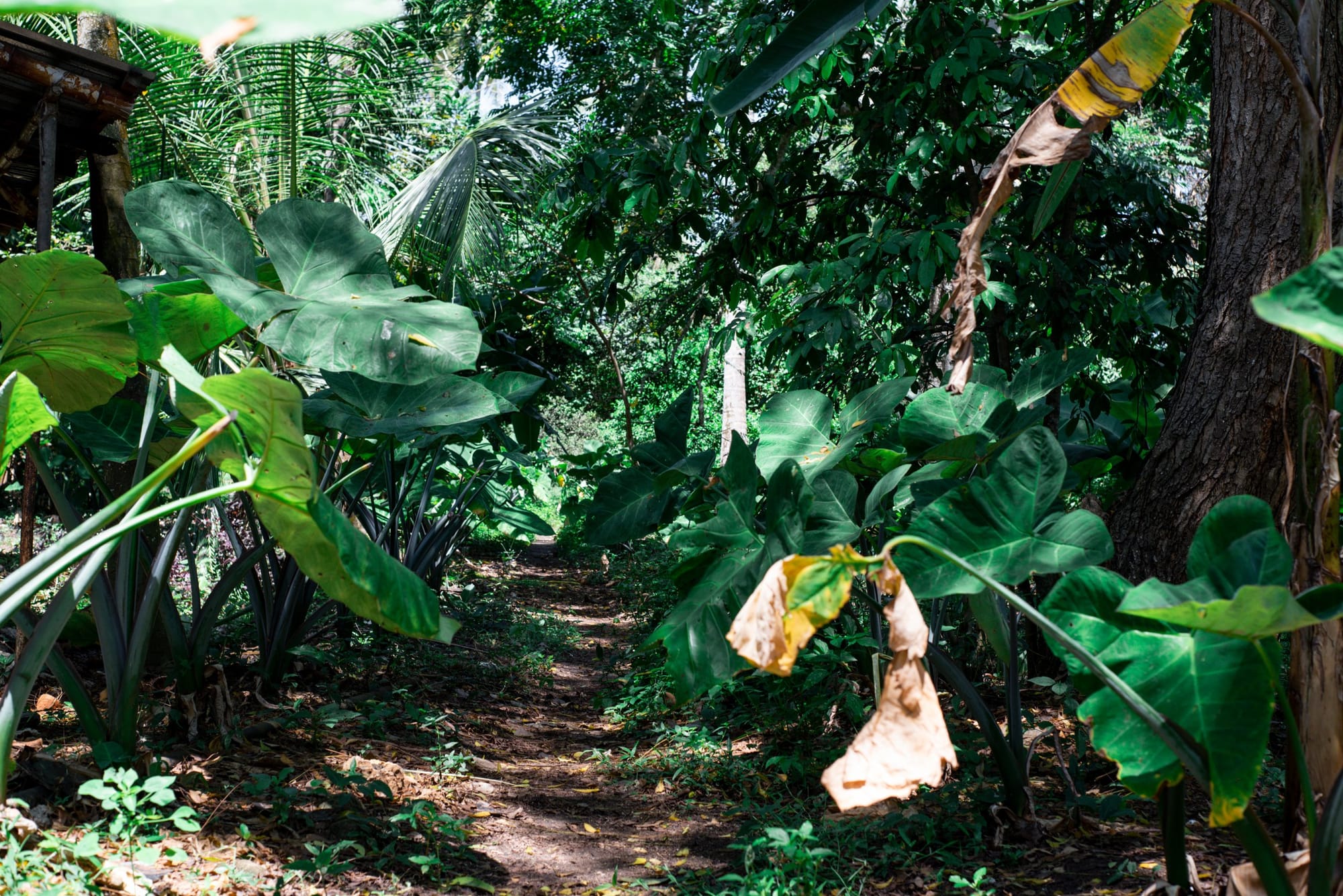
Most of the farm is forest, and it stays that way — Photo: Msonge Organic Family Farm
The farm is about thirty-seven acres; ten of them are planted. The rest is forest and wilderness, and that is deliberate: it houses the insects and birds that elsewhere get replaced by spray. Instead of synthetic fertiliser and pesticides there is compost, plant boosters made from rabbit urine and many crops side by side, along with chickens, cows, goats and rabbits.
“Permaculture has taught us to look at the farm as one connected system. The soil, plants, animals, people, water and waste are all connected, so rather than constantly taking from the land, we try to create systems where resources are reused.”
— Nuru
In the fields grows produce you have probably never seen. Bilimbi, for example, a very sour little fruit that is pickled here or cooked into sauces. Or chaya: half of Zanzibar plants it as a garden fence without knowing that cooked in coconut milk it is a dish. Nuru says it is one of her favourites.
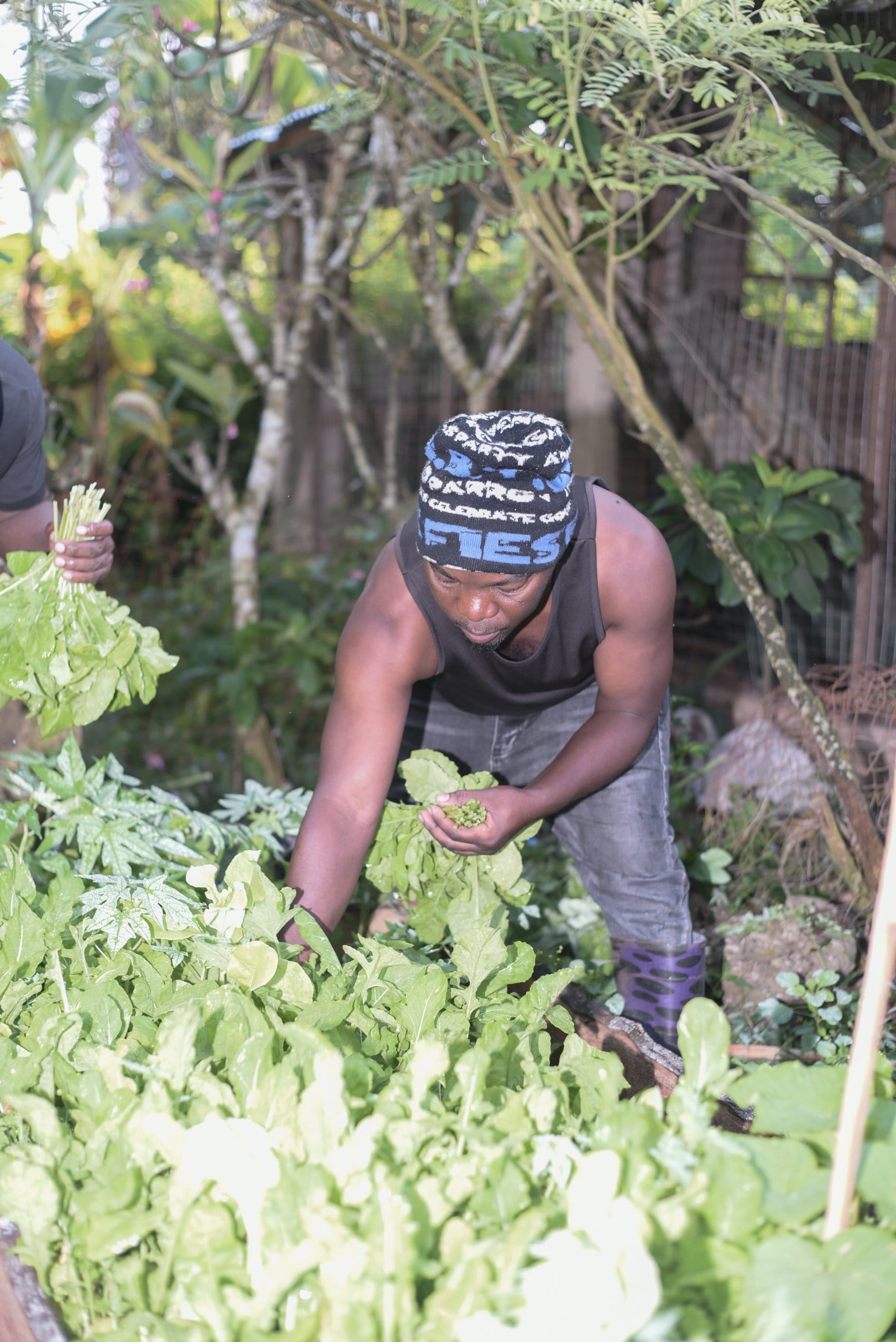
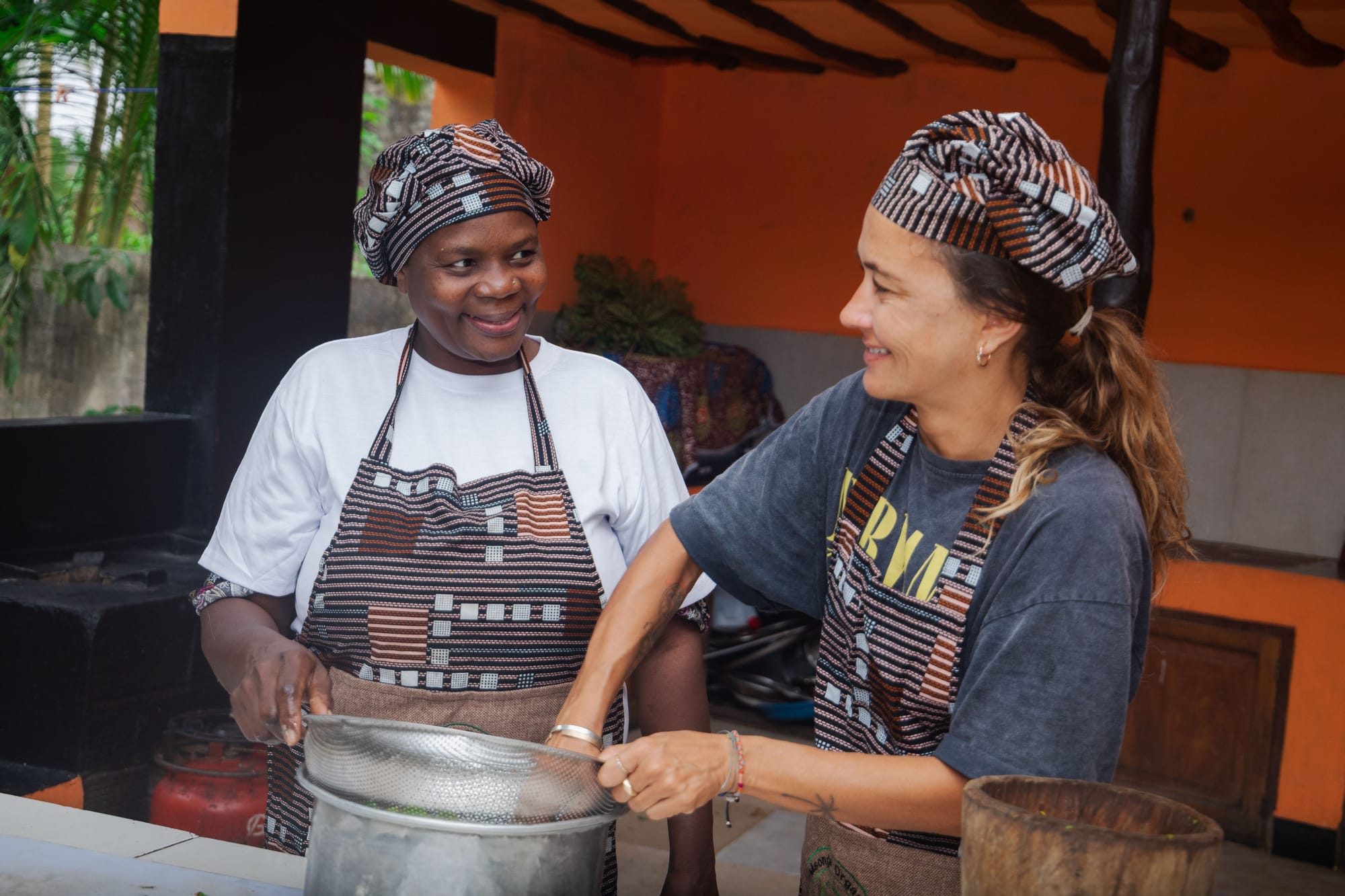
First you harvest, then you cook — in the cooking class Chef Nachum is at the stove — Photo: Msonge Organic Family Farm
Anyone who wants more than the Sunday comes during the week: for the farm tour with lunch, or for the cooking class. That one begins not at the stove but in the field, where you harvest what later lands in the pan. At the stove stands Nachum, Nuru's cousin, who learned most of it from the family's grandmother, Biti Simba. The most requested dish is not the most complicated one but her chapatis.
“For me, the magic of Msonge is the feeling of being connected: to the land, to our family history, to food and to people. There is something very special about walking through a farm that has been in your family for generations and knowing that the same land that provided food for your grandparents is still feeding people today.”
— Nuru
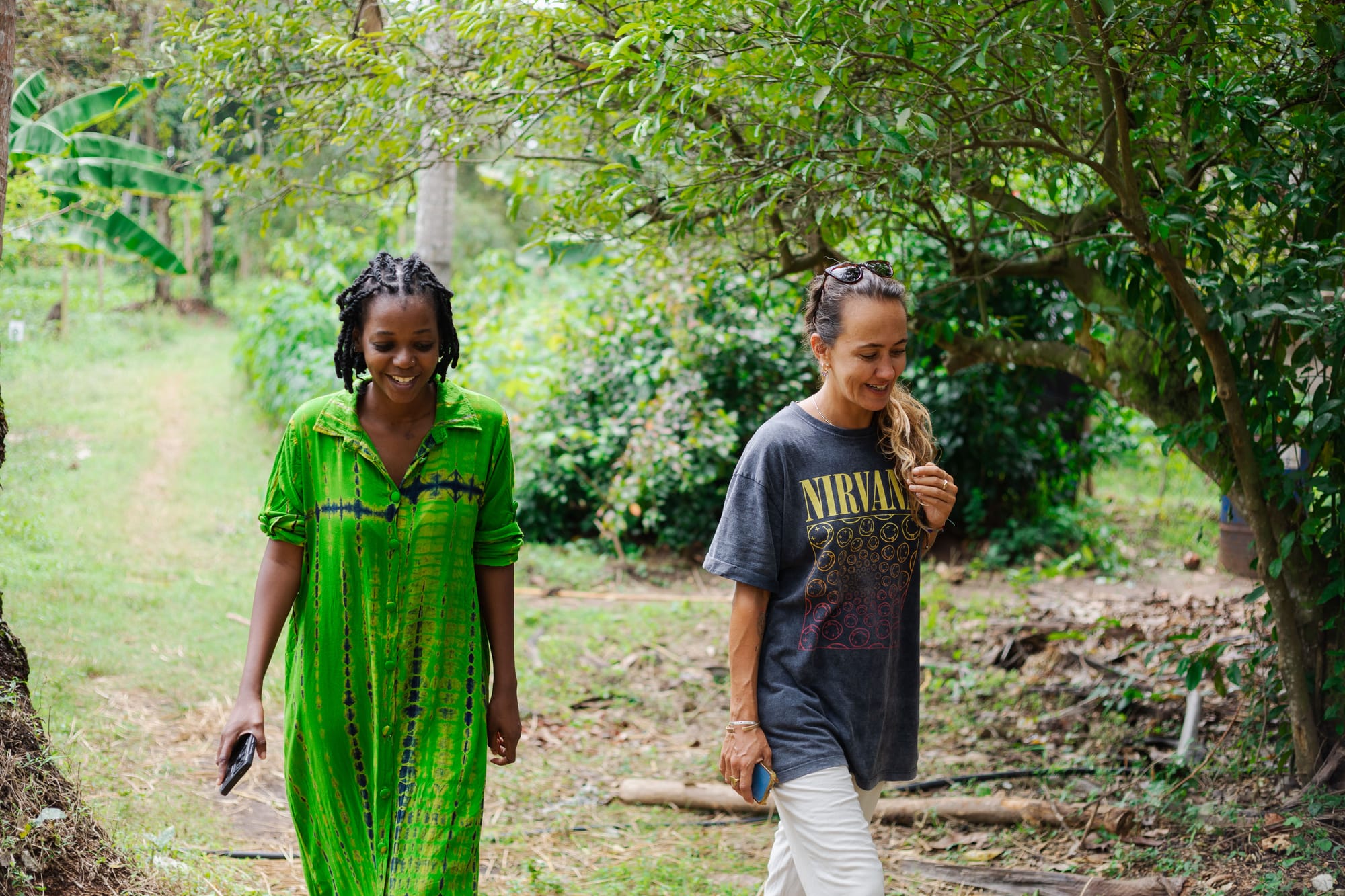
Nuru walking the farm — Photo: Msonge Organic Family Farm
What stays with you from an afternoon like this is hard to put into one line. You stayed a few hours, you ate, you walked the fields, you listened. And you leave a whole step closer to the land, its culture and this family. That is not something you can rebuild anywhere else.
“Msonge has a very natural rhythm. You cannot rush the farm. You have to work with the seasons, the weather, the soil and the plants. I think that is what makes it magical.”
— Nuru
Practical Information — Msonge
Best time to go
All year. In the rainy season the farm gets muddy.
Getting there
Shakani on the Fumba peninsula, about 20 minutes from Stone Town.
Experiences and cost
Farm-to-table Sunday every Sunday from 13:00, TSh 50,000 per person (around 20 US dollars). Farm tour with lunch by prior arrangement, TSh 75,000 (around 30 US dollars). Swahili cooking class with Chef Nachum by prior arrangement, TSh 100,000 (around 40 US dollars).
Booking
msonge.co.tz, Instagram @msongeorganicfarm, WhatsApp +255 754 536 630, phone +255 776 374 466 or nurusoragha@gmail.com. Book the Sunday lunch and the cooking class early, places are limited.
A City That Speaks to You
How you experience Stone Town depends enormously on who you are with. The old town is a World Heritage Site: alleys so narrow that two people brush past each other, carved doors with someone standing in front of them photographing every day, men offering you a tour on every other corner. You can work through a list of sights here. Or you can have this city told to you, with all its stories.
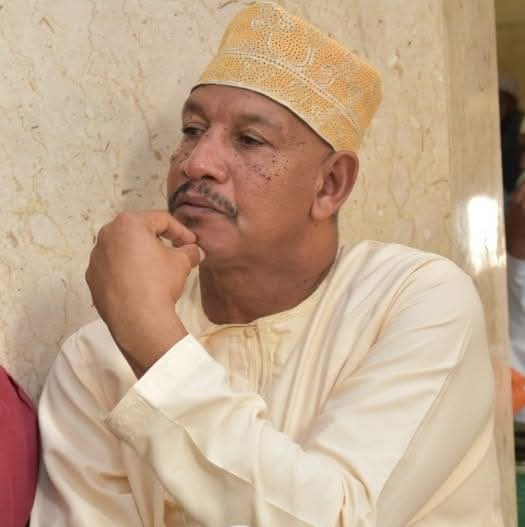
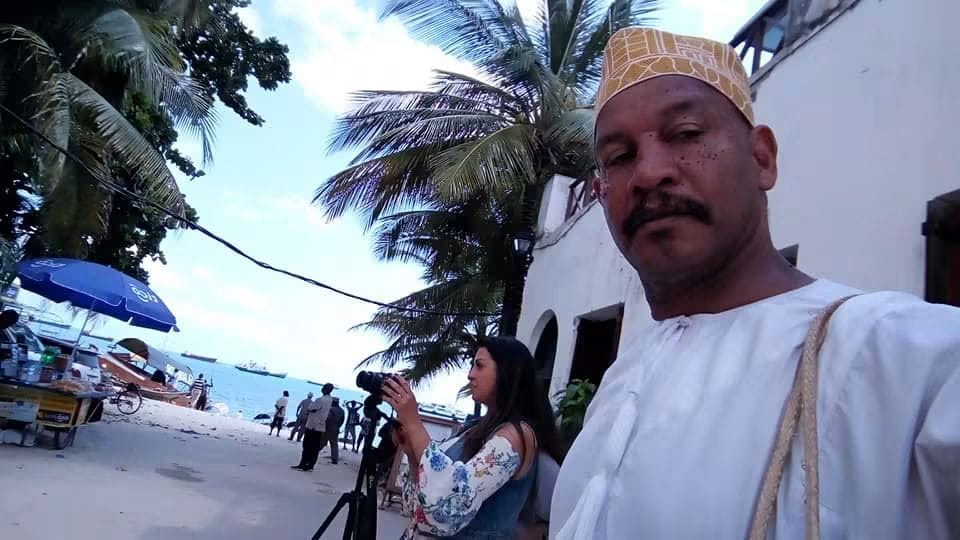
Farid Fazach, historian and cultural expert — raised with the culture of this island — Photo: Farid Fazach
Farid Fazach is a historian and cultural expert, raised with the culture of this island. He says what first gripped him were the stories behind the old doors and narrow alleys, and that every corner of Stone Town seems to have one to tell. For him it is not about buildings:
“A good tour of Stone Town for me does not mean looking at buildings. It means bringing back to life the history, the people and the culture behind those buildings.”
— Farid Fazach, Historian
That you are reading about him at all comes down to a chain that began years ago. A friend working for the UN on Zanzibar had to go to Dar es Salaam at short notice and asked Farid to show two relatives around. Later their parents came to Zanzibar and refused to set out with anyone else; the children had said too much about him. From then on one family brought the next. His lesson from it: a satisfied guest is the best advertising, better than many paid ads.
The Man Who Carries This City Within Him
He begins with the big picture, how Stone Town became the trading and cultural centre of the Indian Ocean. Then it goes into the alleys, to mosques, markets, old trading places. He has a route, but the rhythm stays open; he watches what interests you and leaves time for questions and for whatever happens along the way.
The doors everyone stands in front of, he can place. The Gujarat doors come from the heritage of Indian merchants who settled here: geometric and floral carvings, Indian craftsmanship combined with Swahili traditions and Islamic architecture.
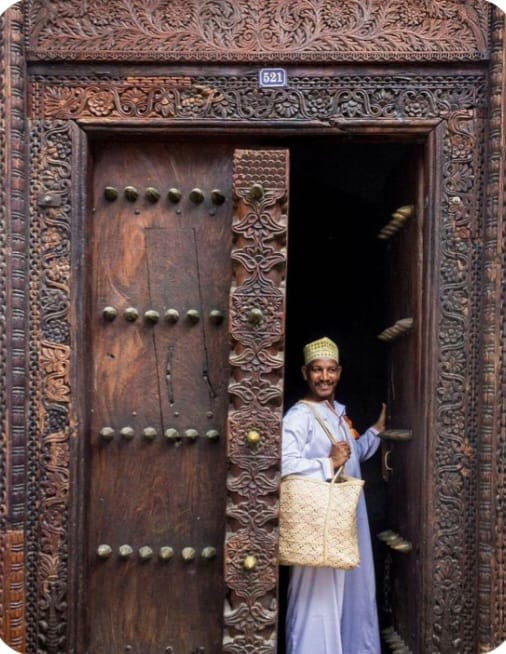
One of the carved doors with someone standing in front of it photographing every day — Photo: Farid Fazach
And then there is a corner where there is nothing to look at. Jaws Corner. In December 1975 the film Jaws was showing in Malindi, and for an island community whose life depends on the sea that was more than Hollywood. After the cinema the young men carried on debating at their meeting place, until someone suggested simply calling it Jaws. The name stuck, and the corner became a place where news was exchanged and friendships made. In 2026 it celebrates its fiftieth anniversary. Farid calls it a living piece of Zanzibari social history, born from a film and preserved in the memories of generations.
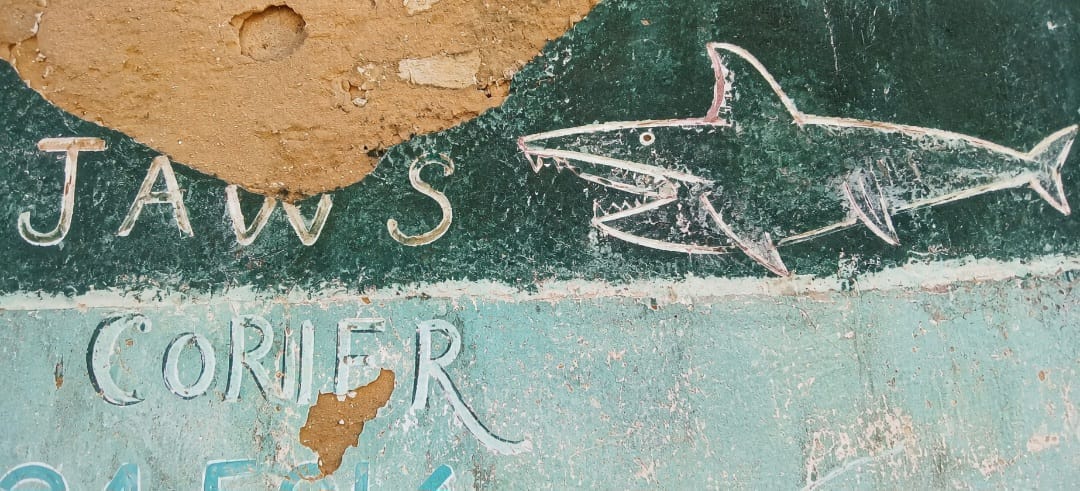
Jaws Corner: a corner with nothing to look at — and which tells you everything anyway — Photo: Farid Fazach
That he does not merely know this city but carries it within him, you hear in one sentence he says about it:
“Sometimes I walk through Stone Town and discover something I have passed many times before, and suddenly see it differently. It feels as if the past is quietly speaking to you. That is the magic of Stone Town: it is not just a place to visit, it is a place to feel.”
— Farid Fazach
His tours last two and a half to three hours and cost fifteen US dollars. He deliberately keeps the price low so that visitors can experience history and culture personally.
By the way, his favourite moment while walking is none of the grand ones: the smell from the small kitchens. Sometimes, he says, it makes him hungry himself, in the middle of a tour.
Practical Information — Stone Town
Best time to go
All year. Mornings and late afternoons are more pleasant.
Meeting point
In Stone Town by arrangement.
Cost
15 US dollars per person, duration two and a half to three hours.
Booking
Directly with Farid via WhatsApp, +255 777 484 734.
Chumbe moved me because it shows what can grow out of love for a country, for its people and for its nature, when someone refuses to let go. More than thirty years ago Sibylle Riedmiller set something in motion for which there was neither a law nor a word at the time. I have great respect for that.
What delights me most about this journey is that the three places belong together without anyone having planned it. Richard recommended Msonge and Farid to me because he values them, not because an article was supposed to come of it. I have not visited any of these places myself. But I spoke with the people behind them, and their stories have not let go of me since.
— The Curator