A Thousand Steps, One Bath
Yunomine Onsen and the Kumano Kodo, Wakayama
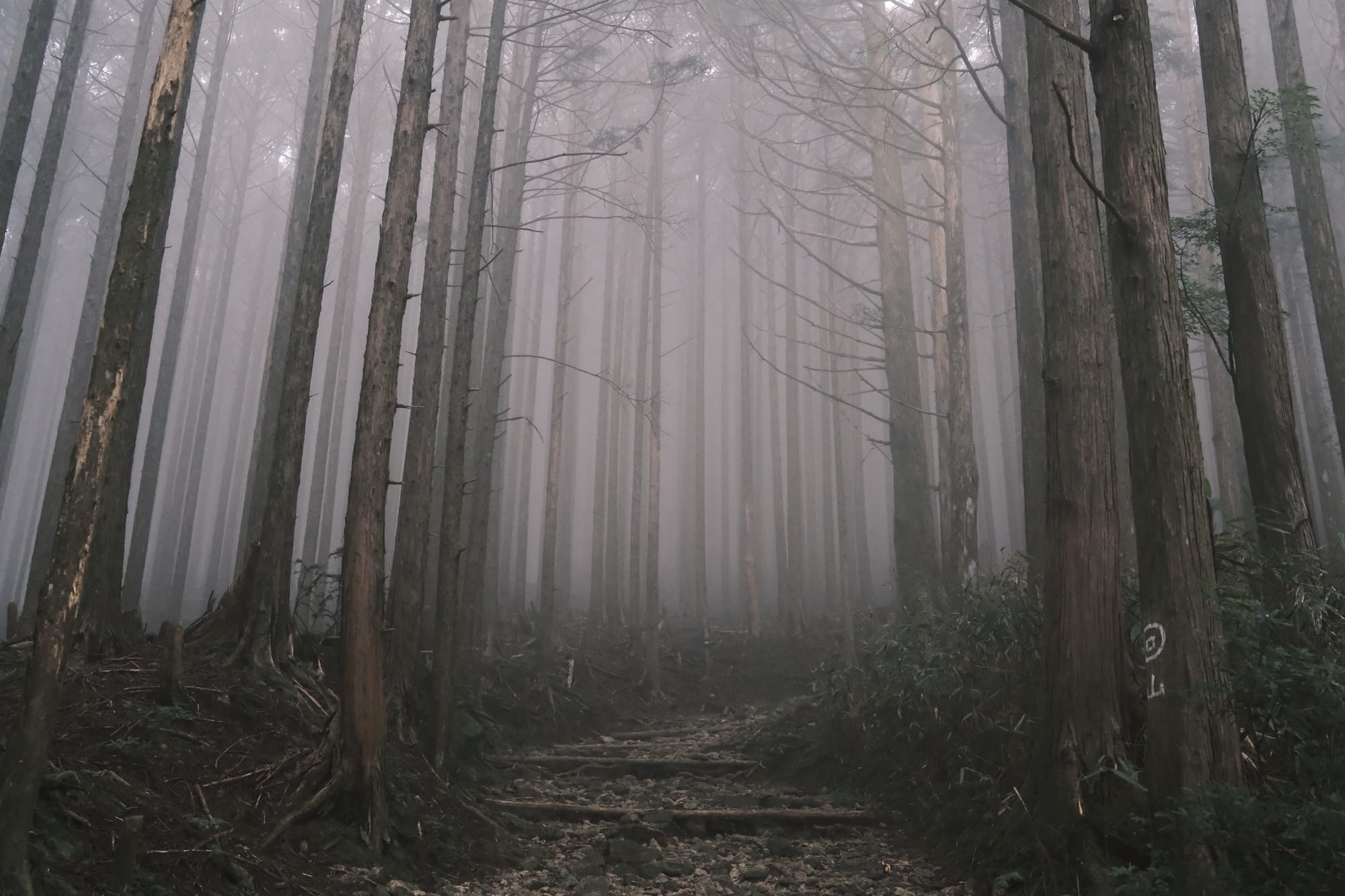
Choosing the Kumano Kodo means accepting a thousand steps — but they lead through breathtaking nature and dense, ancient cedar forests. Staircases that never seem to end, climbing higher and higher, until your legs stop counting. As one hiker put it, it offers a deep connection to Japan's religious and cultural history, to beautiful landscapes, and a challenge you're ready to face.
At the end of such a day lies a tiny valley. Yunomine Onsen welcomes its guests in a traditional, simple way — with steam rising between the wooden houses, and the promise of a hot bath known for its especially healing water, one that has served this exact purpose for centuries: easing tired bodies. Paired with delicious Japanese cuisine, the evening becomes the true highlight after a long day of hiking.
What it is
The Kumano Kodo is a network of pilgrimage trails over a thousand years old, winding through the Kii Peninsula to the three grand Kumano shrines. A UNESCO World Heritage Site since 2004 — one of only two pilgrimage routes in the world with this status, officially twinned with the Camino de Santiago.
At the heart of the trail network lies Yunomine Onsen, one of Japan's oldest hot springs, discovered roughly 1,800 years ago. Legend has it that the gravely ill lord Oguri Hangan was healed here in the hot spring water — a story still told in Kabuki theatre today. At the centre of the village is Tsuboyu, a small wooden bath right by the river, whose water is said to change colour up to seven times a day. It's the only hot spring in the world that is itself a UNESCO World Heritage Site — and you can actually bathe in it.
An onsen is a natural hot spring of volcanic origin — bathing in one, usually communally and often outdoors, has been part of Japanese daily life for centuries, and is far more than mere hygiene: a fixed part of rest, community, and ritual.
What you experience there
The real moment of arrival isn't the room, but the bath afterwards. Ryokan Adumaya has five different onsens — two indoor, two outdoor, plus one private. Sitting in a wooden tub for the first time, instead of stone or tile, you immediately feel the difference: the slight slipperiness of the ever-damp, glossy wood, a material that has aged alongside the years.
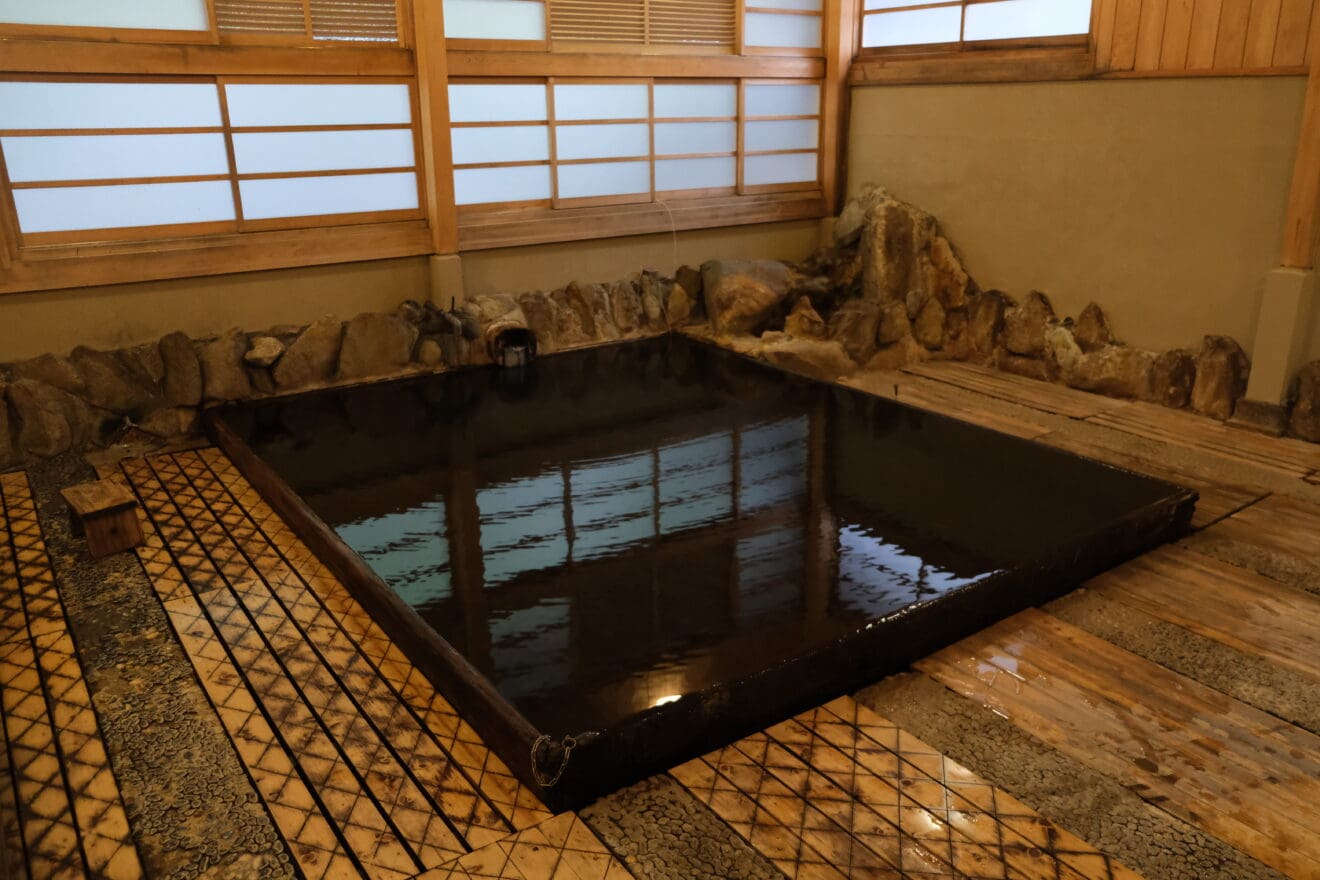
The wooden indoor bath at Adumaya — © Kal, Kulture Kween
Then comes dinner, served in your own room, arriving in many small waves. A kaiseki menu brings the season to the table, course by course: slices of raw fish, grilled eel over rice, pickled konjac, and in between a grilled ayu fish whose aroma lingers long after. You often don't quite know what's being served — colourful, unfamiliar, sometimes without a shared word of language between guest and host — and that's exactly what makes the evening so special. Later, you sleep on a futon laid directly on the tatami, no bed, harder than what one might be used to from Europe. But that's the real Japan.
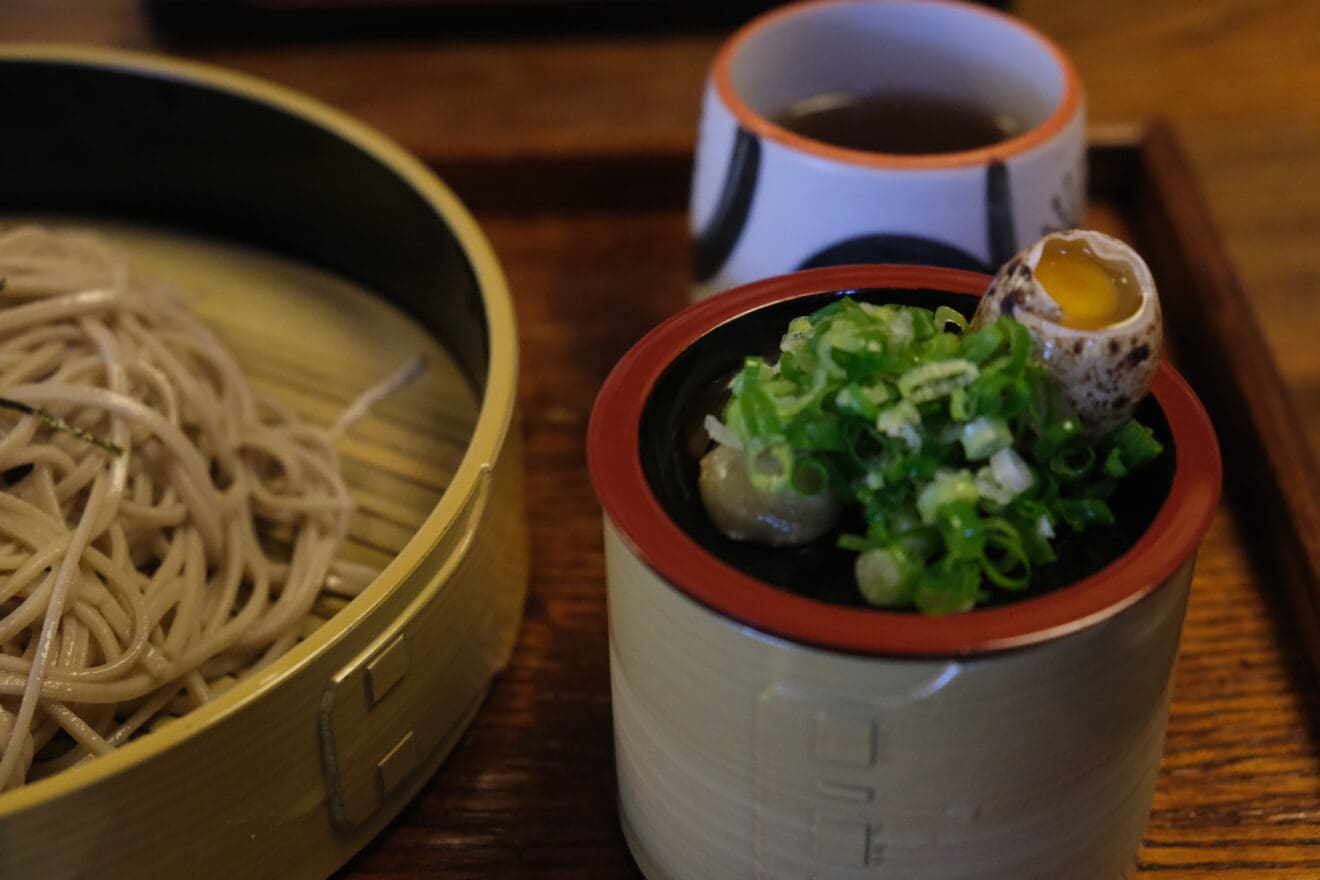
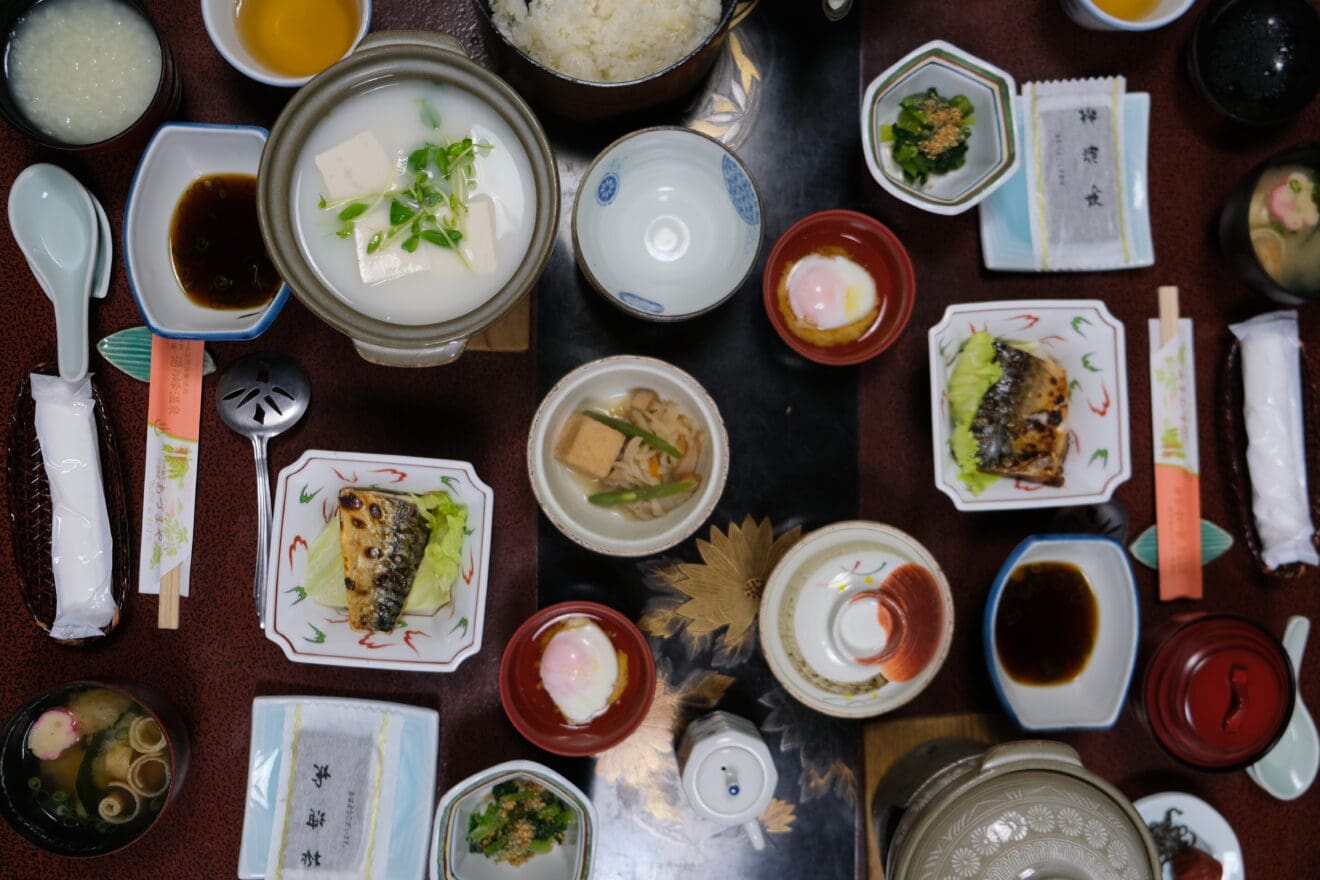
Onsen egg and soba, and the Japanese breakfast the next morning — © Kal, Kulture Kween
The next morning, before moving on, the path leads back to the water once more: to Tsuboyu, the public World Heritage bath, and to the Yuzutsu cooking spot right beside it, where you can boil your own eggs and sweet potatoes in the bubbling spring water — one of the few kitchens in the world that needs no flame. Those who wish can pick up a temple stamp at Toko-ji, dedicated to the healing Buddha Yakushi Nyorai, where people still pray against headaches today.
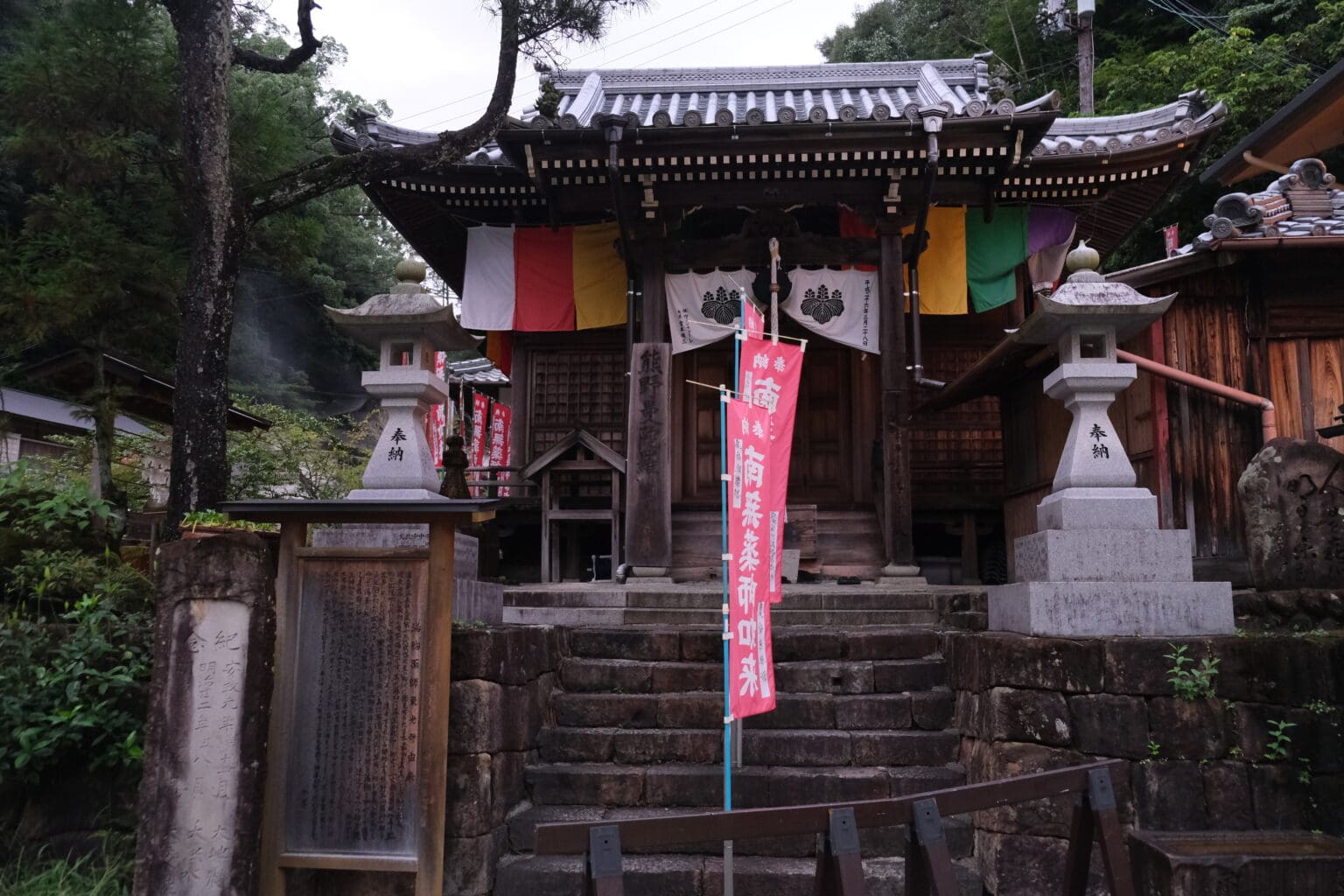
Toko-ji Temple in Yunomine — © Kal, Kulture Kween
What happens in Yunomine is no exception, but the rule along the entire Kumano Kodo: almost every place to stay is a small, family-run house with its own onsen, home-cooked rather than standardised food. The choice of restaurants in the villages is so limited — often just a single shop — that dinner at the ryokan remains, for long stretches, the only proper meal of the day. And that's exactly where the real magic lies: you arrive completely exhausted, and without lifting a finger, a multi-course meal suddenly appears on the table. As one hiker described it, it's the beautiful landscapes, the sweaty climbs, and the buggy forests that all pay off in the end — reflecting on the day over a delicious traditional meal or relaxing in the onsen puts into perspective why the Kumano Kodo has become such a formative experience for so many people.
What the trail does to you rarely shows itself in loud, dramatic moments. It's the quiet things: the sound of running water, the warmth of an onsen after a long day, the smile of a host who doesn't know you and welcomes you anyway. The realisation that simplicity is enough to be happy. Years later, you'll still remember the mountain streams, the rain, the dew, and the gentle winds — together with a kind of reverence that everyday life rarely leaves room for. The trail itself isn't technically difficult, but it demands enough to grow from — some call it nothing less than a trial that leaves you changed at the end.
"I prefer diving deeper into a place and finding the hidden, or at least not so obvious, gems for tourism."
— RILEY SABO, HIKER
One hiker who covered the entire route from Kii-Tanabe to Kii-Katsura in five days — just under 40 miles, over 10,000 feet of climbing — described it this way: there was never a single "wow" moment, but rather a gradual build-up of feeling that finally released fully at Nachi Falls and the great Nachi shrine at journey's end. Setting off early each morning, deep into the mountains, he found himself asking: "What was it like for the countless people of the past to walk this same path over the course of a thousand years, and how many footsteps passed here before me?"
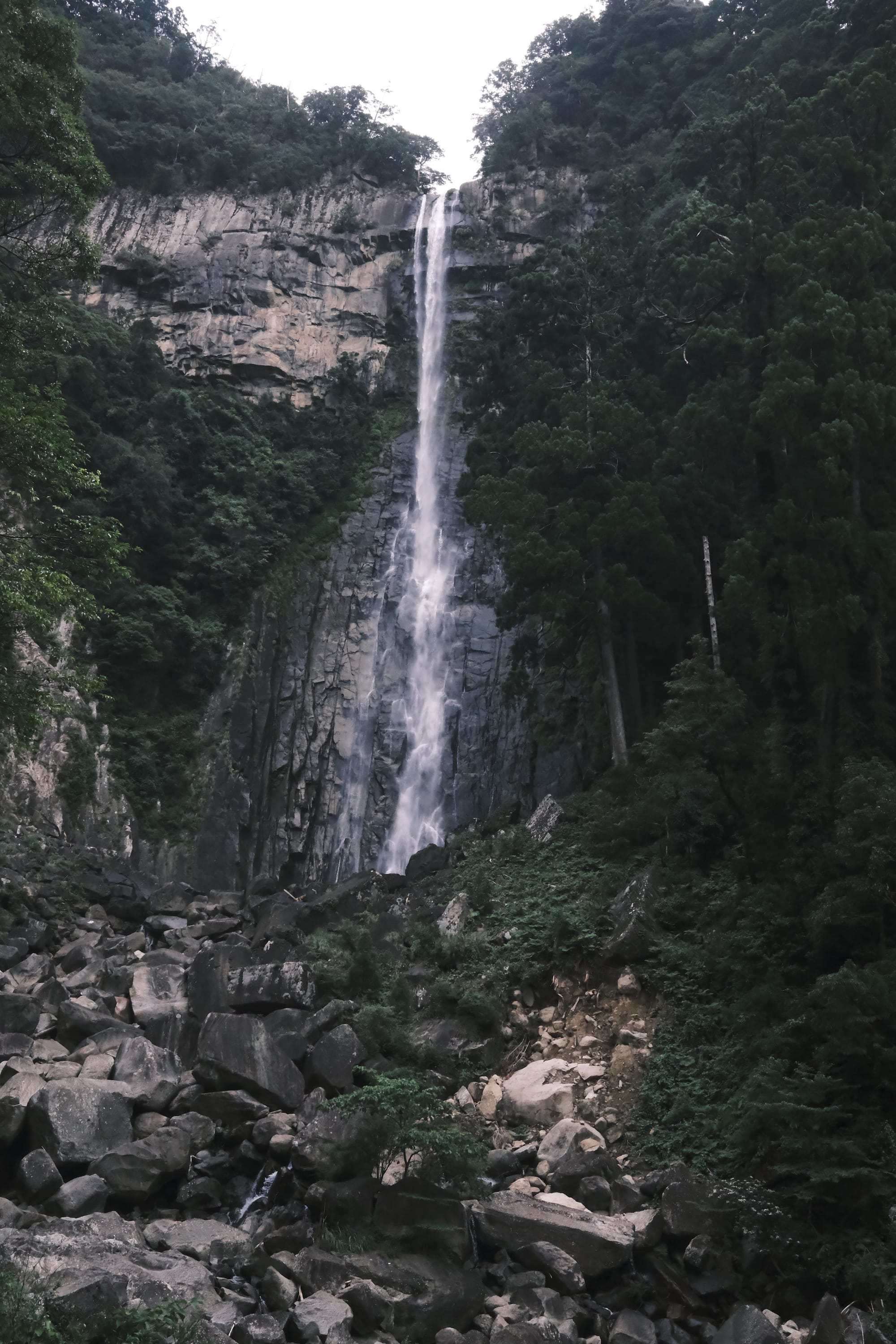
Nachi Falls, the destination of the five-day route — © Riley Sabo
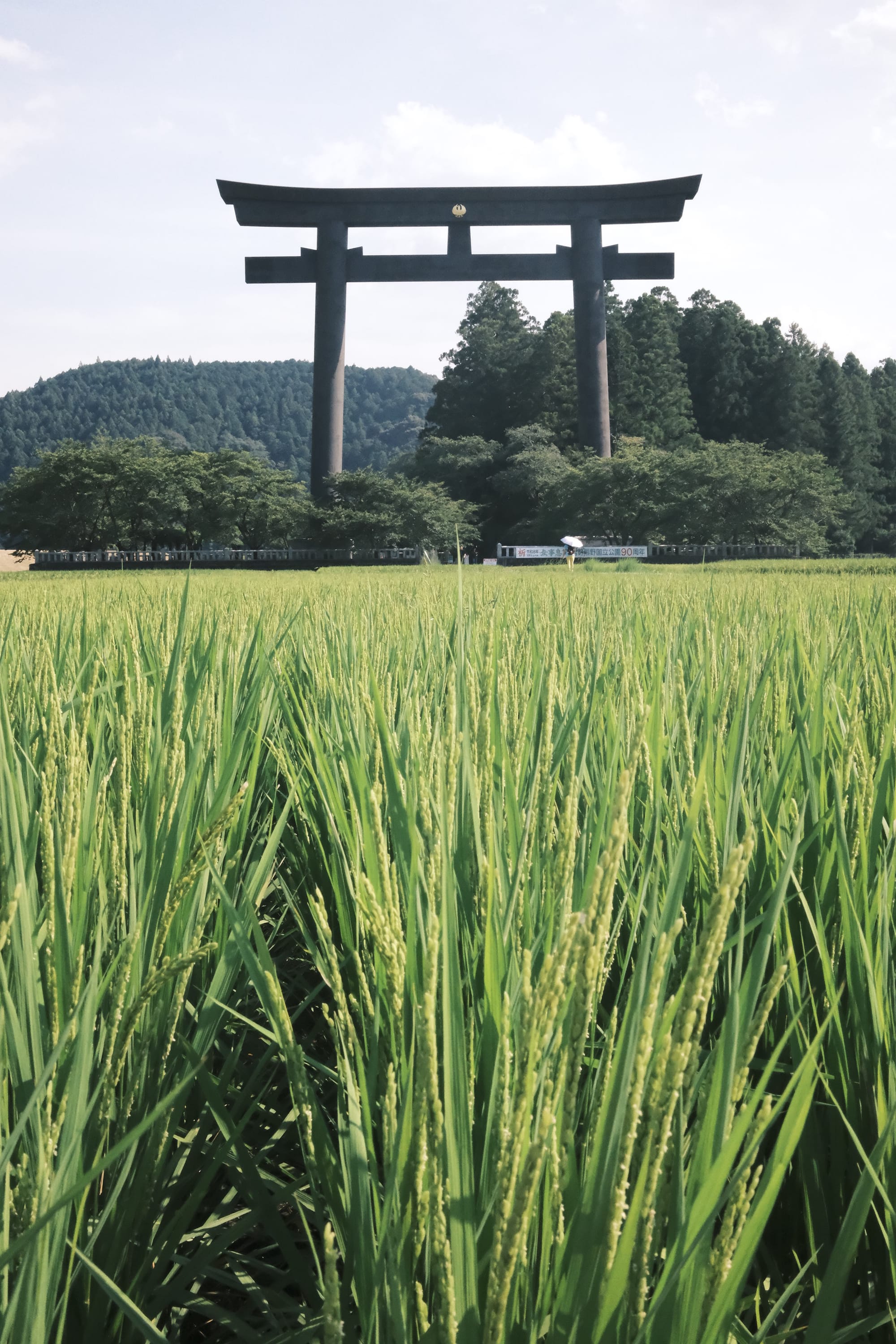
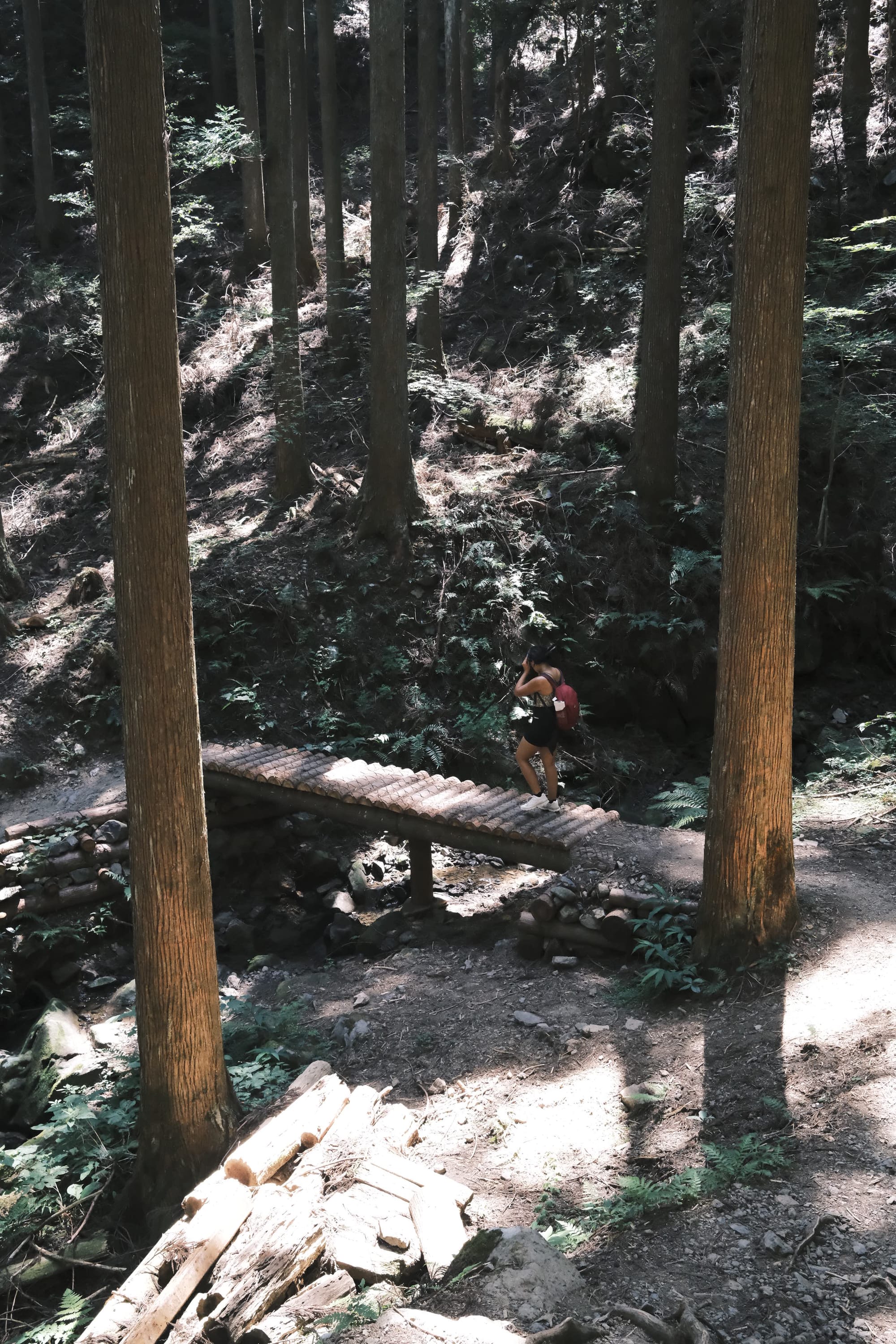
A torii gate rising from a rice field, and on the trail through the cedar forest — © Riley Sabo
The people behind it
Adumaya was founded in the Edo period by a man who gave up his post as a Shinto priest to offer weary travellers a roof instead — an unusual career change whose effects are still felt today. The house has stayed within the same family ever since, through all the generations in which so much around it has changed.
What remains is a hospitality that doesn't feel rehearsed: wet, exhausted strangers are welcomed as though they'd long been expected. And because the village is so small — a single street, a river, a handful of houses — paths cross constantly. You never really walk this trail alone, but in loose company with like-minded travellers you meet in the morning fog and run into again that evening, on the very same staircase.
Who it's for
For anyone willing to arrive soaked and exhausted before understanding what the trail was for — just as much as for anyone who deliberately drives in simply to rest and sink into a hot spring, without taking a single step on the trail. Both belong here. Not a wellness weekend that could be swapped for any other — but for anyone who recognises something real in the imperfection of arrival itself.
"The Kumano Kodo is a perfect experience for those looking to immerse themselves in the real and authentic Japan. It brings spirituality, people, history, great food, and challenging hiking all together for a truly once in a lifetime experience."
— RILEY SABO, HIKER
Tours & Activities
The Dainichi-goe trail between Kumano Hongu Taisha and Yunomine, the main shrine grounds with the towering torii gate of Oyunohara, the neighbouring hot springs Kawayu and Watarase, and a boat ride on the Kumano River for those continuing on. For those attempting the full route: the five-day journey from Kii-Tanabe via Takahara, Chikatsuyu and Hongū to Koguchi and Nachi ends at Nachi Falls and the great Nachi shrine — for many, the true emotional high point of the whole pilgrimage.
Practical Info
Best Time to Visit
Year-round thanks to the hot spring, especially atmospheric in the spring and autumn mist.
Getting There
No train access. Bus from Kii-Tanabe station (approx. 2 hrs) or on foot via the Dainichi-goe trail from Kumano Hongu Taisha (just under 2 hrs).
Cost
Ryokan Adumaya approx. 26,400–50,600 Yen (≈ 165–320 USD) for two people incl. half board. Tsuboyu entry approx. 770 Yen (≈ 5 USD).
Booking
Directly via the ryokan's website or platforms such as Rakuten Travel and kumano-travel.com. For the multi-day hike, Oku Japan arranges accommodation, luggage transfer between ryokans, and trail tickets.
I'd wanted to walk a pilgrimage trail for a long time, and the Kumano Kodo grabbed me immediately — because the nature here is so different from anything I know in Europe. Dense, deep-green cedar forests, ancient stone steps, the scent of cedarwood in the rain, water rippling in the background: a walk to find yourself, step by step. What fascinates me most is that almost every evening, you arrive at a small, family-run onsen house without knowing what you'll be served — colourful, unfamiliar, sometimes without a shared word of language, and that's exactly what makes it so special. No bed, just a futon on tatami: hard compared to what we're used to, but that's the real Japan.
— The Curator