Everything we have,
we share
Smangus, Taiwan
You don't find Smangus because you go looking for it. You find it because someone, at some point, opens a map, spots a dot deep in the mountains of Hsinchu, and decides: there.
That's how one traveller describes it — she rode there on a scooter from Taipei, without many expectations.
We found Smangus on Google Maps and we just took some days off to visit it. The whole way there was just magical.
— CAROL MURPI, TRAVELLER
The Place
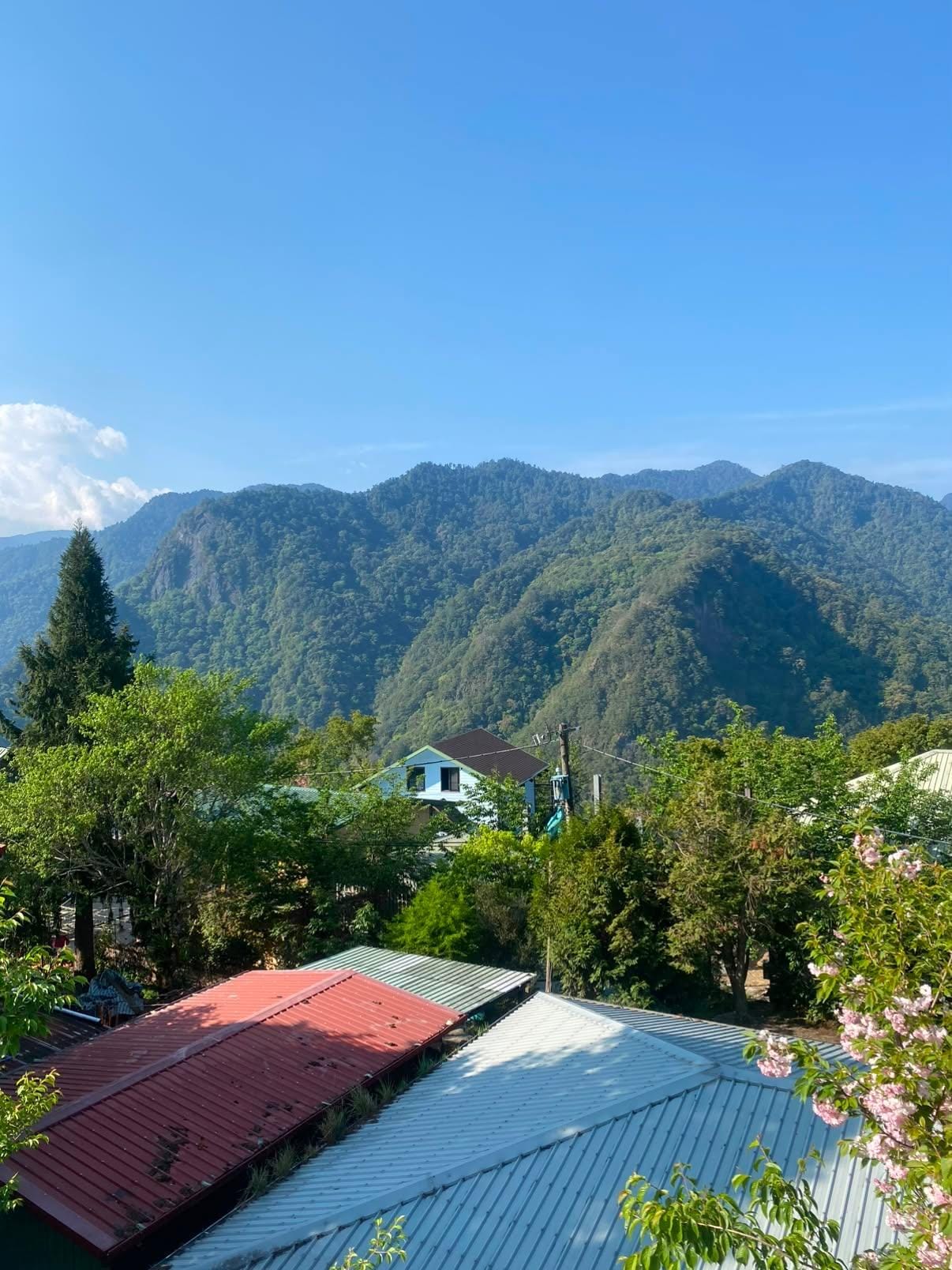
Smangus sits at 1,500 metres above sea level in Jianshi Township, Hsinchu County, in the forested north of Taiwan. According to tradition, an ancestor named Mangus founded the village some 400 years ago while leading a group of Atayal people over the sacred mountain of Tapachien. For centuries the village stayed almost entirely cut off from the outside world: electricity didn't arrive until 1979, a proper road not until 1995 — until then it was considered Taiwan's most isolated village, once nicknamed the "Dark Village" by outsiders.
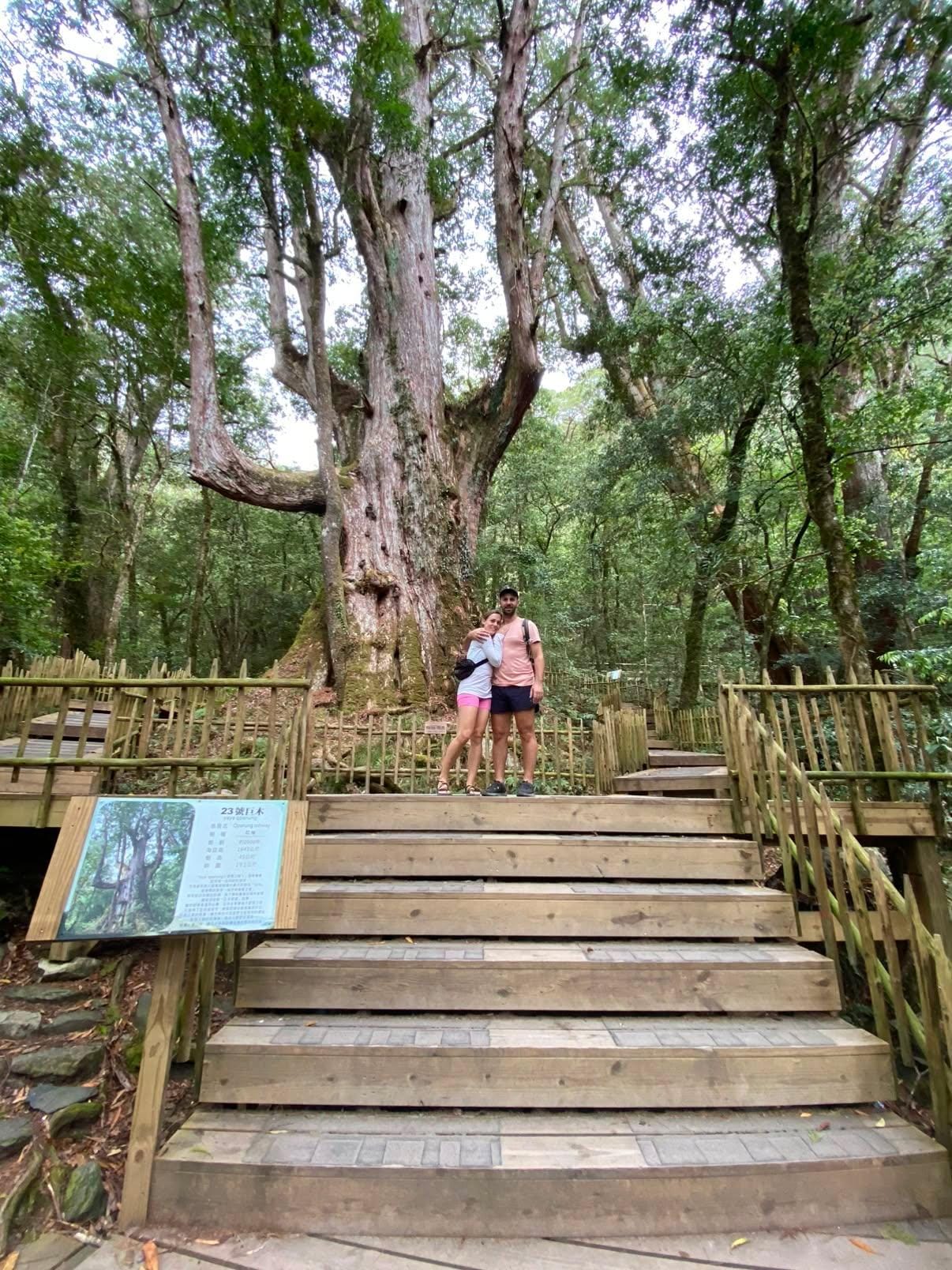
In 1991, tradition has it, a village elder dreamed of the ancestors, who spoke of sacred trees to the east of the village. All the adult villagers set out in groups to search for them — from early morning until sunset. The grove lay 5 kilometres away, over a gruelling two-and-a-half-hour mountain trail — not a place you'd stumble upon by chance. What the search parties found were red cypresses thousands of years old, some over 2,000 years, the tallest almost 45 metres. Word spread quickly, and the remote farming village became a destination for hikers almost overnight.
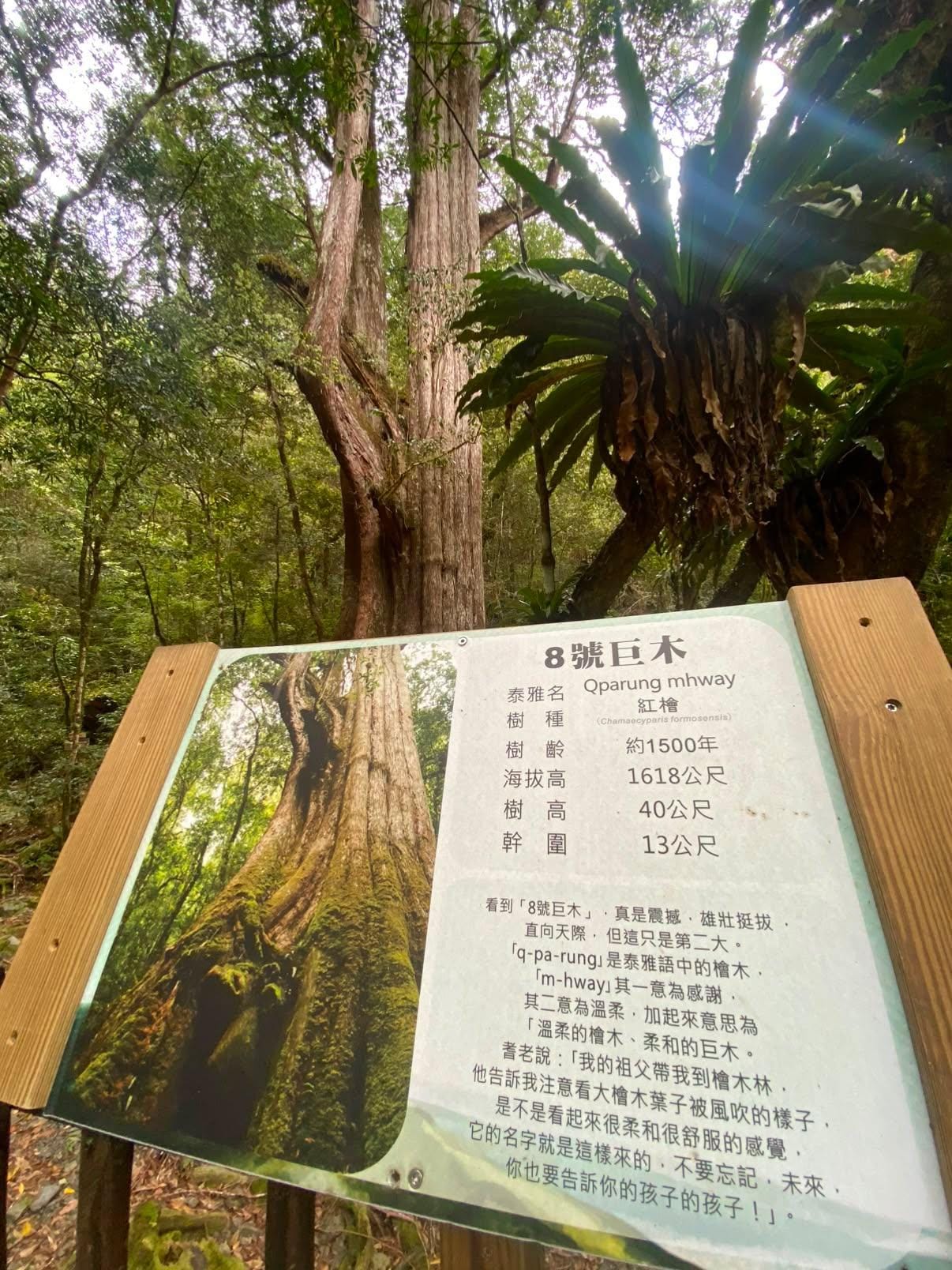
Tree No. 8, "Qparung mhway" — roughly 1,500 years old, 40 metres tall. © Carol Murpi
Every one of the great trees carries its own Atayal name. This one is called "Qparung mhway" — "q-pa-rung" is the Atayal word for cypress, "m-hway" means something like gratitude, or gentleness. At the foot of the tree, an information board tells of an elder recalling how his grandfather once brought him here and asked him to look closely: how the branches sway in the wind, so softly, so calmly. That's where the name comes from — along with a request to pass the story on to the next generation.
The sudden arrival of tourism also brought conflict: neighbours began competing for guests. The tribal council chose an unusual way out — the village would from then on be run as a cooperative, called "Tnunan Smangus." Inspired both by the early Christian community of goods described in the Book of Acts and by the Israeli kibbutz model, which a village delegation travelled to see for themselves. To this day, around 80 percent of the village's roughly 200 residents share work and income equally. Tasks — housekeeping, kitchen duty, reception, farming, guiding — are assigned according to ability and interest, organised across nine departments of the tribal council, from tourism to environmental conservation. On top of that come collectively funded subsidies for healthcare and education.
What You Experience There
Those who stay overnight live in one of the village's own guesthouses, eat in the communal restaurant, and get a glimpse of how a village that shares everything actually works. "It was fascinating to see how the restaurant works, the bakery and the reception," says the same traveller. She ate at the restaurant, tried the baked goods from the village's own bakery, and had a hot pot — "the food was great and the service excellent."
Meals are mostly served in the communal hall, buffet-style: outside, men grill large cuts of pork over an open fire, while inside, other villagers prepare the rest of the meal. Those who prefer can eat instead at the small café, which has its own menu. In front of the village store stands a large wooden bear carving — a popular photo spot, in keeping with the village's wood-dominated architecture, from the lamp posts to the furniture. The village's rhythm clearly follows the community itself, not its guests: one visitor recalls arriving to find the whole village at a wedding in the church — the restaurant stayed closed that evening, and he ended up cooking himself instant noodles. Not a service failure — simply a village that puts itself first.
Great energy in the forest, and a sense of respect for Mother Nature. The whole path to the forest is breathtaking.
— CAROL MURPI, TRAVELLER
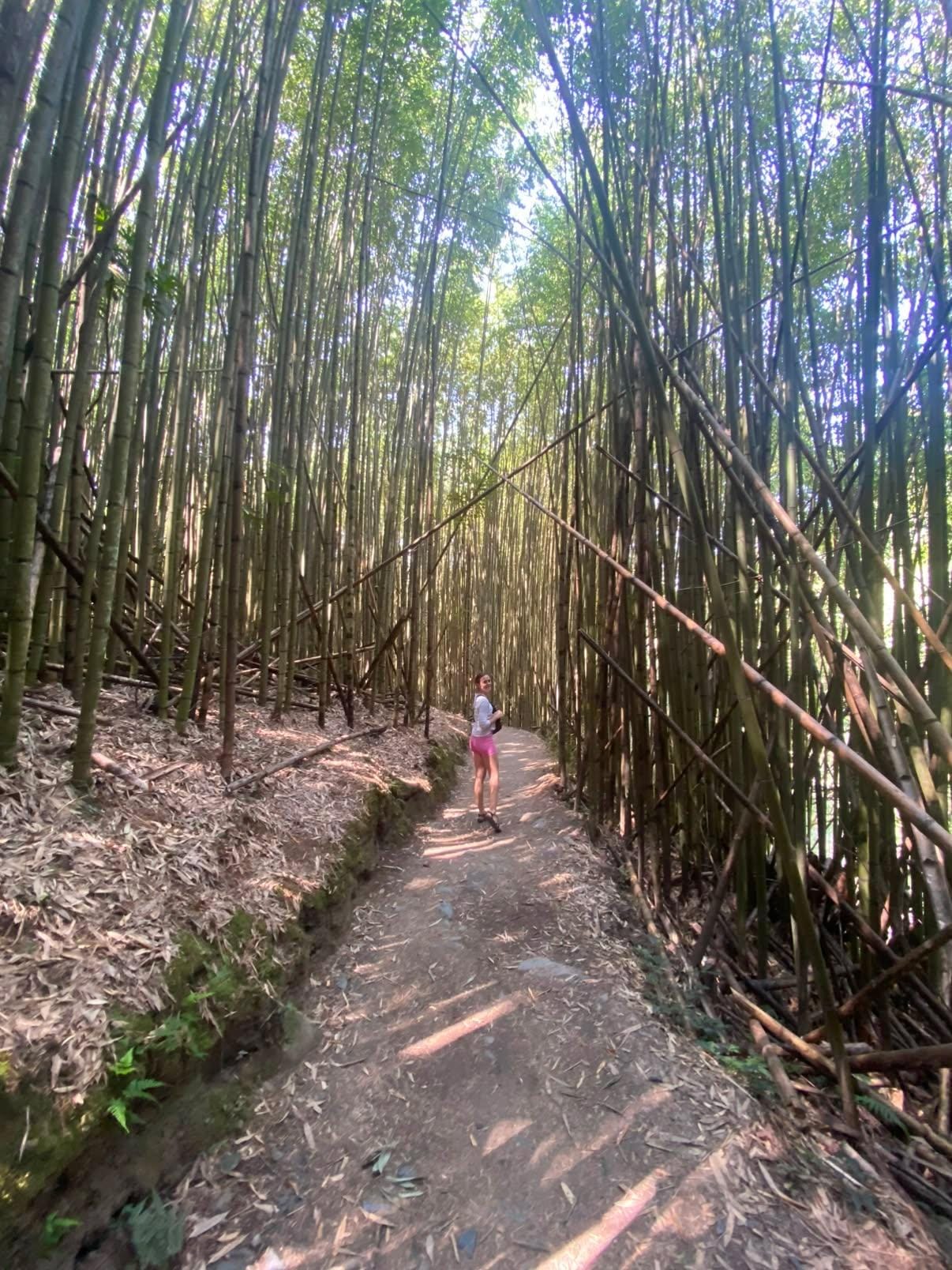
The path to the red cypresses also winds through dense bamboo forest. © Carol Murpi
The next morning, the trail leads into the forest, toward the red cypresses — past bamboo groves, along narrow paths that thread between the trunks. Those who wish can join the Sunday service, held in the Atayal language and open to guests as well. Since 2021, a deliberate limit has also been in place: a maximum of 50 vehicles a day for day visitors, overnight guests exempt — so that the forest stays what it is.
The People of Smangus
The residents are Atayal, one of Taiwan's 16 officially recognised indigenous peoples. Originally animist, they have been predominantly Christian since missionary activity in the 20th century — a background that also shapes the cooperative's ethos of shared property. The Atayal's traditional facial tattoos have all but disappeared today; what has survived is the art of weaving, which guests can still witness in the village. Hunting, too, remains part of daily life — practised in balance with the forest, not at its expense.
Children often move to other parts of the country to study, but many come back — because they value the community and recognise the potential of this place.
Who It's For
"Smangus is for nature lovers and people who want to have a great experience in nature with aboriginal culture," the traveller sums up — "families, couples and groups of friends." The journey takes some patience — the final stretch, along a narrow mountain road, is slow and winding. But it's worth it for anyone who wants to experience Taiwan's nature at its most untouched.
"It's worth it," she says in the end, "maybe go by car since it's a very long ride."
Smangus is a place for people who appreciate the aliveness of ancient trees. For anyone who wants to get to know an indigenous people that lived in such isolation for so long. For anyone who believes that there is strength in doing things together, and that something remarkable can be built that way. That's what Smangus is about. And that's why people come.
Practical Info
Best Time to Go
Possible year-round. February/March: cherry blossom season, especially popular and pricier.
Getting There
About 3–4 hrs from Hsinchu on winding mountain roads. The final 16 km are single-lane, passable only at fixed time windows. No public bus.
Cost
Roughly NT$1,500–6,000 (US$45–190) per night (double room), depending on category and season. Breakfast included, other meals extra.
Booking
By phone only — 03-5847687 / 03-5847688 — or via smangus.org. For weekends, booking 2–3 months ahead is recommended.
I haven't visited Smangus myself yet, but this cooperative has stayed on my mind for weeks. A village that decided not to compete over guests, but to carry everything together — that wouldn't work the same way in Europe. What moves me most is that the young people come back, even after studying in the city, because they recognise the potential this place holds. I'd love to stand in front of one of these thousand-year-old trees myself one day — and to learn more about Atayal traditions, of which there are surely still many left to discover.
— The Curator