Behind the Gate, Time Slows Down
How a 130-year-old hanok ensemble in the middle of Seoul shows that culture doesn't belong in a museum — it wants to be lived
Seoul is loud, bright, fast. Neon light, traffic, skyscrapers that glow at night like a second sky full of stars. And then, in the middle of the Bukchon district, an unassuming wooden gate. Step through it — and the city disappears.
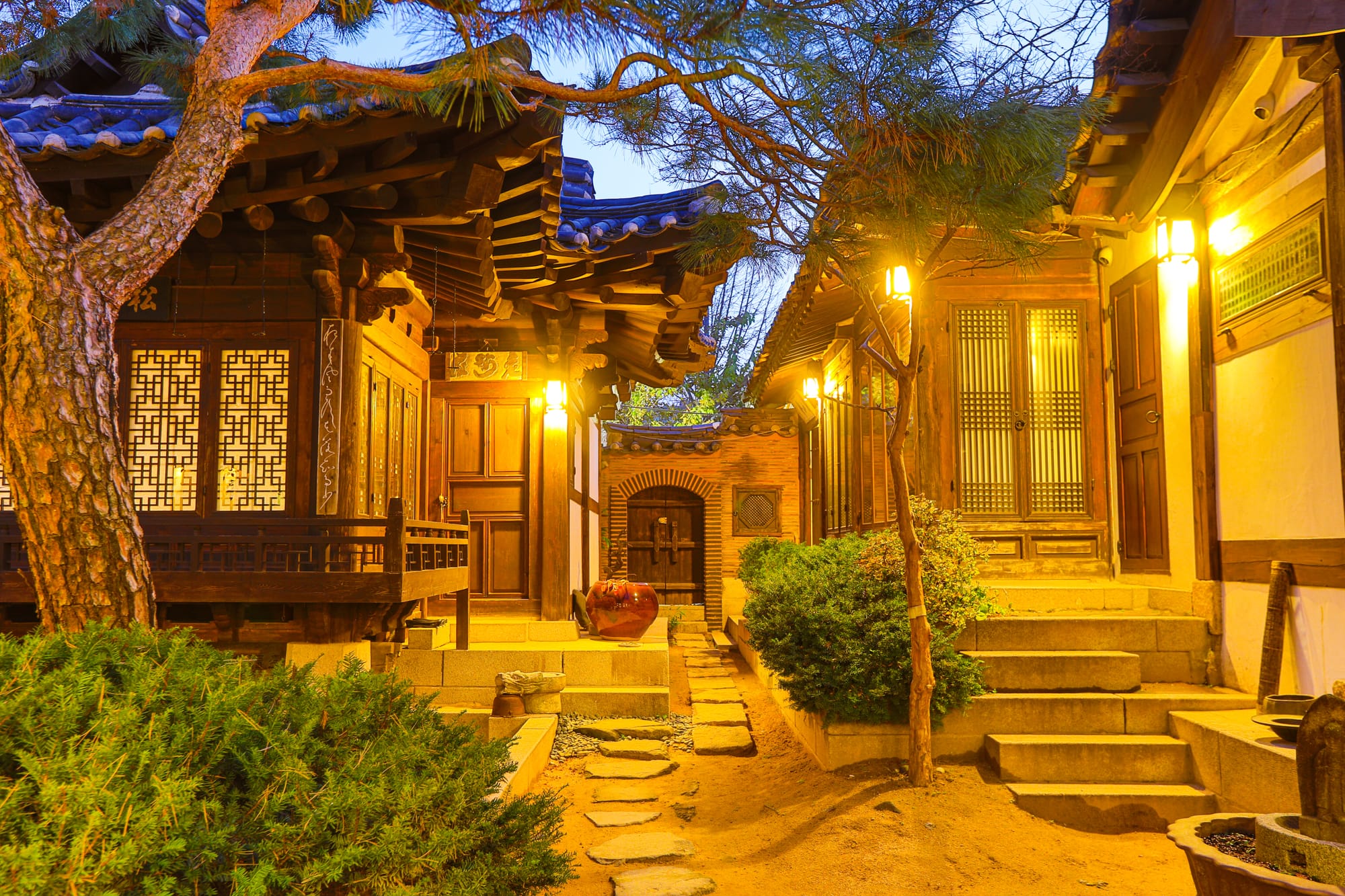
The moment the city vanishes behind you. — © Rakkojae Hanok Collection
No more traffic noise, no neon light. Just the sound of a courtyard, the creak of old wood, the slow movement of light across a curved roofline. You are standing in Rakkojae, a 130-year-old hanok ensemble, and you feel it immediately: time moves differently here.
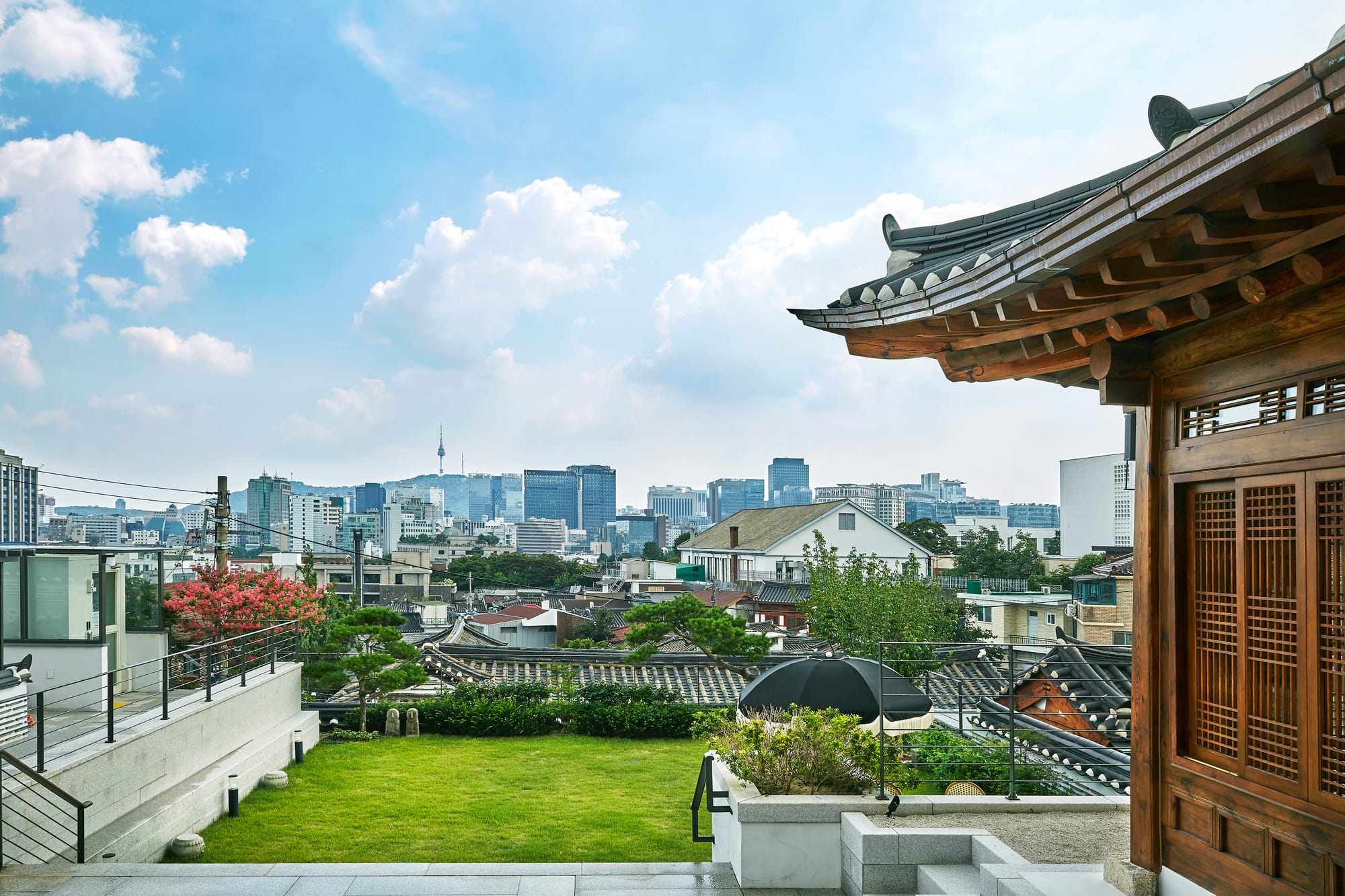
Two worlds, one view: the rooftops of Bukchon and, beyond them, the skyline of the metropolis. — © Rakkojae Hanok Collection
What it is
Rakkojae is one of the oldest surviving hanok houses in Seoul — a hanok is a traditional Korean wooden house, built without nails, with a curved tiled roof and heated floors (ondol). In the past, a fire was lit in the kitchen, and the hot smoke was channeled beneath the entire floor, warming the stone slabs before escaping through a chimney at the other end of the house — a principle that stores warmth in the floor for hours. The property was originally an aristocratic residence, later for a time a Confucian school.
Young Hwan Ahn, the founder of Rakkojae, wanted to preserve Korean culture and, for the 2003 restoration, brought in a master carpenter recognized as a holder of Korea's traditional architectural heritage. Together, with great love and dedication, the two turned the property into something extraordinary. It was the first hanok in Korea ever to become a hotel. In 2017, the first Michelin Guide Seoul listed it as the first hanok hotel ever included.
The price sits somewhat above that of comparable accommodation nearby — but there's a reason for that. Luxury was never the starting point. Ahn built Rakkojae because he watched traditional Korean houses disappear — and with them, the knowledge of how to build and maintain them. Hospitality became his way of keeping the architecture alive, rather than placing it behind glass.
What you experience there
Three connected hanok buildings, each with its own character: the "Far Bedroom" styled after a Chosun-era scholar's room, a "Master Bedroom" with a natural jade floor, a patio room with direct access to the courtyard. Welcome tea, a chance to try on hanbok, a clay sauna in the main hanok, a kimchi workshop for anyone who wants to get their hands in the dough. Breakfast is served Korean or continental style, delivered right to your room — a beautifully prepared Korean breakfast in bed leaves you feeling thoroughly looked after. That's exactly what sets Rakkojae apart from many other places to stay: the attention to the small things, not just the grand gesture.
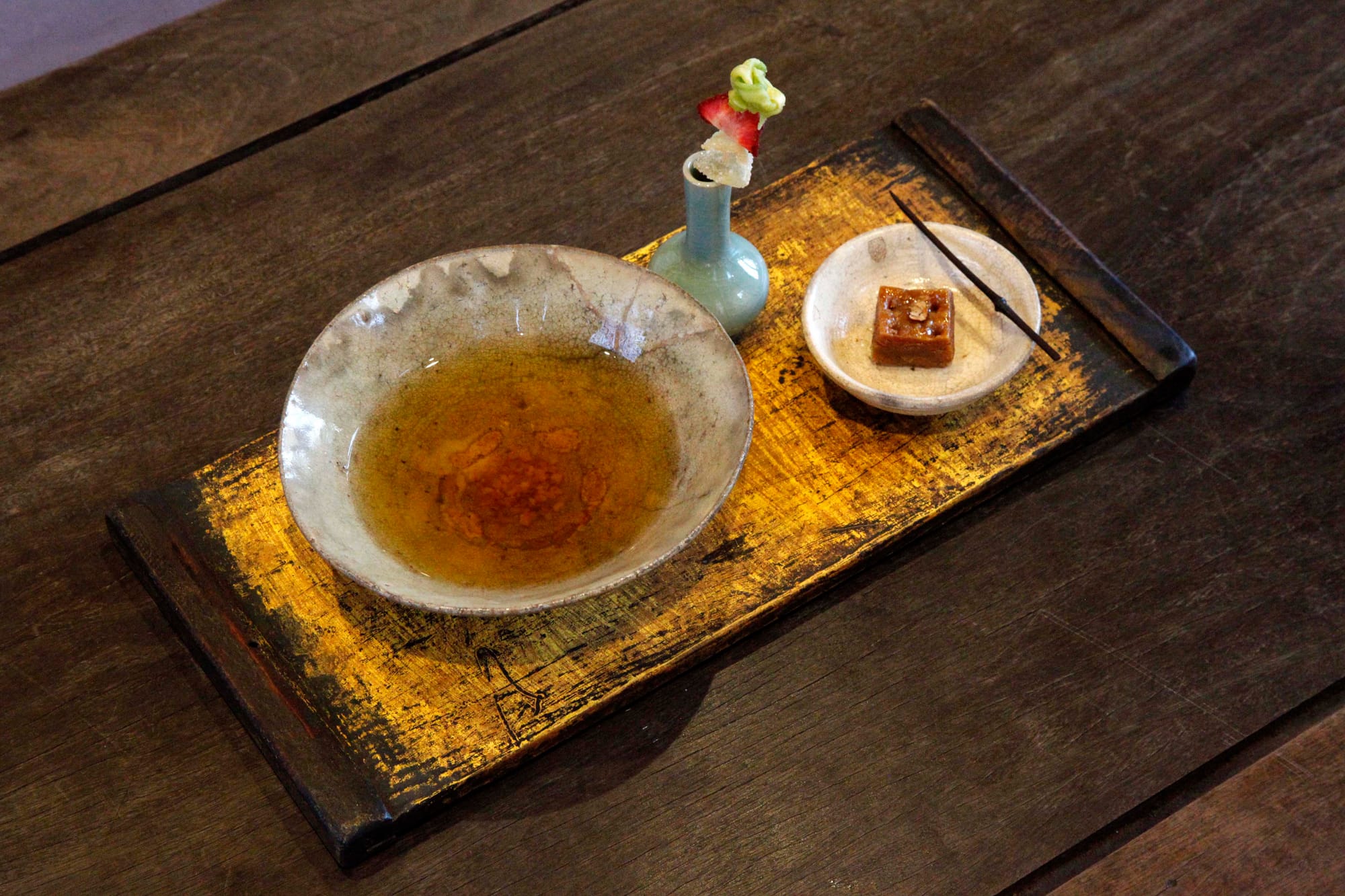
Breakfast arriving while the courtyard outside is still quiet. — © Rakkojae Hanok Collection
The real magic, though, can't be booked. Michael Jiwon Ahn, director of Rakkojae and son of the founder, describes it like this:
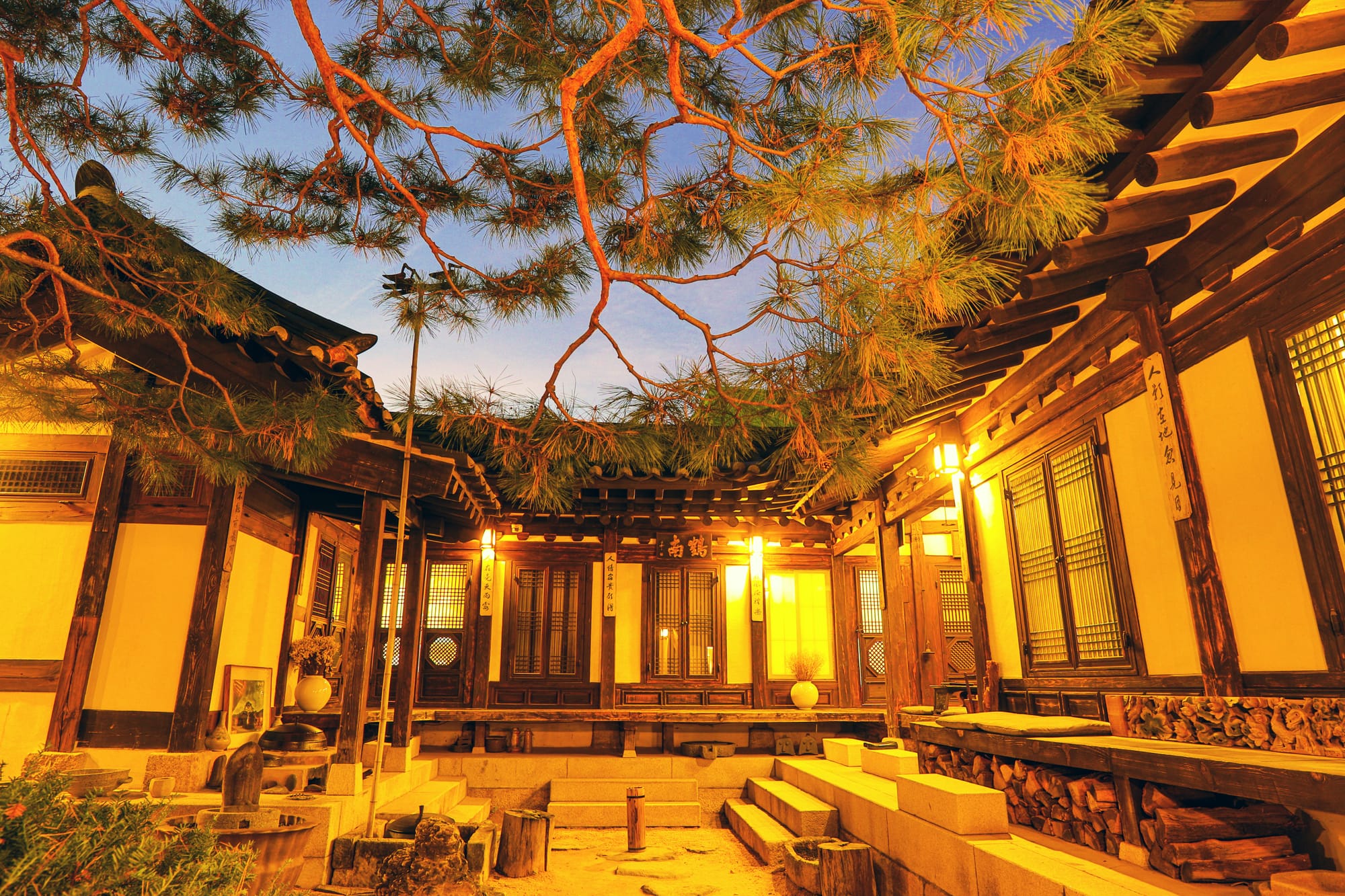
"For me, the magic is usually found late at night or early in the morning, when the courtyard is completely still. There may be the faint sound of rain on the roof tiles, wind passing through the wooden doors, or light beginning to appear beneath the eaves. Nothing dramatic is happening, but the house feels alive."
— Michael Jiwon Ahn, Director
Nothing dramatic happens — and that's exactly why it stays with you.
The people behind it
Rakkojae remains a family affair to this day. Young Hwan Ahn runs the house as president, his son Michael Jiwon Ahn as director. The father, Young Hwan Ahn, also founded the carpentry school out of conviction: he realized that it wasn't only the buildings that were disappearing, but the craft along with them. Through the school, he wants to contribute to preserving the tradition. Carpenters trained there continue to work on the buildings to this day — because a hanok is never truly "finished." It demands constant care, constant understanding.
That is also where the biggest open challenge lies, as Michael himself openly admits: traditional buildings are expensive and difficult to maintain, and the balance between preservation, accessibility for guests, and financial reality remains a constant balancing act. In his own words:
"Our biggest unresolved challenge is how to preserve authenticity while remaining economically sustainable. Traditional buildings are expensive and difficult to maintain, and genuine hospitality requires far more care than simply operating a beautiful space. At the same time, commercialization can quickly dilute the very qualities guests come to experience. We are constantly trying to find the balance between preservation, accessibility and financial reality."
— Michael Jiwon Ahn, Director
Michael also pushes back on a common label:
"Rakkojae is sometimes described simply as a 'luxury hanok hotel.' While understandable, that description can be misleading. Luxury was never the original purpose."
— Michael Jiwon Ahn, Director
Who it's for
Here, you experience Korean culture in a truly special way, with great attention to detail — not just the architecture, but also Korean craftsmanship, clothing, the small rituals of everyday life.
Practical Information
Location
Gye-dong, Jongno-gu, Seoul — right in Bukchon, near Anguk subway station
Cost
From approx. 230,000–275,000 KRW per night for two people (≈ 163–195 USD, exchange rate fluctuates)
Booking
Directly via rakkojae.com, by phone, or through international partner platforms
Getting there
Fly to Seoul Incheon, then the AREX train or a taxi into the city center
Note
Children under 12 cannot stay overnight, per house policy
Tours & Activities
A kimchi workshop, tea ceremonies, the chance to try on hanbok, and a traditional clay sauna are all part of the standing offer. Guests who stay longer can explore the neighboring Bukchon Hanok Village on foot — most memorable early in the morning, before the alleys fill up.
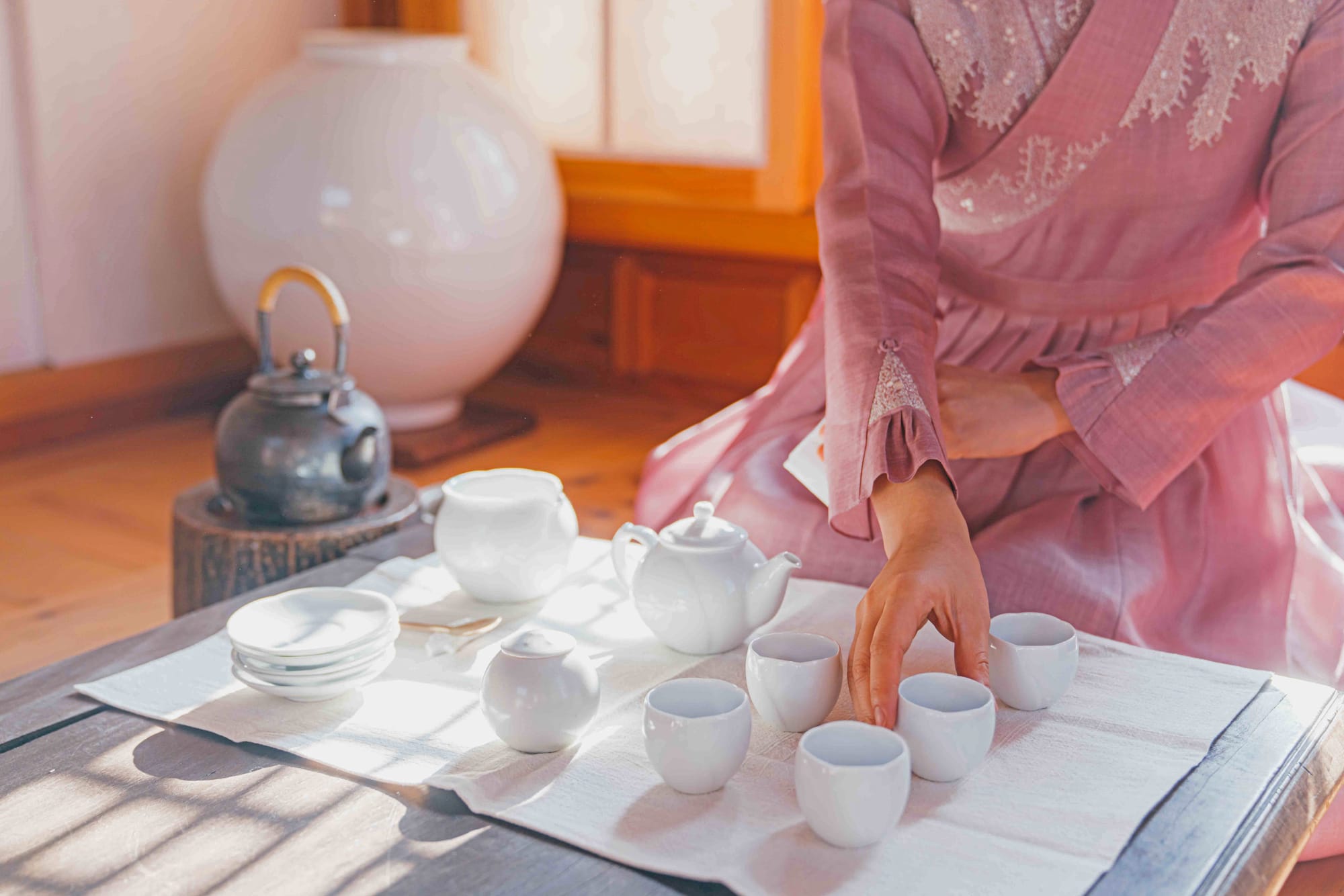
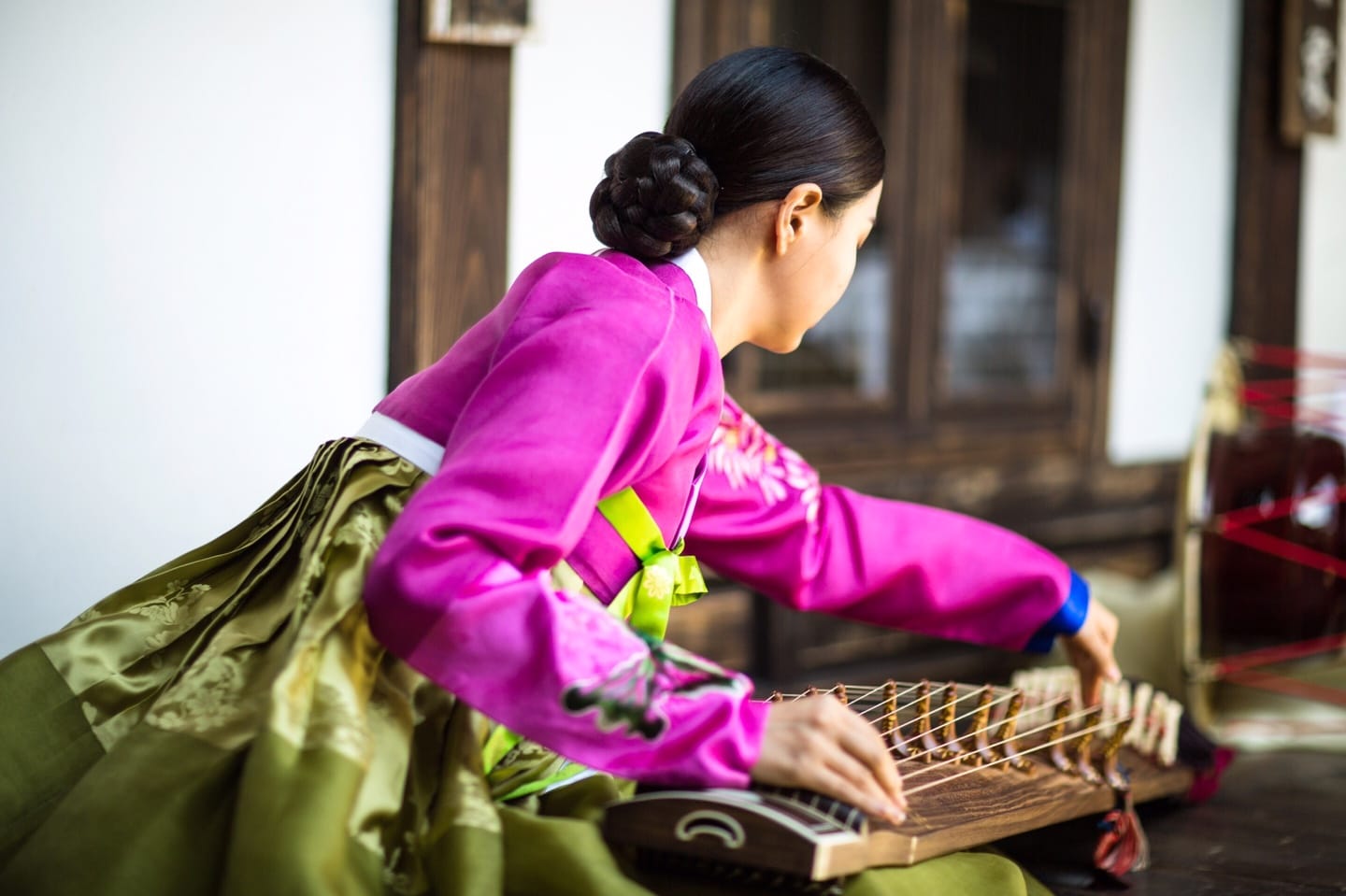
Tea ceremony and traditional music, part of the cultural program around the house. — © Rakkojae Hanok Collection
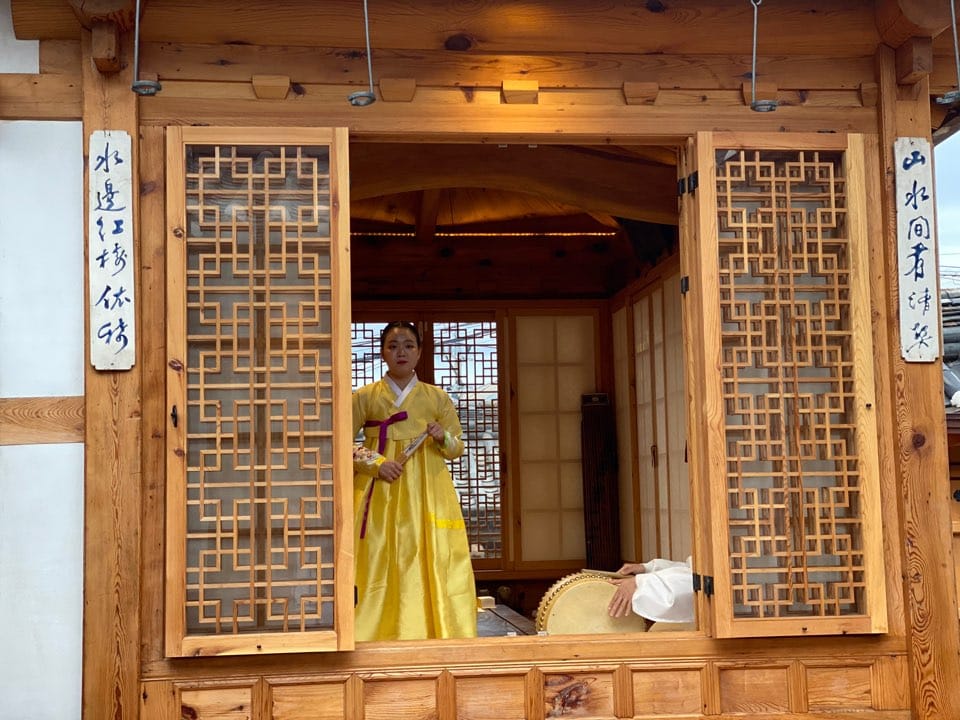
Those who wish can try on hanbok themselves and experience the sound of tradition. — © Rakkojae Hanok Collection
I have never been there. But I can picture exactly how that moment must feel: leaving the loud, glowing Seoul behind and stepping through a simple wooden gate into another time.
What moves me most about this story isn't the building itself — it's the attitude behind it. For the father, Korean culture was never something to put behind glass and look at. It's something you feel, something you live, something you pass on. That's why the carpentry school exists. That's why there are tea ceremonies, craft workshops, clothes to try on. Not as a backdrop — as a living continuation.
And then there's the one line from the interview that hasn't left my mind since: the magic moment, he said, is when the wind moves through the old doors late at night or early in the morning, and maybe rain falls on the roof. No spectacle. Just a house that's alive. That, to me, is the heart of Wander Wonders — not the grand gesture, but the quiet moment you have to make time for.
— Claudia