Under the
Great Tree
Salt from a well two thousand years old, ham cured in mountain air, herbs from the slope: in Nuodeng, people live the way they always have.
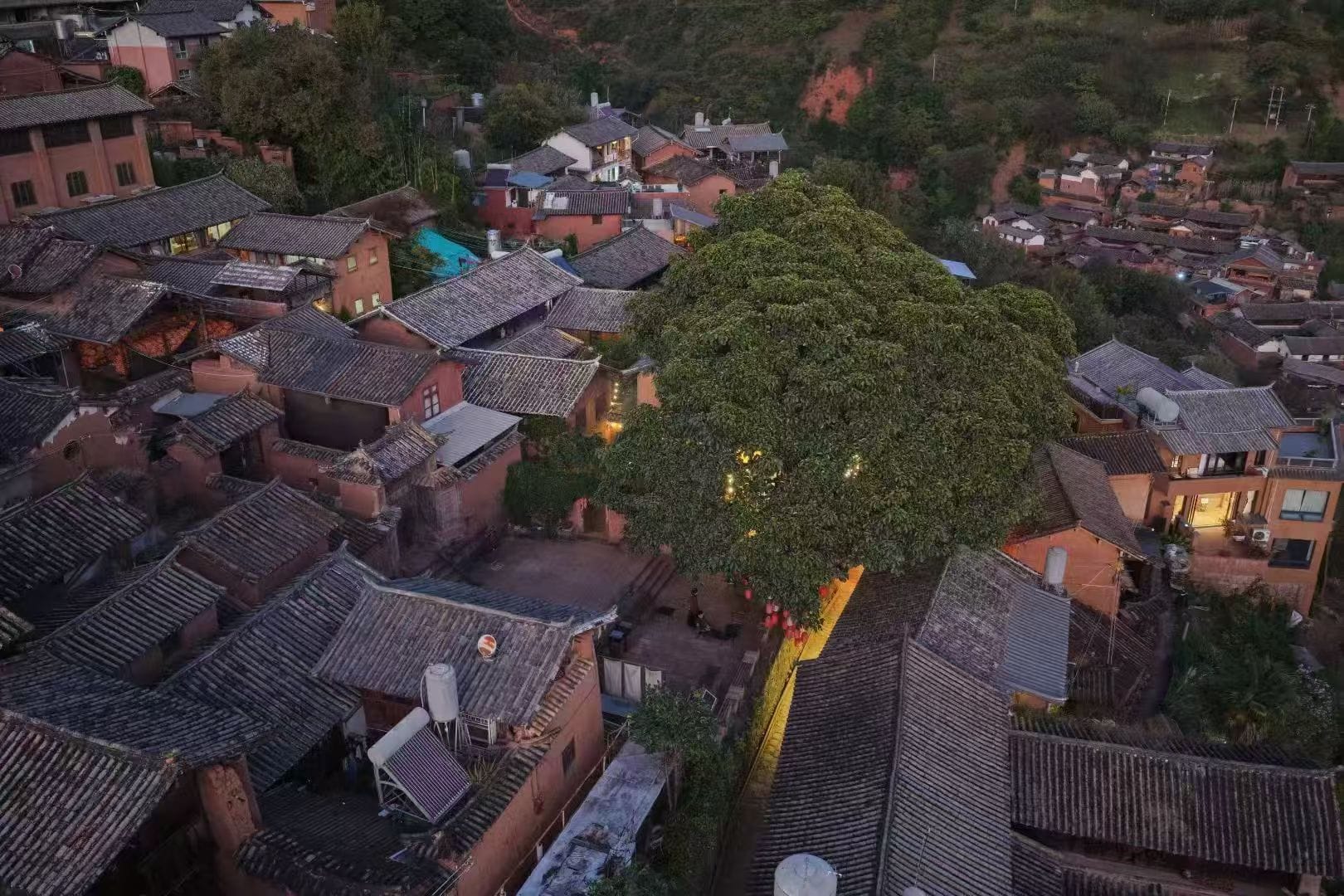
It began with a thunderstorm and two French travellers. Today this courtyard smells of herbal broth, and the village of aged ham, and anyone who stays here sleeps in a house that has belonged to the same family for three hundred years. Nuodeng is a village in Yunlong County, built into a hillside. People come for its living tradition — for the residents who stayed, the houses that were kept, and the bond between a host and this house, this ground.
Cars reach the village entrance and no further. What would be a street elsewhere is here a stretch of the old Salt Horse Road, and the stone steps wind uphill between yellow earthen walls.
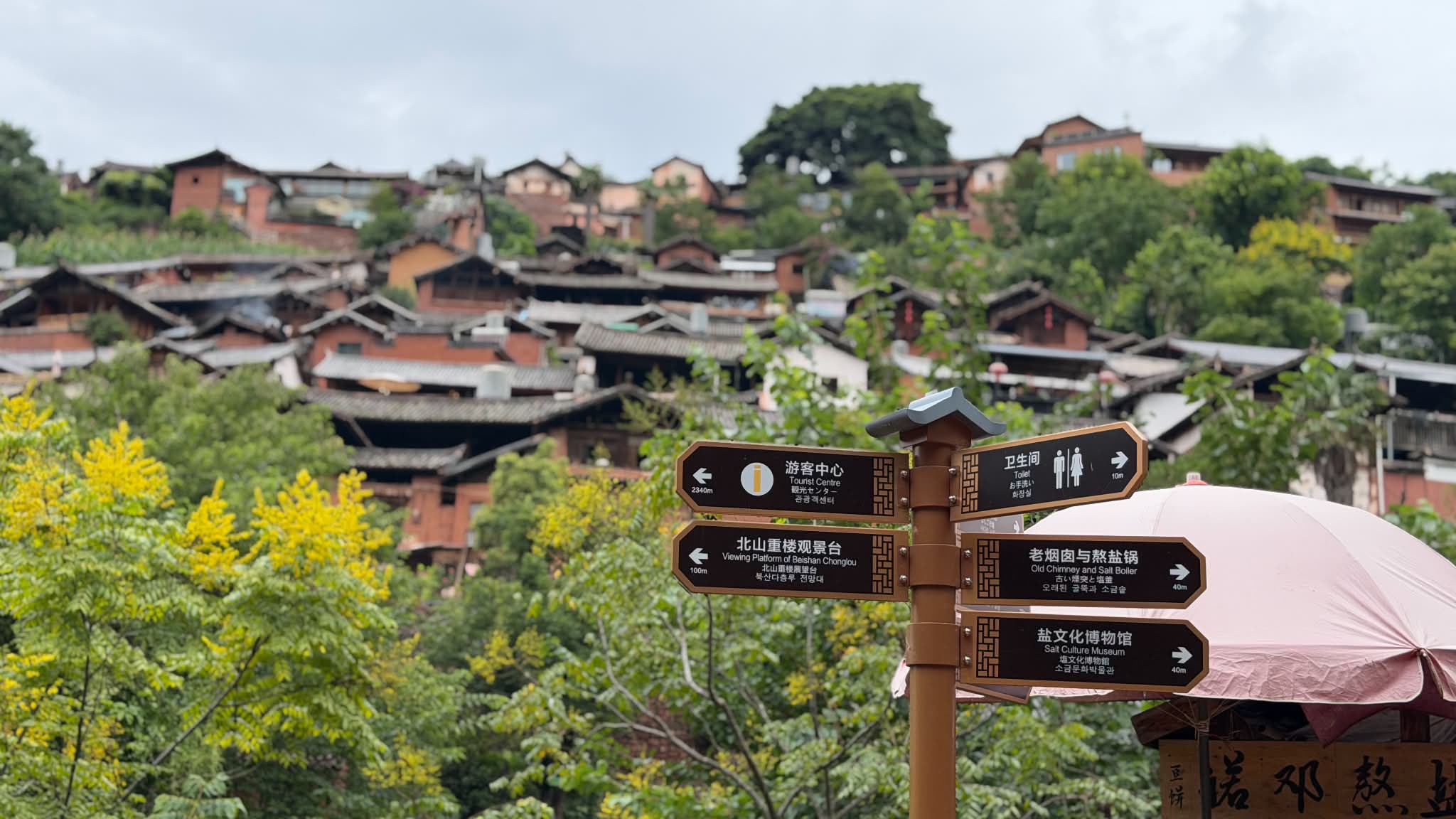
The signposts point to the old chimney and the salt boiler — © Simon Sonng
What this is
Nuodeng exists because of salt. The brine well the village is named after was dug in the Han dynasty and is over two thousand years old. The village name first appears in a chronicle in 863 and has not changed since. Salt made a mountain village wealthy: during the Kangxi era, more than eighty percent of the entire tax revenue of Dali Prefecture came from Yunlong. Caravans from Tibet and Burma brought jade and medicinal herbs and left with salt and tea.
Wealth meant education. The salt merchants put a share of their profits into schools and built temples — more than twenty stood within a very small area. In the Yuhuang Pavilion at the very top, dedicated to the Jade Emperor, three storeys and entirely of timber, a Confucian temple, a Maitreya hall and a Guandi temple stand side by side; on the ceiling, a painting of the twenty-eight lunar mansions, the old Chinese star map.
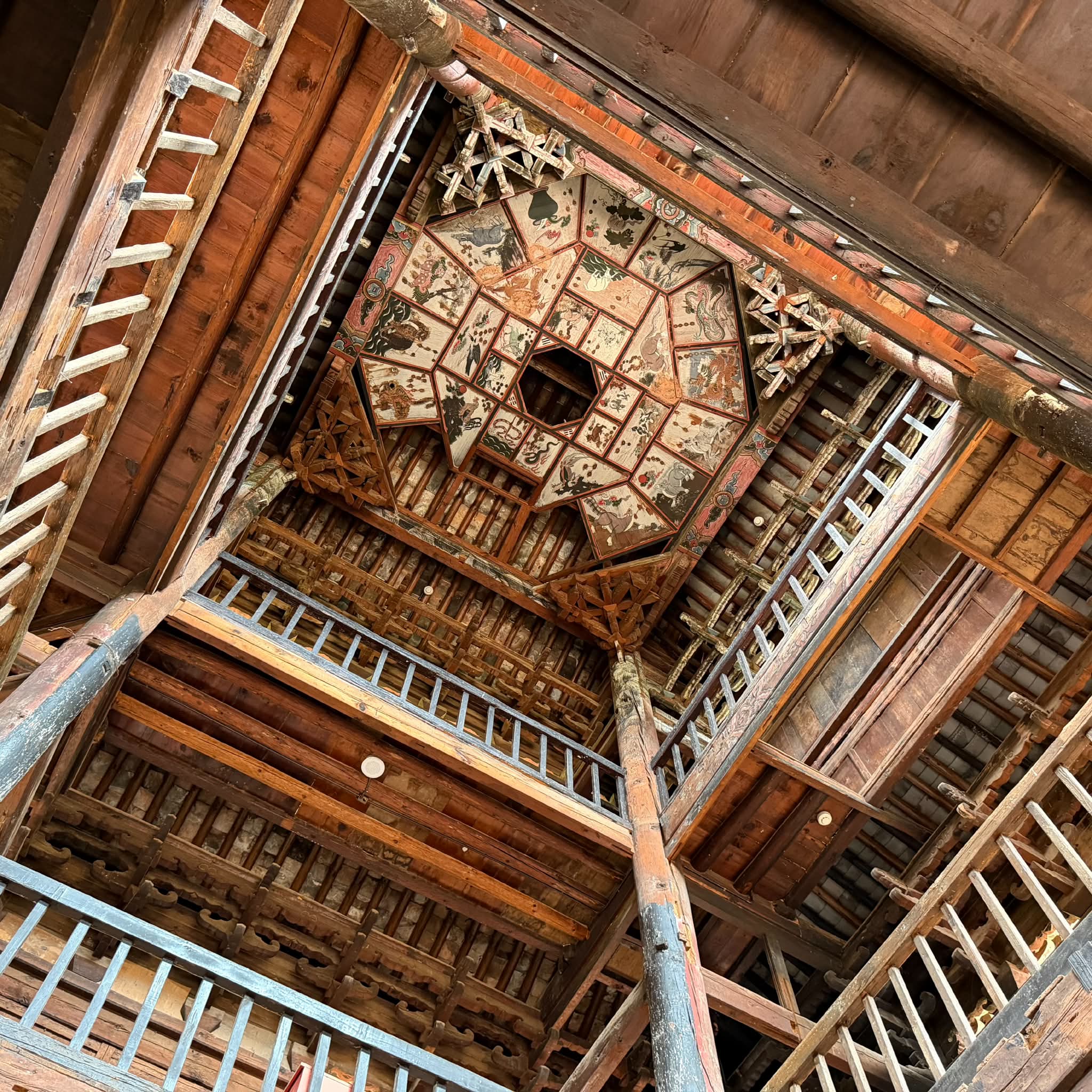
The coffered ceiling of the Yuhuang Pavilion shows the twenty-eight lunar mansions — © Simon Sonng
The village became known in 2013, when the documentary series A Bite of China featured Nuodeng ham. Its flavour comes from the salt of this well.
What you experience there
This is a village with deep tradition. Barely any shops, no attractions. The customs are simple and sincere, but nobody makes a deliberate effort to please tourists — they simply show what is there. It is quiet. What you hear is the jingle of mules and horses, birdsong, mountain wind, and in the evening the voices of villagers.
What you smell tells the whole story of the place in a single breath.
In the air, the scents of soil, firewood and salted ham are mixed, and occasionally the faint smell of brine from the old salt wells drifts through.
— SIMON SONNG, TOUR GUIDE
At the old well, salt is still made by hand: draw the brine, filter it through fine linen, boil it for hours in a cast-iron pan until nothing remains but crystals.
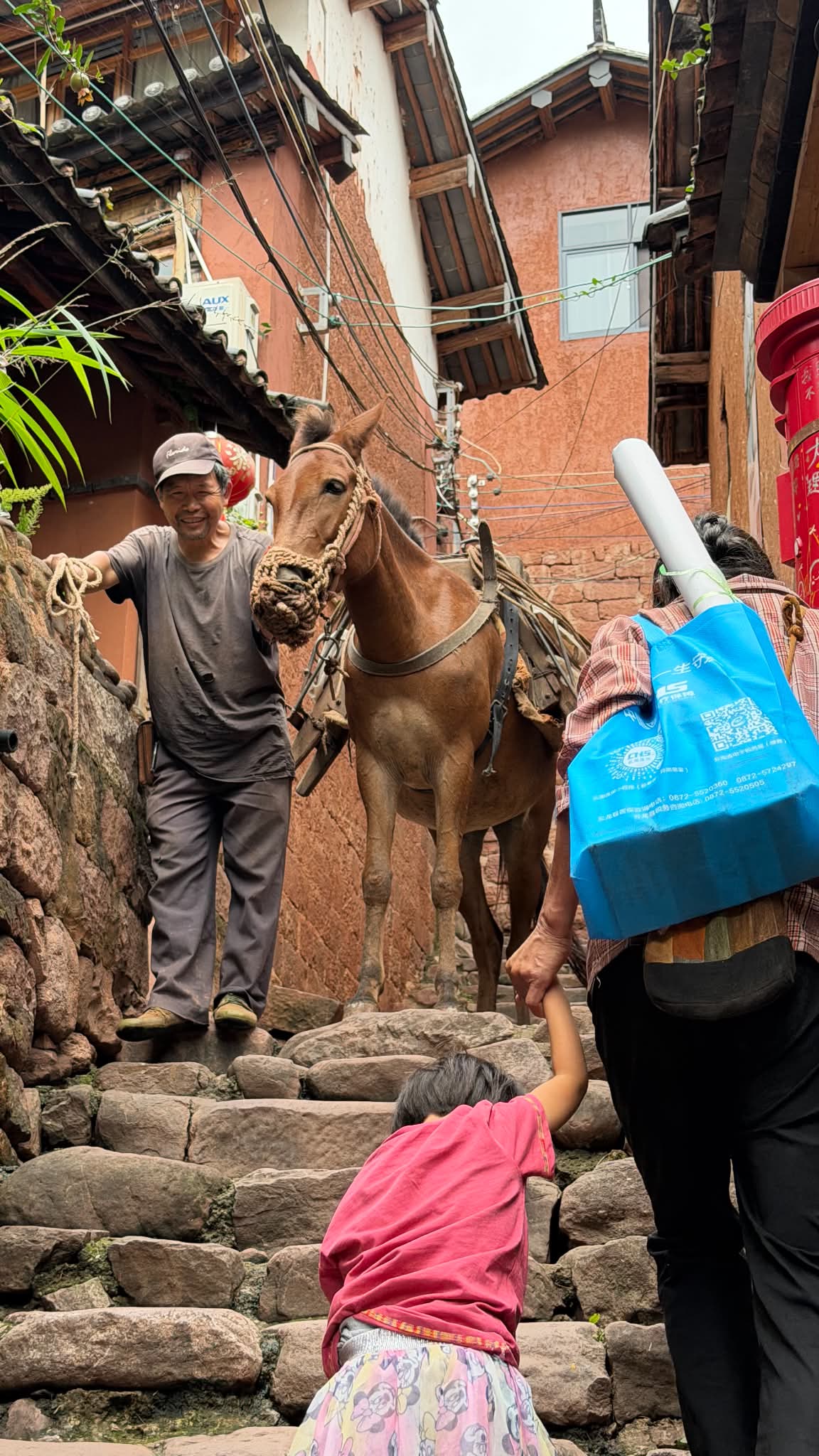
Everything needed for daily life is carried up the steps — © Simon Sonng
Climbing to the Yuhuang Pavilion at the summit takes some effort. On the way you meet residents who live further up — one carries a fifty-kilo sack of rice in his basket. Everything needed for daily life is carried up to the houses on the mountain this way.
Meals are taken at the guesthouses higher up: stir-fried ham, ham with seasonal vegetables, wild mushrooms, buckwheat cakes, ersi rice noodles. What stays with you longest is the air-dried ham — matured over years, with a distinctly aged flavour. You taste the mountains and the salt in it.
This is not a built set. The Bai still live here. Elderly people sit in their doorways and work. Villagers take their livestock out and dry sausages. There is no bar street, no trend-driven shops; the guesthouses and restaurants are essentially farmhouses.
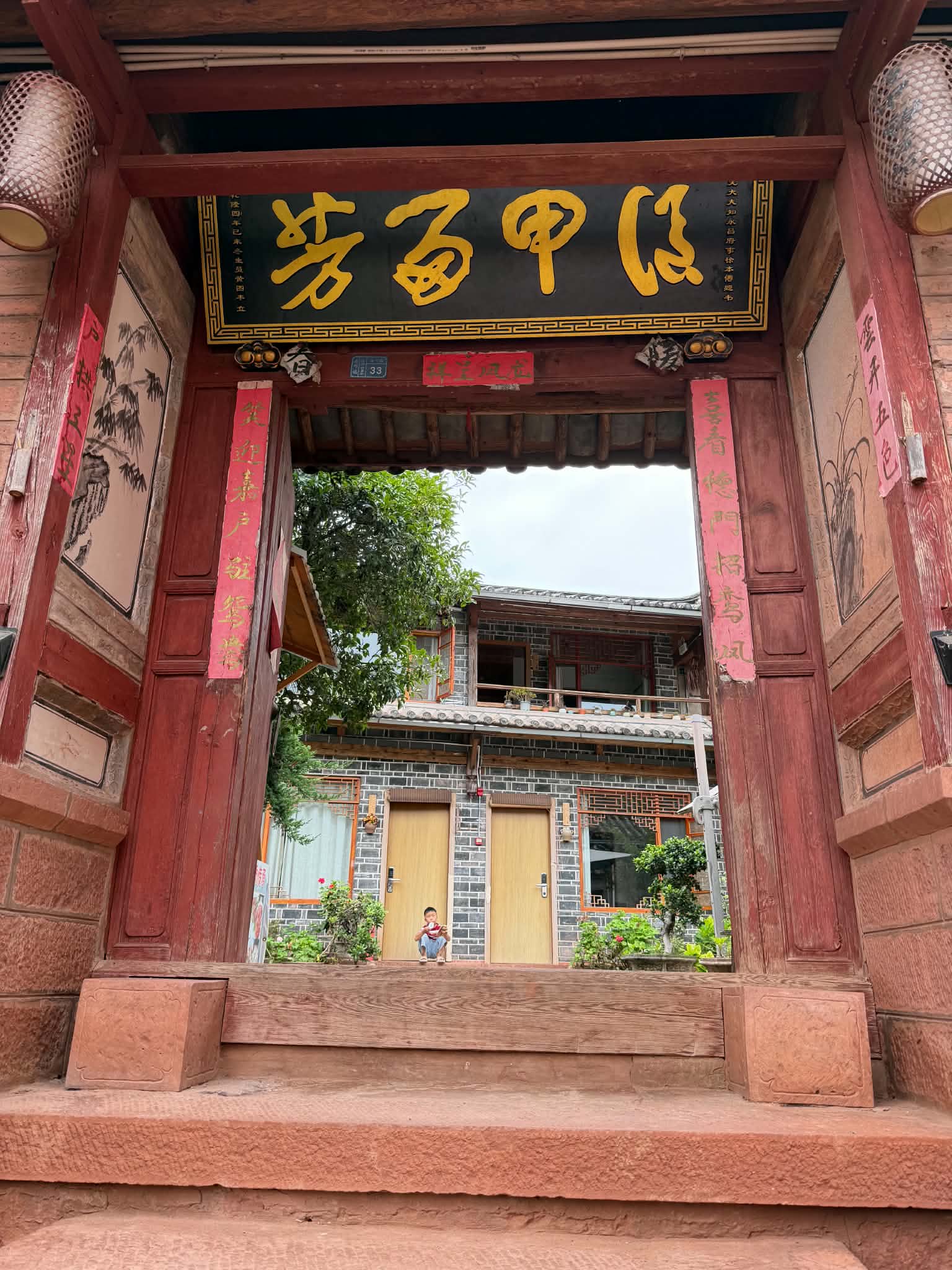
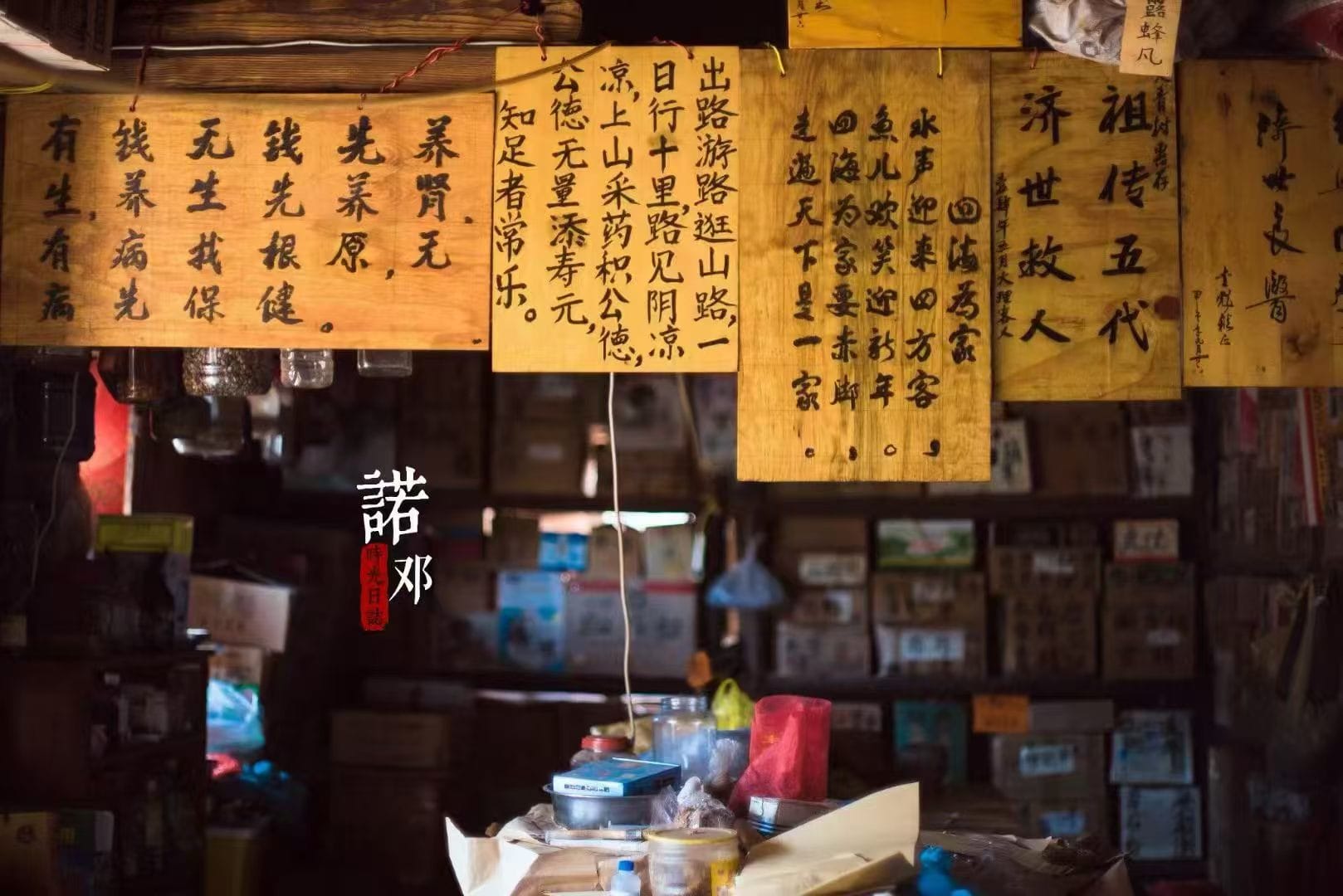
A view through a courtyard gate — © Simon Sonng · Inscribed wooden boards above a herbal shop — © Daqingshu Inn
The people behind Daqingshu Inn
In the centre of the village stands a banyan tree, over five hundred years old. Beside it, a stone gate. It was once the entrance to the salt tax office; when the authority moved away, the Huang family took over part of the grounds and rebuilt the official gate into a plaque recording the names of family members who passed the imperial examinations.
One of them is Huang Gui, known as the great Confucian scholar of central Yunnan; the family tells that he turned down a career at court in order to stay in the village and teach. His courtyard still stands three hundred years later. The family running it today is the twentieth generation of the Huang.
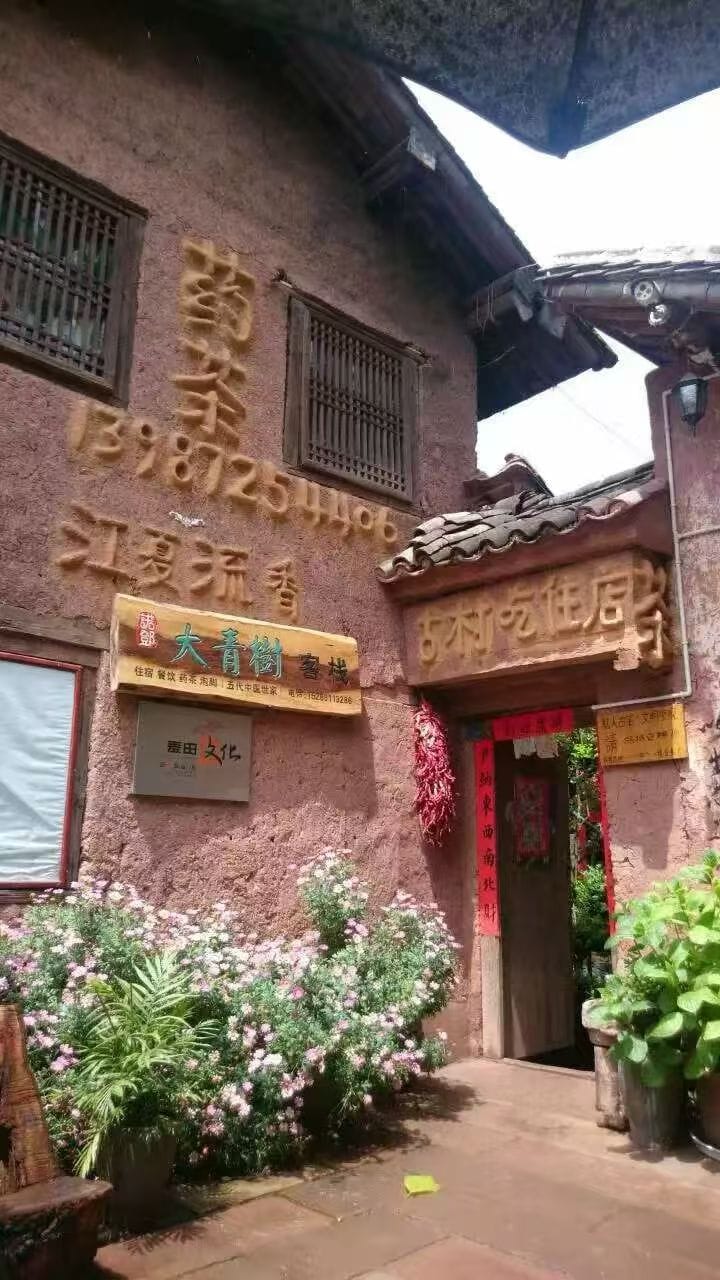
The entrance to Daqingshu Inn — © Daqingshu Inn
That guests would one day sleep in this courtyard was really an accident. In 1998, a thunderstorm stranded two French travellers who asked for help using hand gestures. The mother of the house had never seen foreigners and was afraid. The father said: “When you are away from home, you help if you can.” He built two beds from benches, boards, straw mats and a large flowered quilt, so the two would not have to spend the night in the rain. On leaving, they left behind a dollar.
Fifteen years later the telephone rang. Could he stay a night, a traveller asked, ten yuan would be fine. Huang Liangyu, whom everyone calls Ayu, warned him: it is simple here, there may be caterpillars and fleas. As long as there's a bed, he said. Late that night the father carried his heavy suitcase up the mountain. The next morning the guest declared: “From tomorrow I'll eat with you. Whatever you eat, I'll eat.” And so, at a guest's express request, the first house in Nuodeng offering food and lodging came into being. It is named after the tree under which it all began: Daqingshu, great green tree.
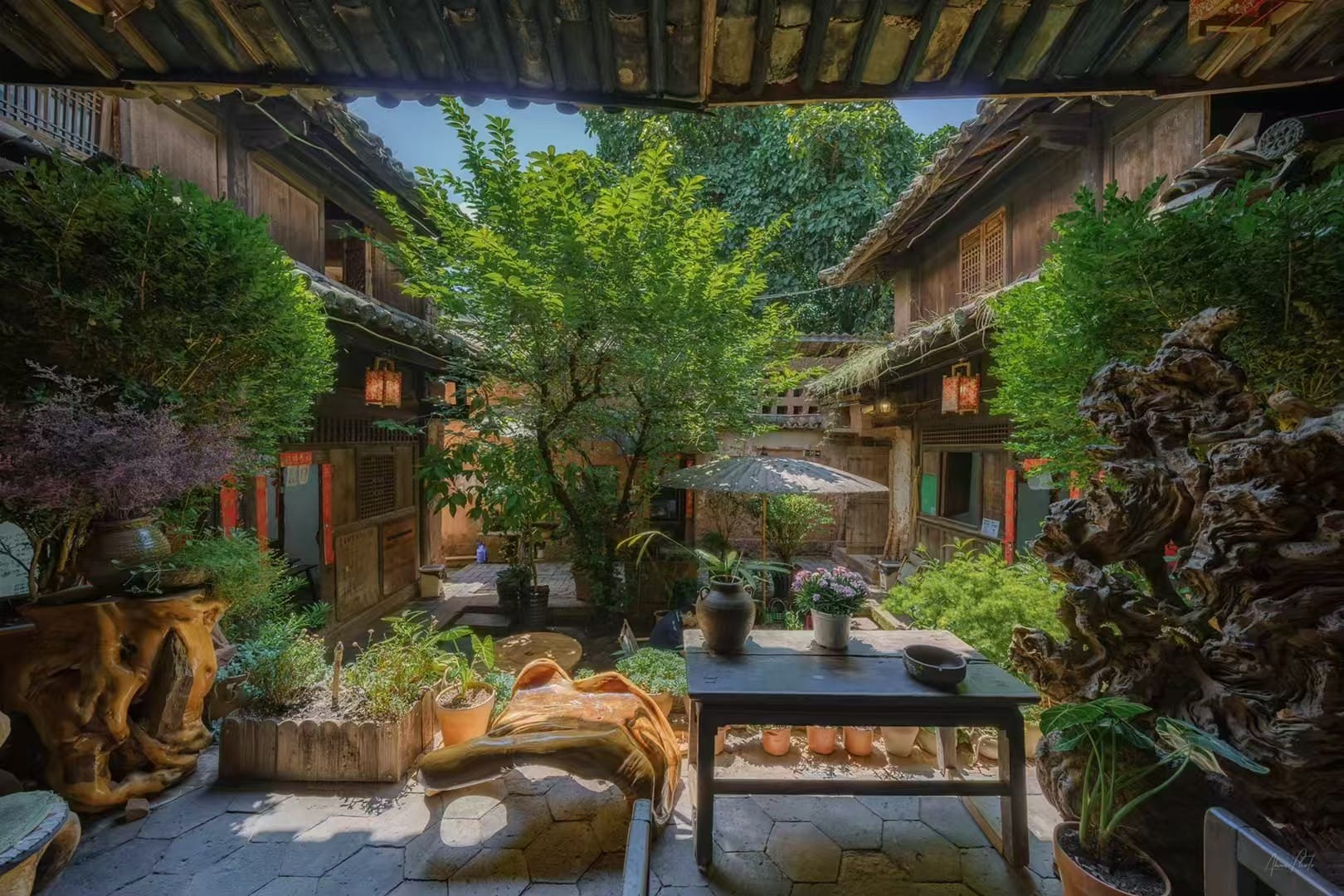
The three-hundred-year-old courtyard — © Daqingshu Inn
When Ayu came back after her studies, she wanted to rebuild the old courtyard. Her mother refused.
Destroying is easy, restoring is hard. Guests come to Nuodeng precisely to see these old things. Tearing down takes only three days. But should you want to restore it — it never comes back.
— AYU'S MOTHER
The hardest thing is never finding an old house and dressing it up to look old, but finding that balance between preserving and changing, which is so difficult to hold.
— AYU, HOST
The family found another way: a second, new courtyard, into which all the modern comfort went, placed where it would not touch the foundations of the old house. They could not afford an architect, so they felt their way forward themselves, step by step. “Anyone staying here can touch three hundred years of time and still doesn't have to endure the cramped chill of an old house,” Ayu says.
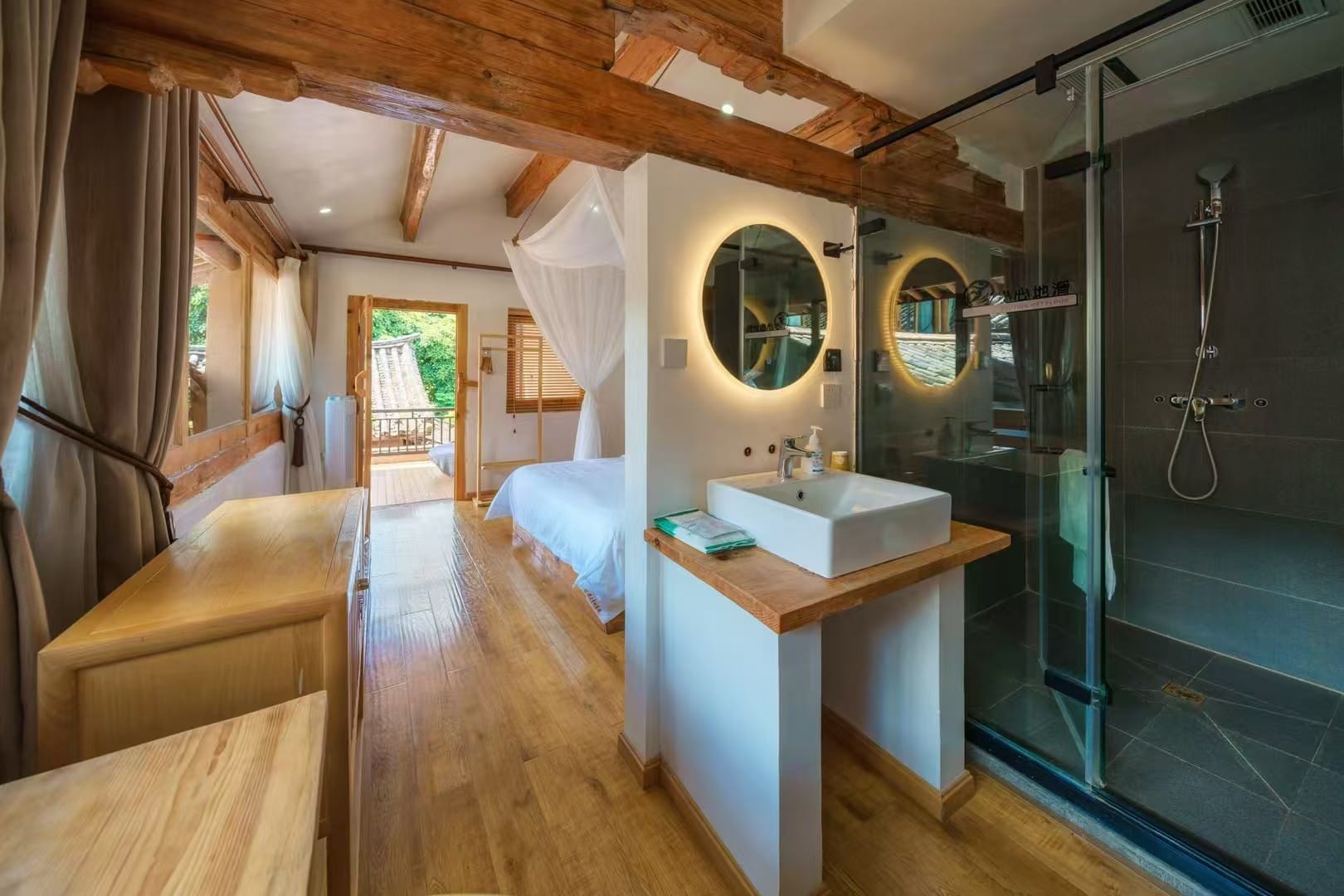
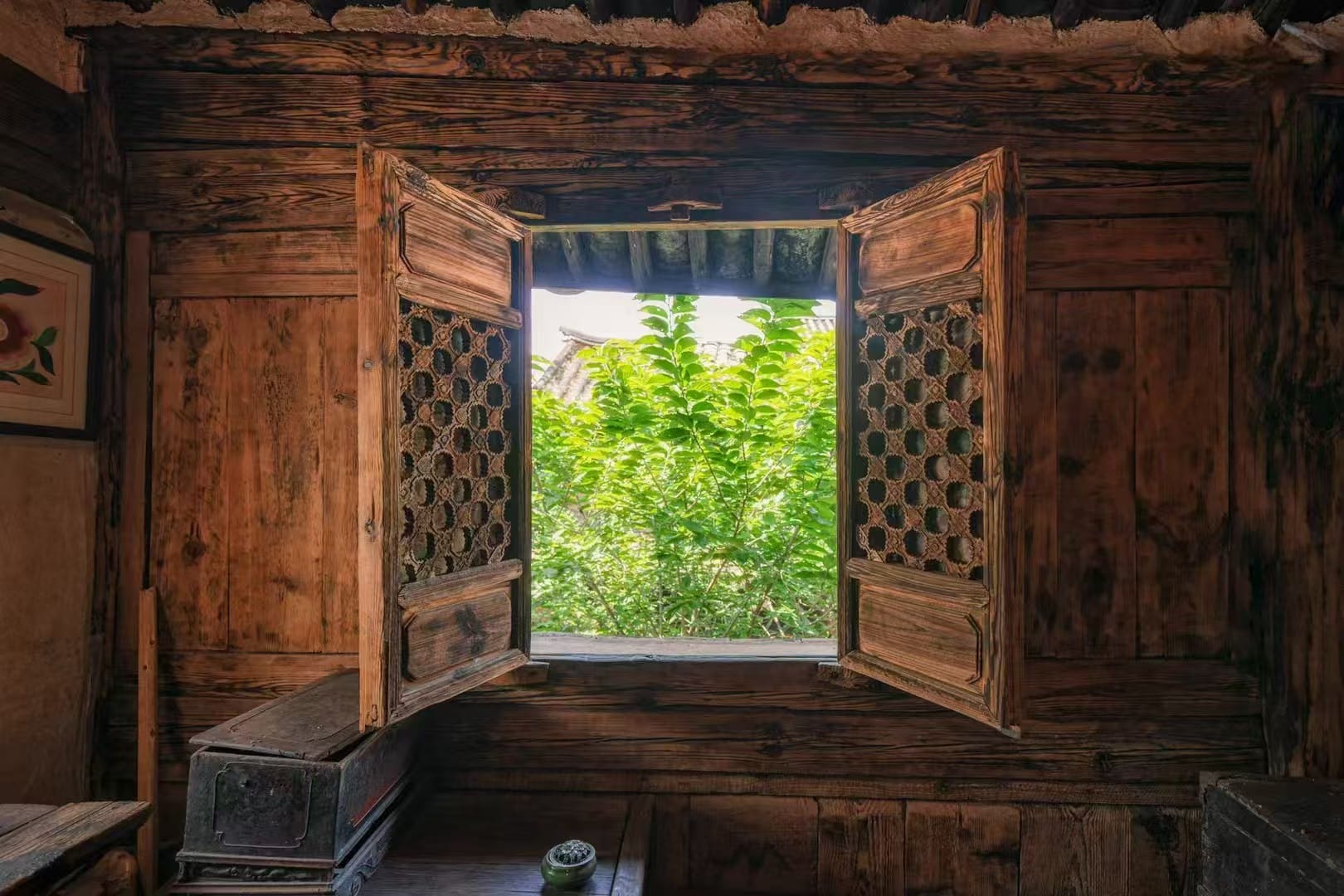
In the new courtyard: modern comfort beneath old beams. In the old courtyard, everything stayed as it was — © Daqingshu Inn
It took her a long time to understand that the house is not the business but the task: “I don't run one room after another, I tend the roots of my own family, I guard the life of an old house.” And what she tells her guests, she says, is not a guide you could find online.
There is one thing in this courtyard you cannot book anywhere, and it is nonetheless the heart of it all. The father gathers the wild herbs himself in the mountains, more than twenty of them. The grandfather, ninety-three years old, has insisted all his life on boiling them over a wood fire. You bathe in a tub of twenty-year-old albizia wood — first the steam, then the bath.
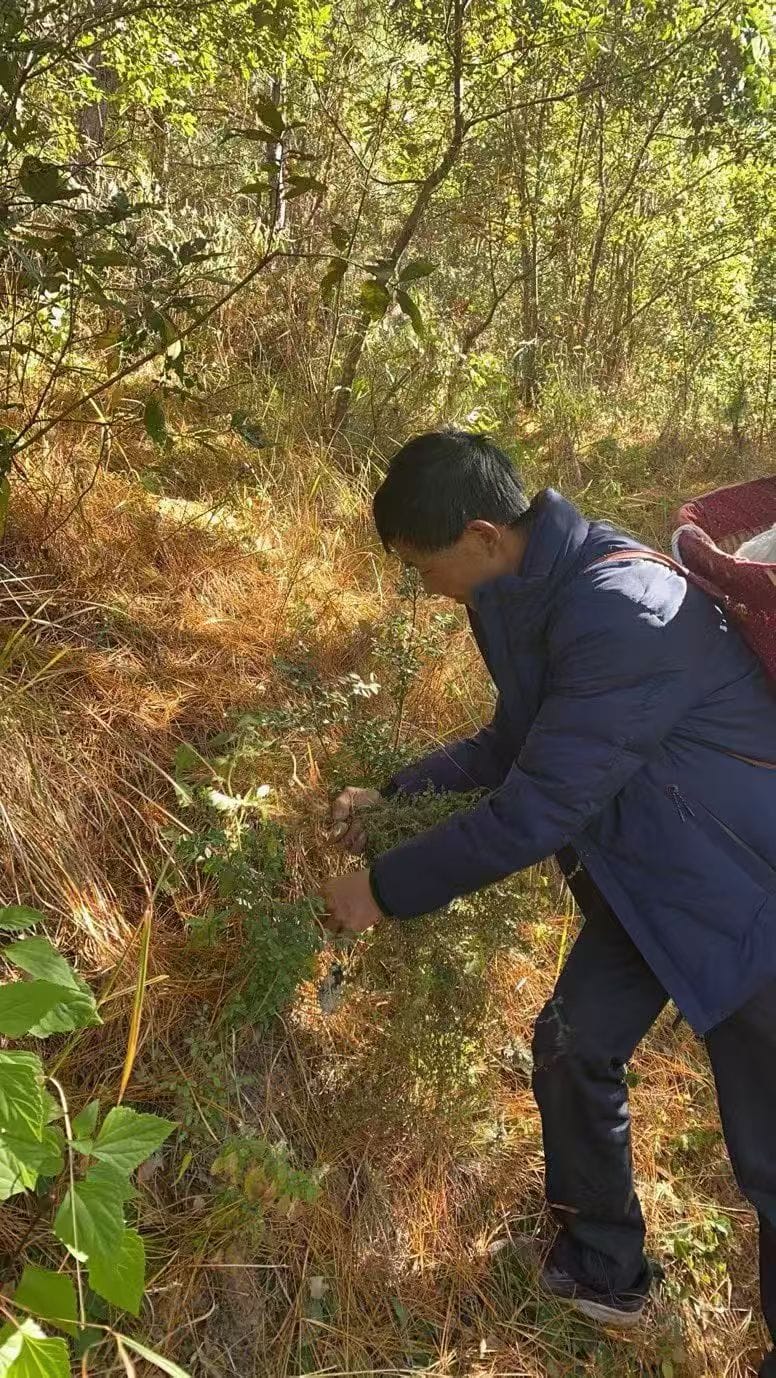
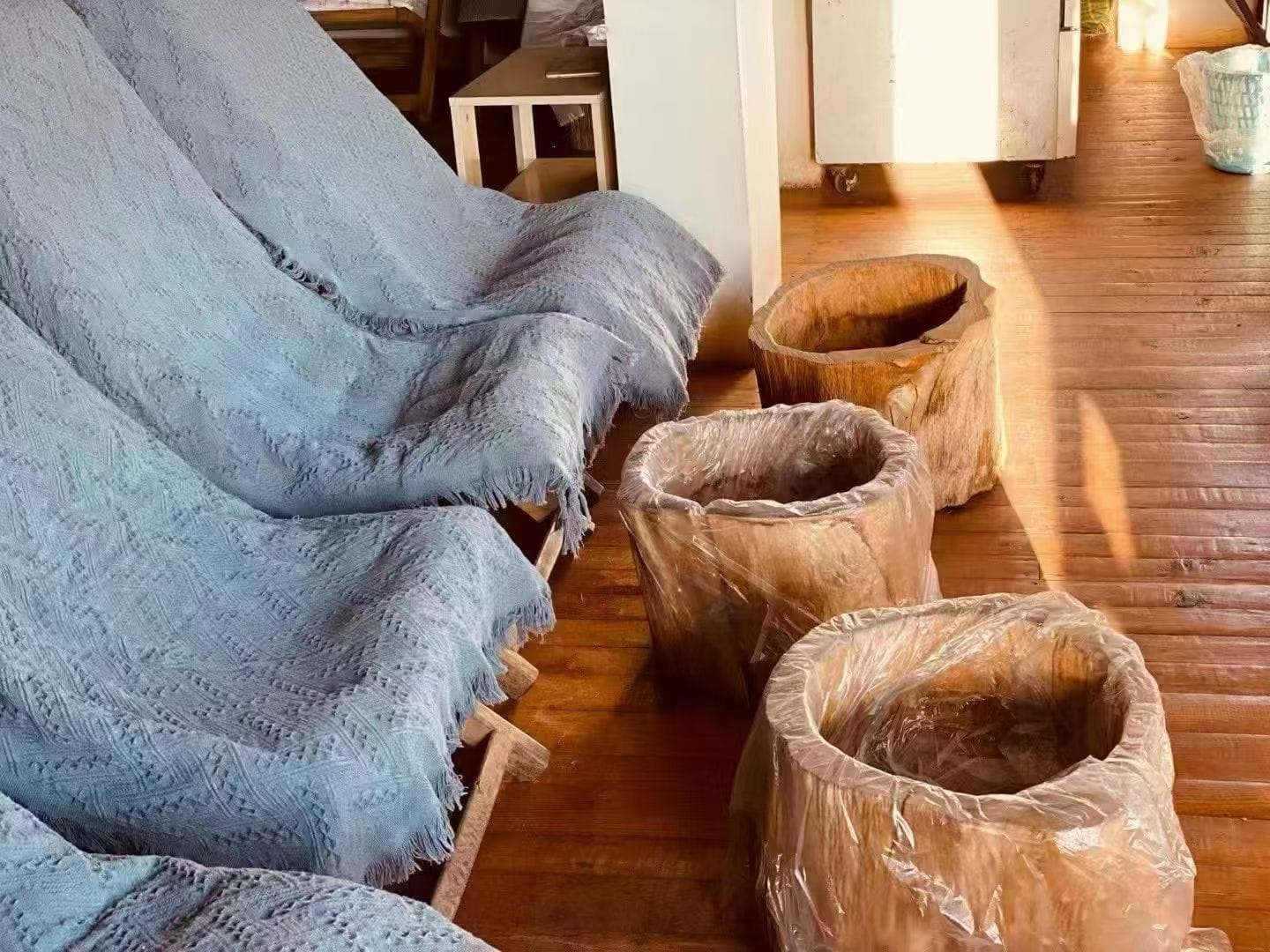
The father gathers the wild herbs himself in the mountains. You bathe in tubs of albizia wood — © Daqingshu Inn
The scent of the herbs goes right into your bones; in the moment afterwards you can clearly feel your strength returning.
— AYU, HOST
It is these things, Ayu says, that give the old house a soul.
For a long time she did not dare speak with guests, “afraid I was only a girl from the countryside. Later I understood: I know Nuodeng best of all. So I tell them Nuodeng.”
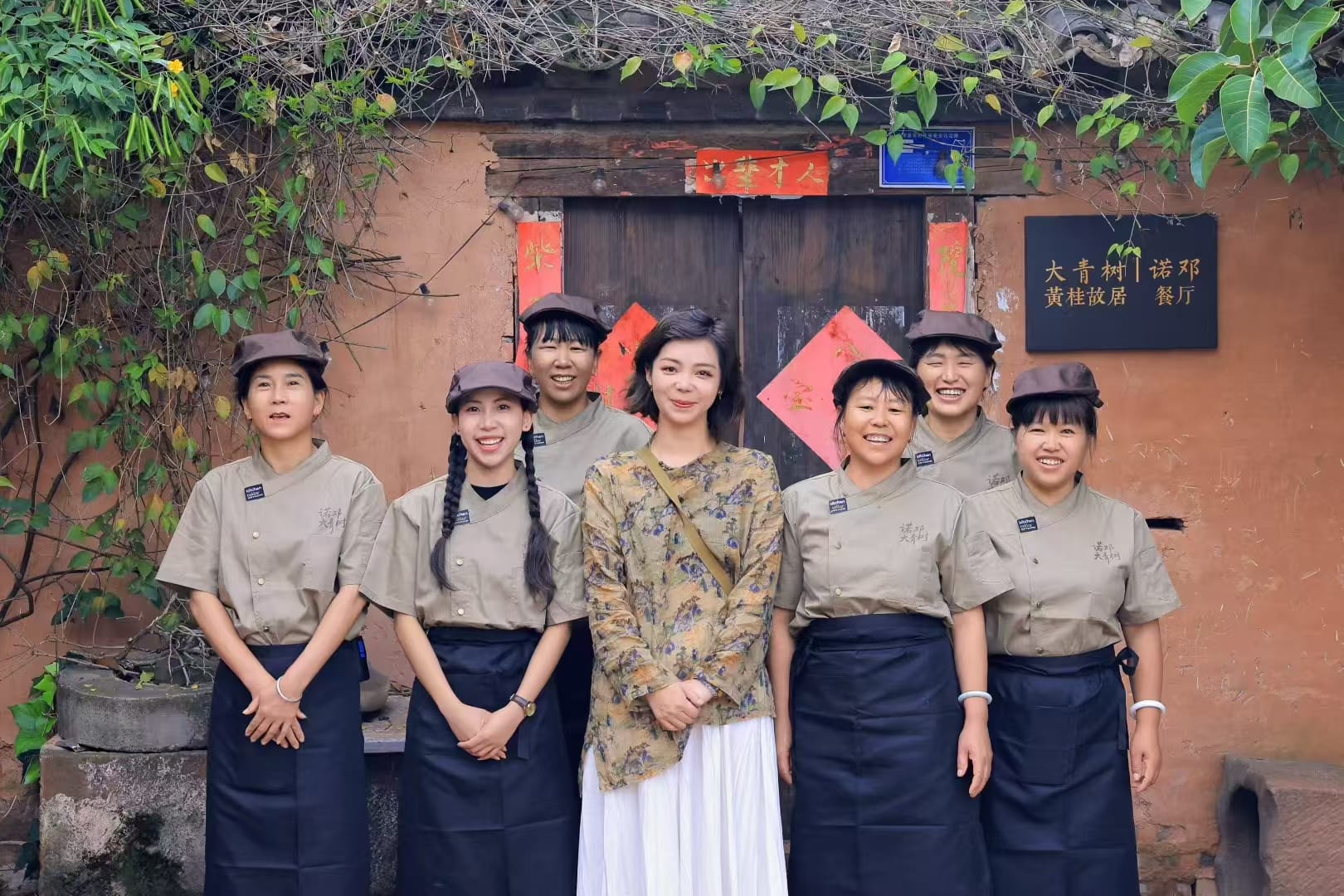
The team of Daqingshu Inn — © Daqingshu Inn
Who this is for
For anyone who wants to experience China as everyday life rather than as scenery. The old building should not be an exhibit set on a pedestal, Ayu says, but a space you can actually touch and live in with ease. And so it is: the rooms in the new courtyard are comfortable, yet the way there still leads up stone steps. If you like walking and taking your time, you belong here. Two nights are the minimum, three are better.
Dalangba
A high pasture at 2,500 metres, inside the Yunlong Tianchi nature reserve.
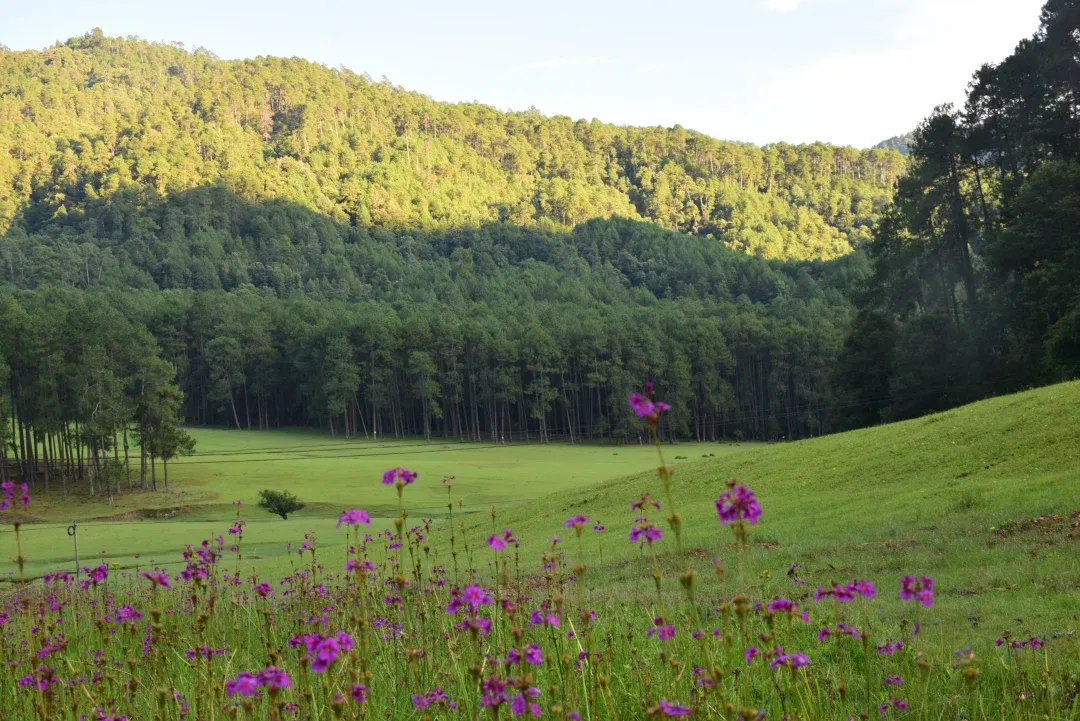
A high pasture at 2,500 metres, ringed by tall pines. Cattle, sheep and horses graze freely, streams run through the grass, small farmsteads lie scattered across it like beads. In summer the forest floor is full of mushrooms, and at night the Milky Way stands so clearly overhead that it seems unreal — there is not a single light up here to compete with it.
Dalangba belongs to the Yunlong Tianchi nature reserve. In the surrounding forests lives the southernmost population of the Yunnan snub-nosed monkey, one of the rarest primate species in the world. Until 2007, nobody knew they still existed here at all.
The way up is somewhat demanding. You first drive to the Taiji viewpoint, where the Bi River draws two bends that mirror the yin-yang symbol. Most visitors turn back there. Those who continue have a few more kilometres of mountain road ahead, then a guard post at Tianchi where you register, then six kilometres of switchbacks. After the last bend, the view opens up.
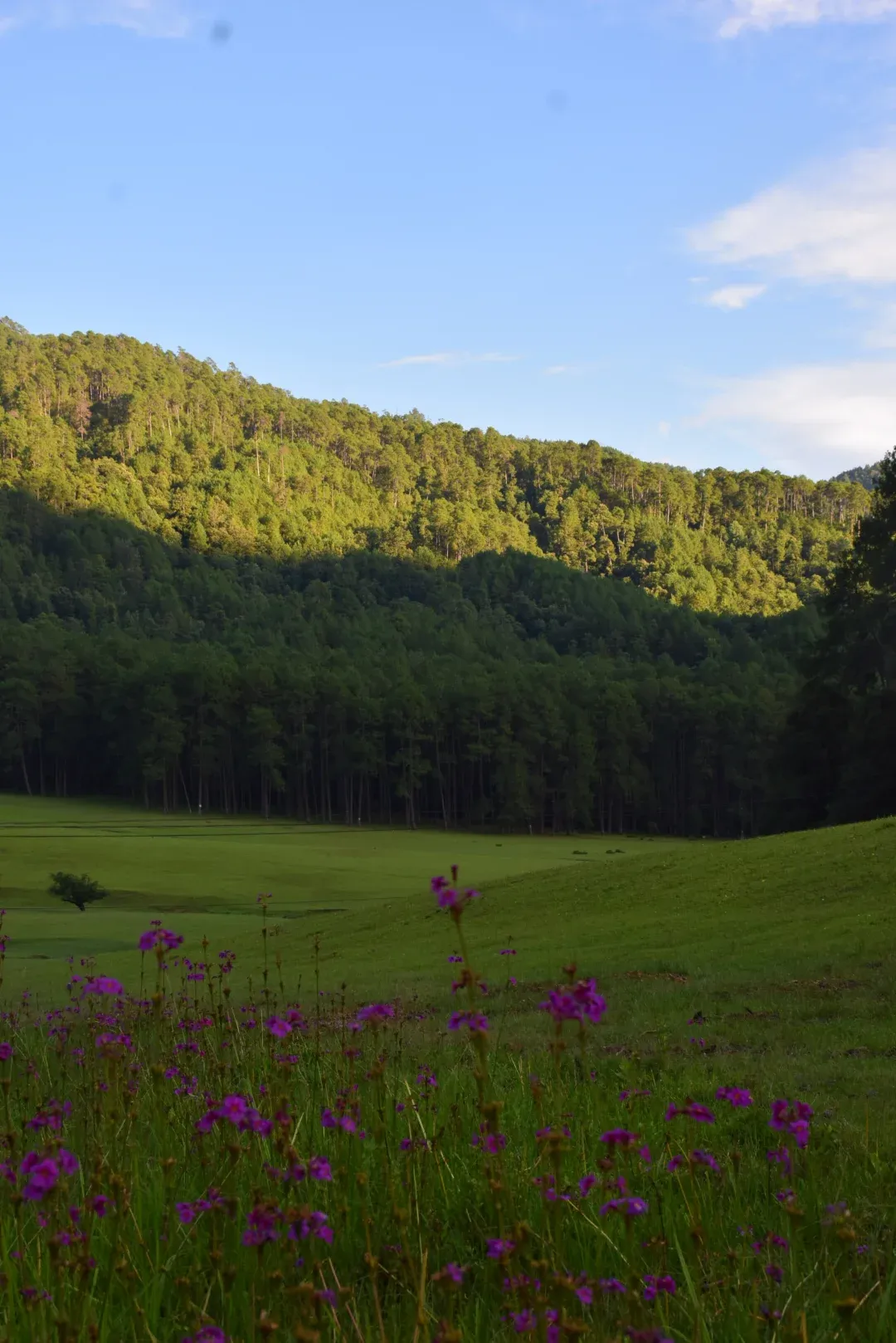
After the last bend, the view opens onto the pasture — © Jiang Xing
Arriving up top
Up here it feels like another world. Rich pastures, fertile land. Papaya and walnut trees grow in the farmyards, mushrooms in the forest. Nothing here is comfortable, you sleep in a tent — and for this silence and this view it is entirely worth it.
This is where you get to know agricultural China. Locals run small farm guesthouses; eat with them and you may use the ground and stay the night for free, or pay a small fee for the ground alone. Camping on your own is no longer possible: pitch your tent by the river and you will be visited by a man on a motorbike, the reserve's forest ranger. No fire, no tent, no overnight stay on the open meadow — bears may be about at night.
Some of these farmsteads belong to the rangers themselves. They are also the ones who come closest to the snub-nosed monkeys: most recently they observed a group of more than twenty animals. Anyone who encounters them has been very lucky indeed.
Whatever is there is what gets cooked. A chicken, freshly caught, braised with nothing but a few slices of homemade ham — no other seasoning. It makes the broth especially fresh and sweet. Alongside it, a plate of porcini the host happens to have on hand. Perhaps it tastes so good precisely because everything is this fresh.
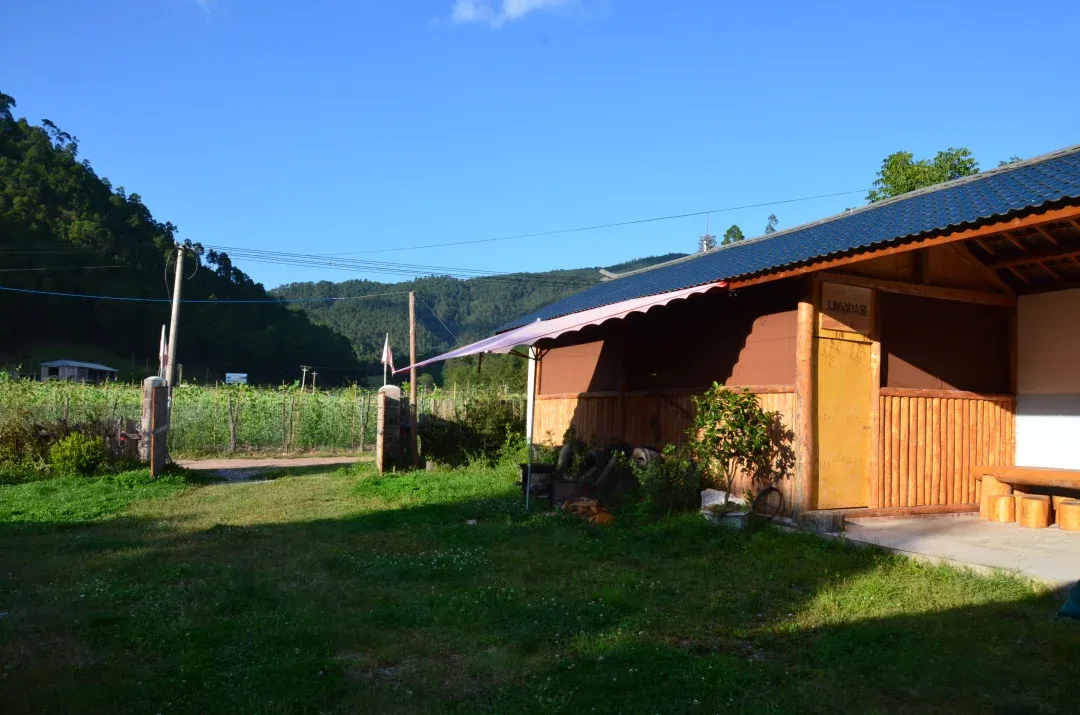
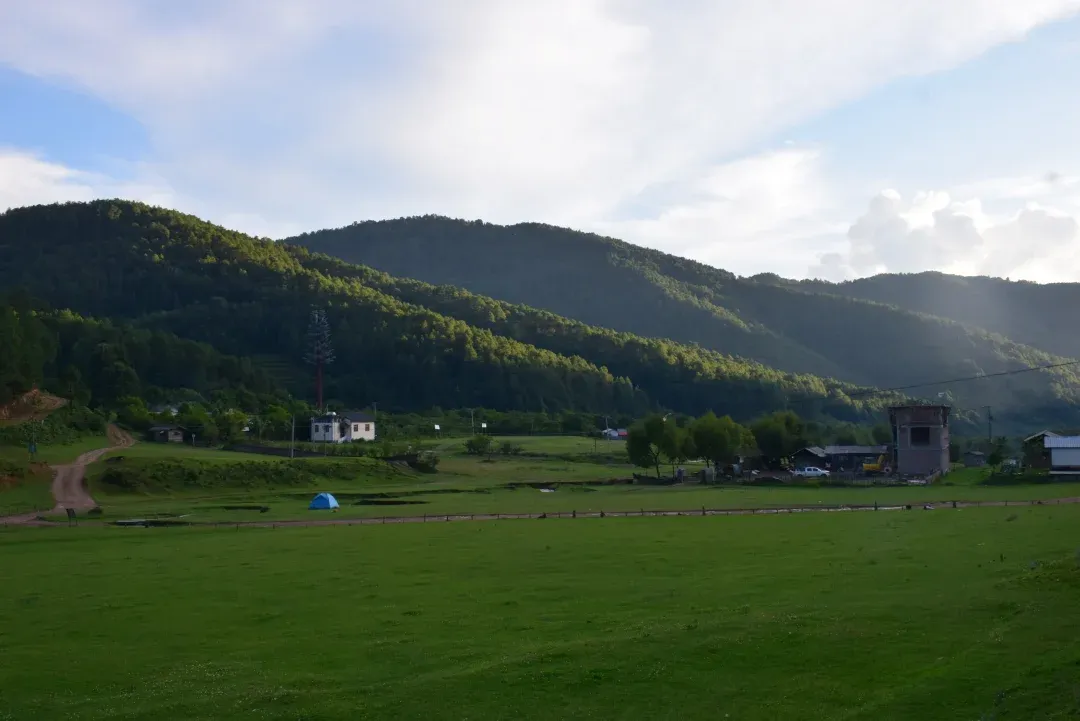
The farmsteads at the edge of the pasture, with the bean fields in front. Camping today is only allowed on private ground — © Jiang Xing
It is mushroom season. Green-capped russula, chanterelles and porcini grow in the pine forests, and with luck, matsutake. The needle layer on the ground is thick and soft; lift it and the surprise is underneath. It is best to go into the forest twice, in the evening and again the next morning. Talking to the host, it emerges that the mushrooms of Dalangba differ from those elsewhere around Dali — same names, different appearance, different taste.
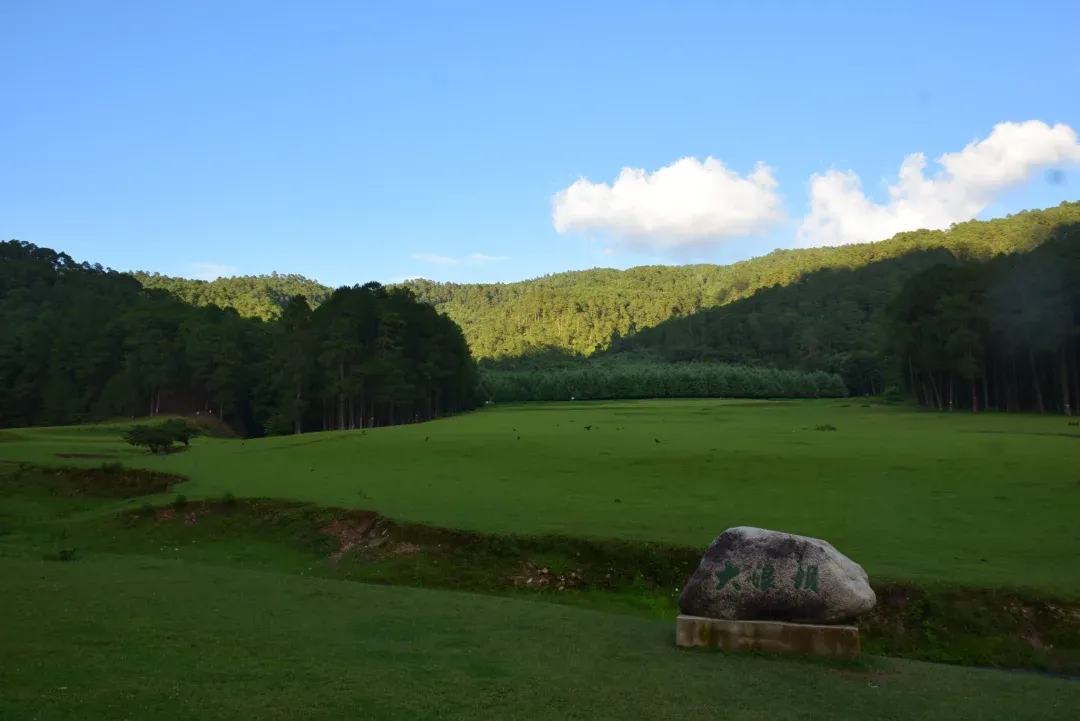
The wide pasture of Dalangba — © Jiang Xing
At night
At 2,500 metres, with no light pollution, the Milky Way stretches right across the sky. You think of the Taiji figure seen that afternoon and of the twenty-eight lunar mansions on the ceiling of the Yuhuang Pavilion down in the village. From the star map above to the landscape below — as though something were quietly answering something else.
It is not guaranteed. Sometimes rain moves in and the clouds do not clear all night, and you see only a few scattered stars. In the morning the dew lies heavy and the air is very fresh.
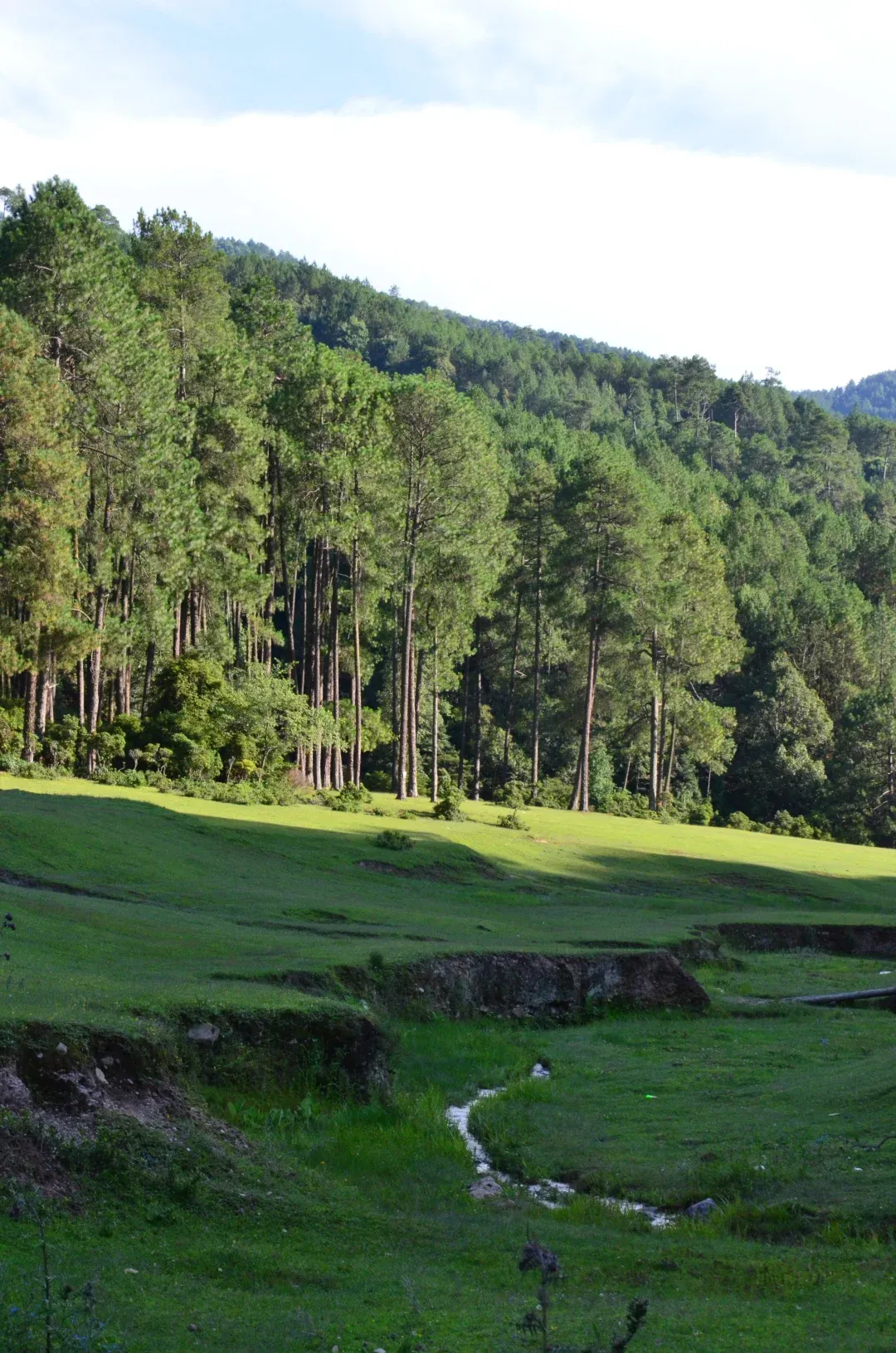
In the morning the dew lies heavy and the air is fresh — © Jiang Xing
Practical Information
Getting there
Bus from Dali (Xiaguan) to Yunlong county town, around three hours of switchbacks, then six to seven kilometres uphill. Public transport is poor — hiring a driver from Dali is the most practical option.
In the village
From the village entrance you continue on foot only. Sturdy shoes. The village starts at 1,900 metres, the Yuhuang Pavilion above 2,100. Cool at night.
Where to stay
Daqingshu Inn大青树客栈 — the Huang family courtyard beneath the great tree. An old courtyard and a new one; the modern comfort is in the new. Direct booking by phone on +86 152 8811 3286, alternatively via Trip.com or Booking.com.
Dalangba
A day of its own, in a different direction from Nuodeng. Registration at the guard post. Barely any mobile signal, little food available — bring your own. You stay in the yard of a local family.
Best time
Nuodeng all year round. Tianchi and Dalangba have a forest fire protection period from March to June; only residents may enter then, outsiders can go as far as the pear orchards.
Pear blossom
In March and April the pear trees blossom across the slopes; in August and September you can pick fruit in the orchards.
What surprised me about Nuodeng is that nobody there fights for tourists. Ayu wrote a sentence that describes exactly why I make this magazine: that too many places turn their unique historical substance into a mass-reproducible business template — and that what truly holds people is never standardised service, but the deeply rooted bond between a host and their house and their ground. What moved me most is not the story of the house, but what it has cost this family to keep it. I was not there. Everything written here comes from people who were.
— The Curator