What Stays, When You Stay
Naksansa, a 1,353-year-old cliffside temple on Korea's east coast — and Oeam, an inland village that never lost its own rhythm
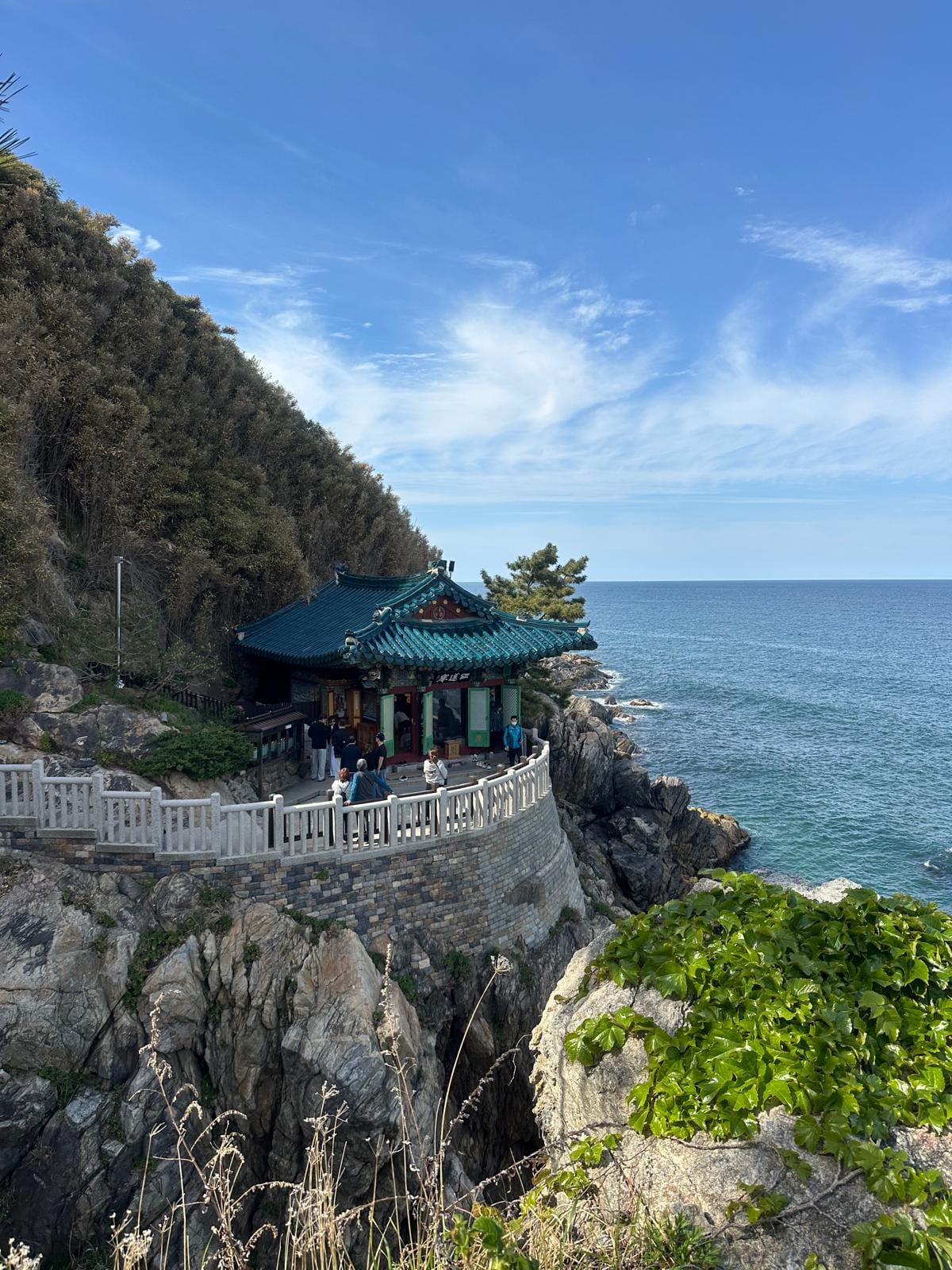
You arrive along the coastal road from Yangyang, the sea still in the rearview mirror, and then the view opens up: a temple on a cliff, waves breaking against the rock, a massive stone Gwaneum statue gazing out over the water. Most people stay an hour, snap a few photos of the famous cliff view, and drive on. They have no idea what they're missing.
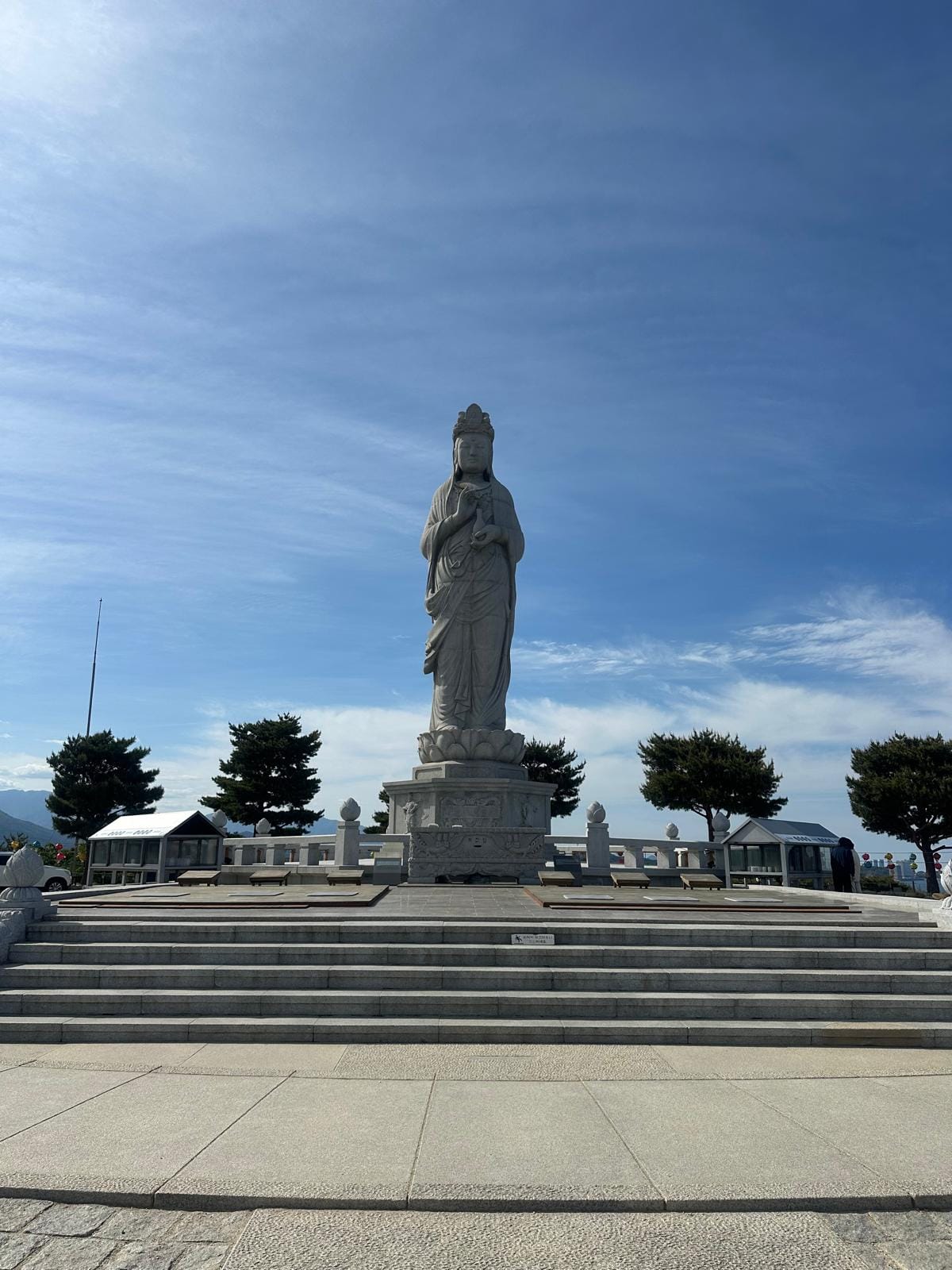
The great Gwaneum statue, a landmark visible from far away. — © Manon Banroques
What it is
Naksansa was founded in 671 by the monk Uisang and has stood for over 1,350 years at the foot of Mount Obongsan, right above the East Sea. The temple has been destroyed several times — by the Mongols in the 13th century, during the Korean War, and most recently in a devastating wildfire in 2005 — and rebuilt true to its original form each time.
Naksansa is one of the most visited temples in eastern Korea, precisely because of its extraordinary setting: from the temple, you look out over the open sea, a view that draws plenty of day-trippers, especially on weekends. And yet the place has held on to something that other, equally famous temples have long since lost: those who only pass through see the cliff and the statue. Those who stay the night experience a different Naksansa — one that only reveals itself once the day-trippers have long gone home, and one that, as overnight guests keep saying, truly stays with you.
"Even though Naksansa is very well-known and visited by many people, it somehow felt as if time had stopped for a moment. Being there, surrounded by the temple and facing the ocean, was incredibly calming."
— Manon Banroques, @manonbnrs
What you experience there
Those who stay overnight get to know monastic life in a way that's hard to grasp from the outside. The range of meditation styles on offer is surprisingly wide — from breathing to walking to wave meditation right on the beach, along with a food meditation where you close your eyes before eating and reflect on where each ingredient came from, from the grain of rice to the finished dish. The early morning is the most striking part: the first ceremony of the day begins at four a.m., after which a path leads through nature to the clifftop Hongnyeonam hermitage — a small prayer hall built on a rocky outcrop directly above the sea, with an opening in the floor through which you can look down at the rocks and waves below. According to legend, this is where the monk Uisang had his vision of the Bodhisattva Gwaneum before building the main temple. At the end of the path: sunrise over the East Sea.
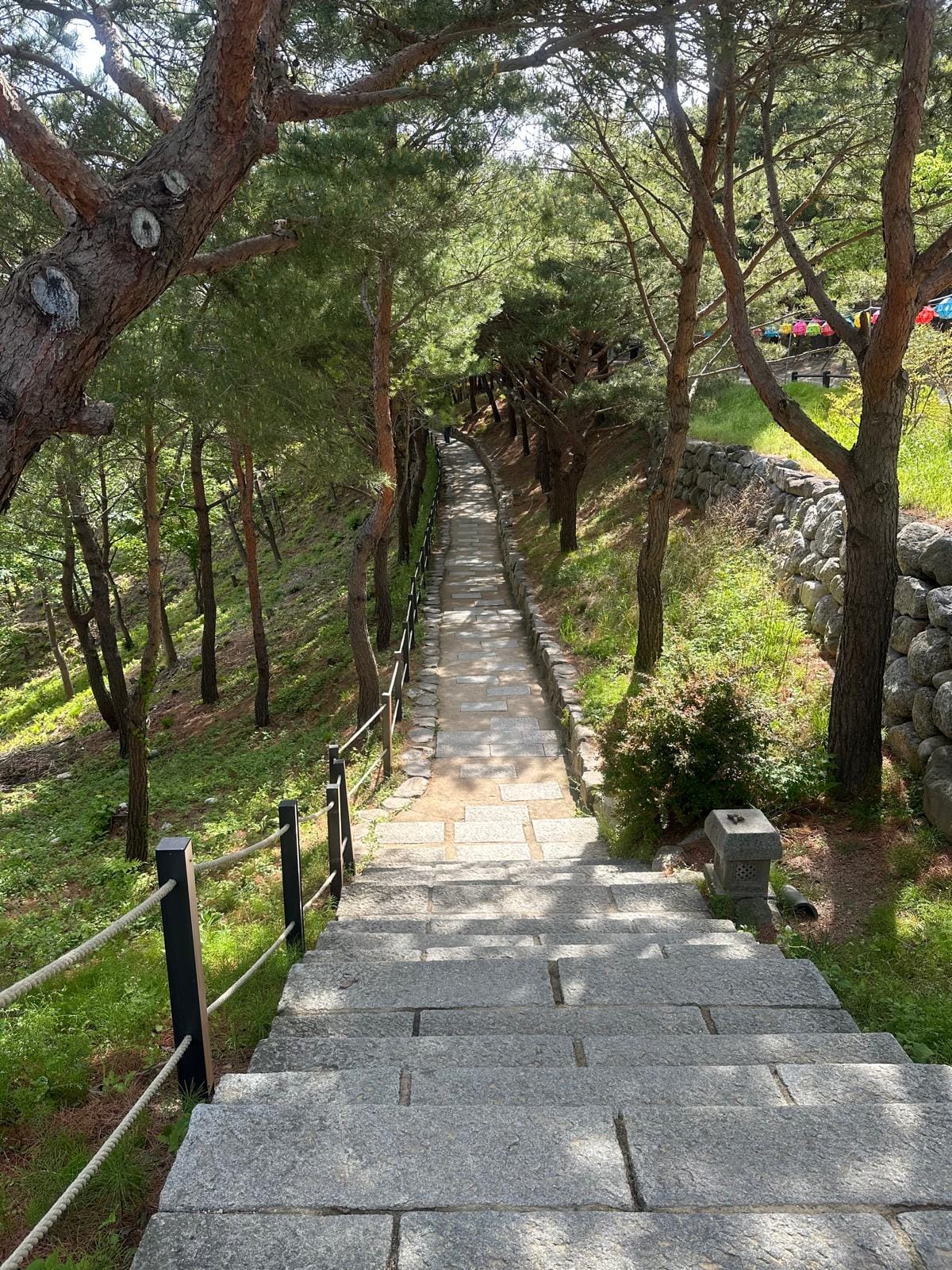
The forest path overnight guests walk before sunrise. — © Manon Banroques
The accommodation itself is deliberately simple, a clear contrast to hotel comfort — and yet it surprises many guests. You sleep in comfortable rooms for up to six people, modern and equipped with a private bathroom, men and women housed separately. The entire complex was rebuilt after the 2005 fire, so the sanitary facilities are correspondingly up to date.
The food, too, is something guests often highlight: simple but well-balanced vegetarian cooking. One visitor, who spent three days there independently, put it this way: "The meals in the temple are just perfect traditional humble food."
But the real magic doesn't lie in the program — it lies in the place itself.
"There was something very special about being in such a famous and popular place while still feeling such a strong sense of peace. […] Naksansa has something very special that is difficult to explain until you experience it yourself."
— Manon Banroques, @manonbnrs
Who it's for
For anyone willing to take their time — not just see the temple, snap a few photos, and move on. Manon puts it as a clear recommendation: "Take your time. Don't go just to see the temple, take a few pictures and leave. Take the time to look around, breathe, and really experience the atmosphere of the place." Picture sitting on the beach, listening to the waves, while someone gently guides a meditation — and you get a sense of what makes this program special: a closeness to yourself you won't easily find anywhere else, and a genuine piece of Korean culture along the way.
Practical Information — Naksansa
Location
Ganghyeon-myeon, Yangyang-gun, Gangwon-do
Cost
40,000–80,000 KRW depending on the program (≈ 28–57 USD, exchange rate fluctuates)
Booking
eng.templestay.com or naksansa@templestay.com
Getting there
Express bus from Seoul (Express Bus Terminal) to Yangyang, then a local bus to the temple
Tours & Activities
Nearby, it's well worth combining a visit with Seoraksan National Park, whose rugged peaks and forests are just a short drive away. The sunrise from Uisangdae Pavilion and the coastal town of Sokcho with its fish market are also worth the detour.
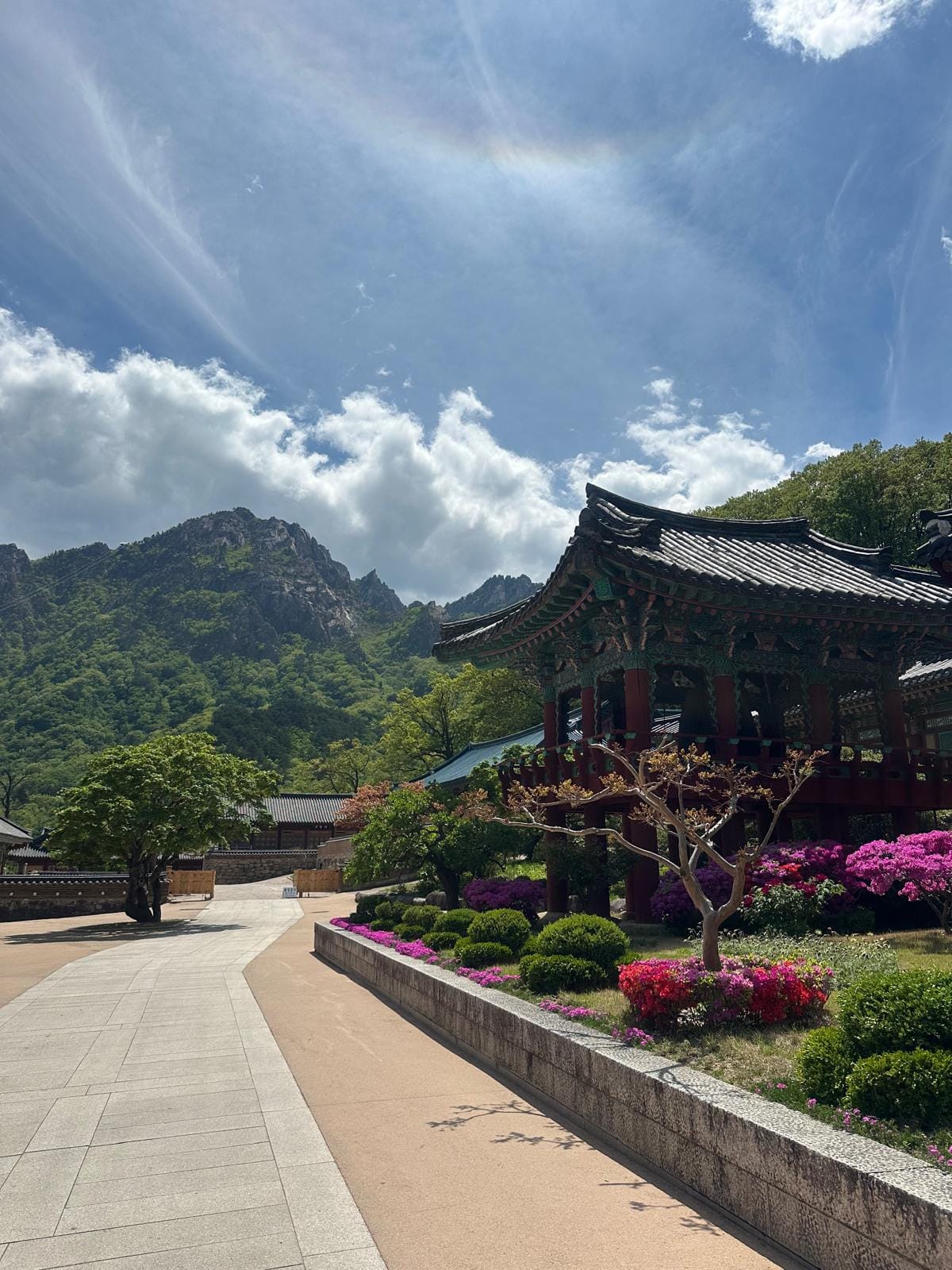
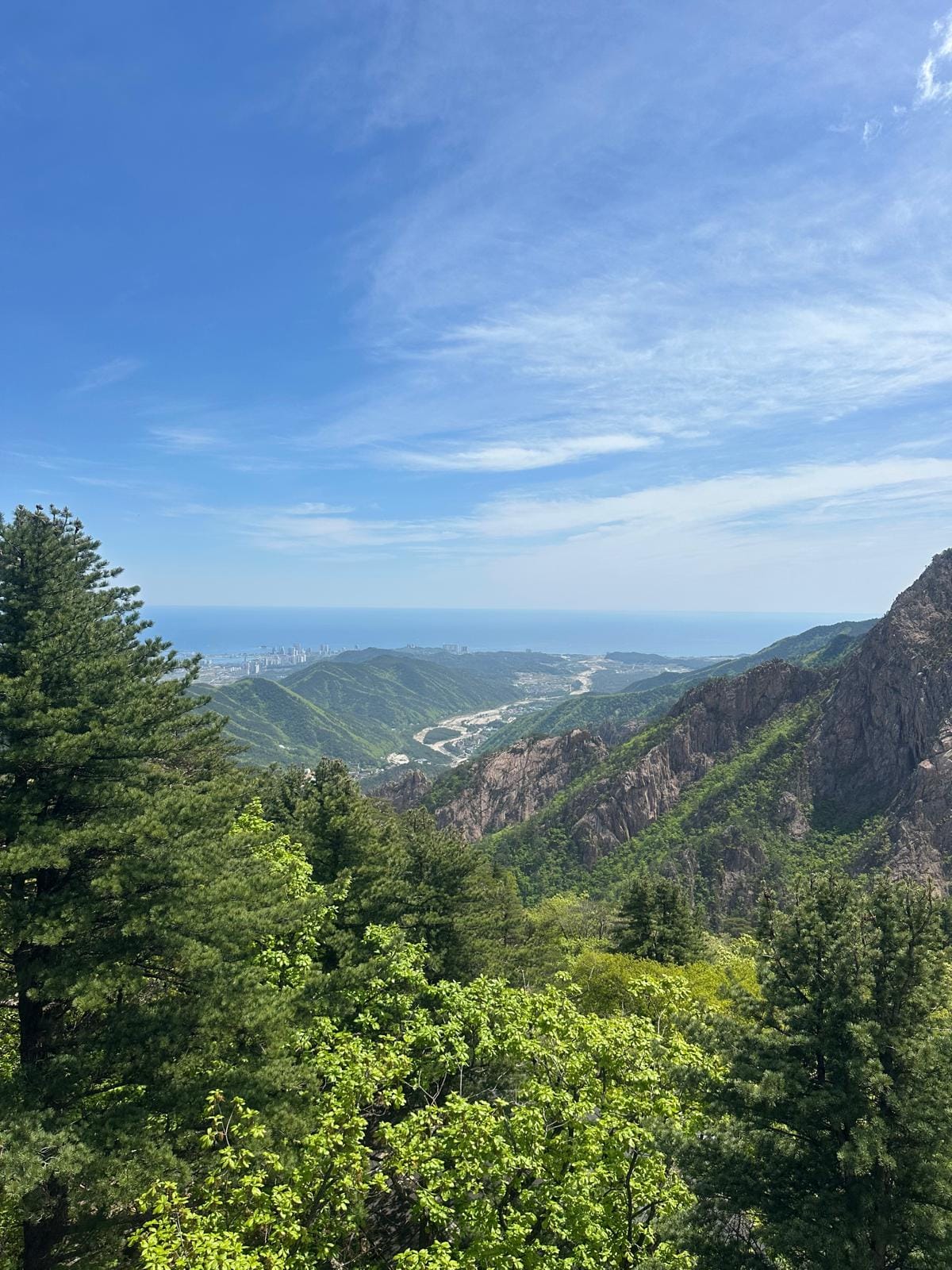
Seoraksan National Park, a worthwhile detour from Naksansa. — © Manon Banroques
Oeam Folk Village — A Kingdom That Lives On
About 300 kilometers southwest of Seoul, in the hills of Asan, lies a very different place that shows, in its own way, just how deep you can dive into Korean history: Oeam Folk Village, a village over 500 years old dating back to the Joseon era (1392–1910), Korea's last kingdom before modernization.
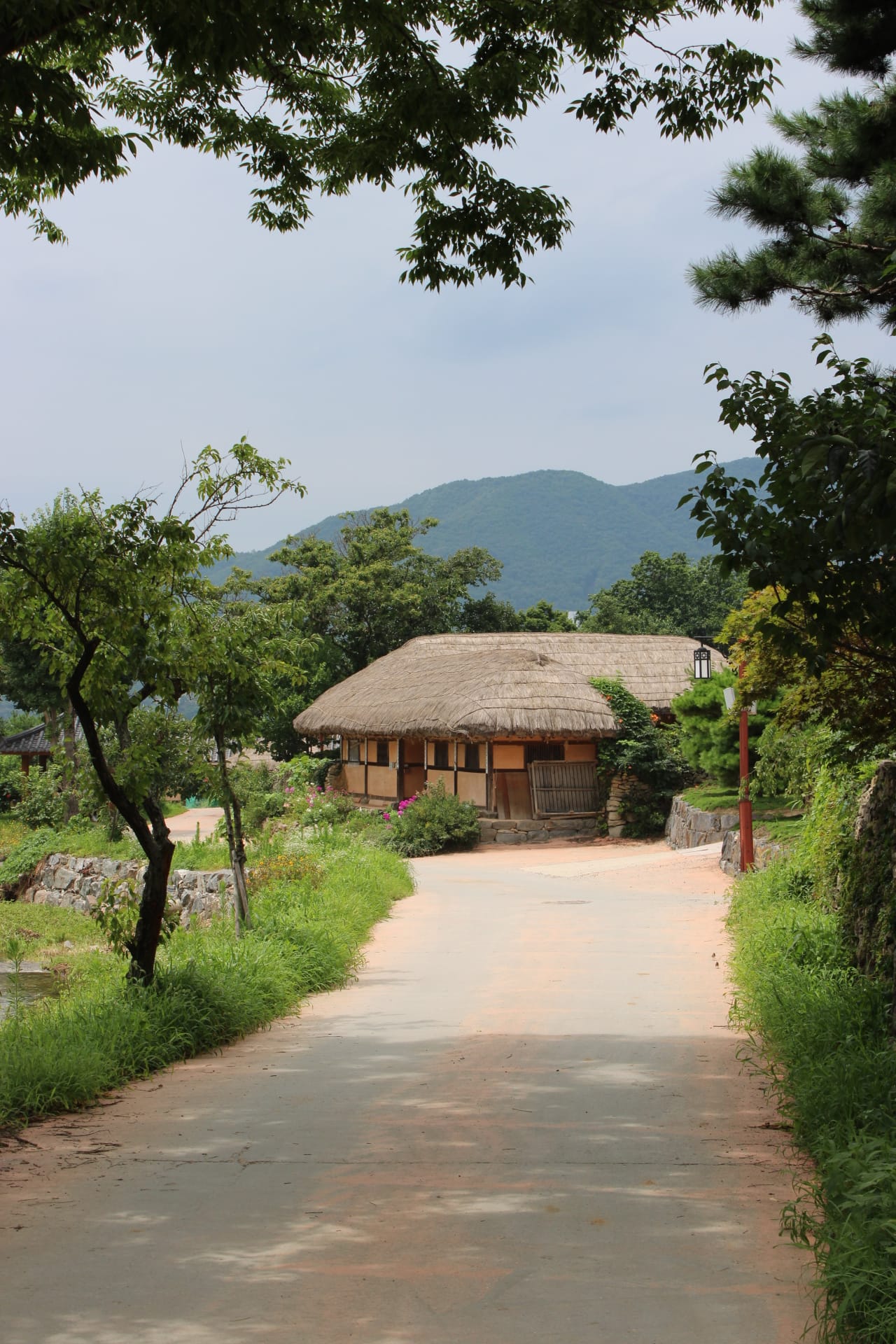
The road into the village — thatched roofs, mountains, quiet. — © Ashley Whitten
What makes the village special is the direct, visible contrast between two social classes of the Joseon era: tile-roofed hanoks belonging to the Yangban scholar-gentry stand right next to thatched-roof houses of the common rural population — both building styles preserved side by side to this day, unusual for a village of this kind. A clever water system has channeled mountain water into the village for centuries, originally to prevent fires while also securing the water supply.
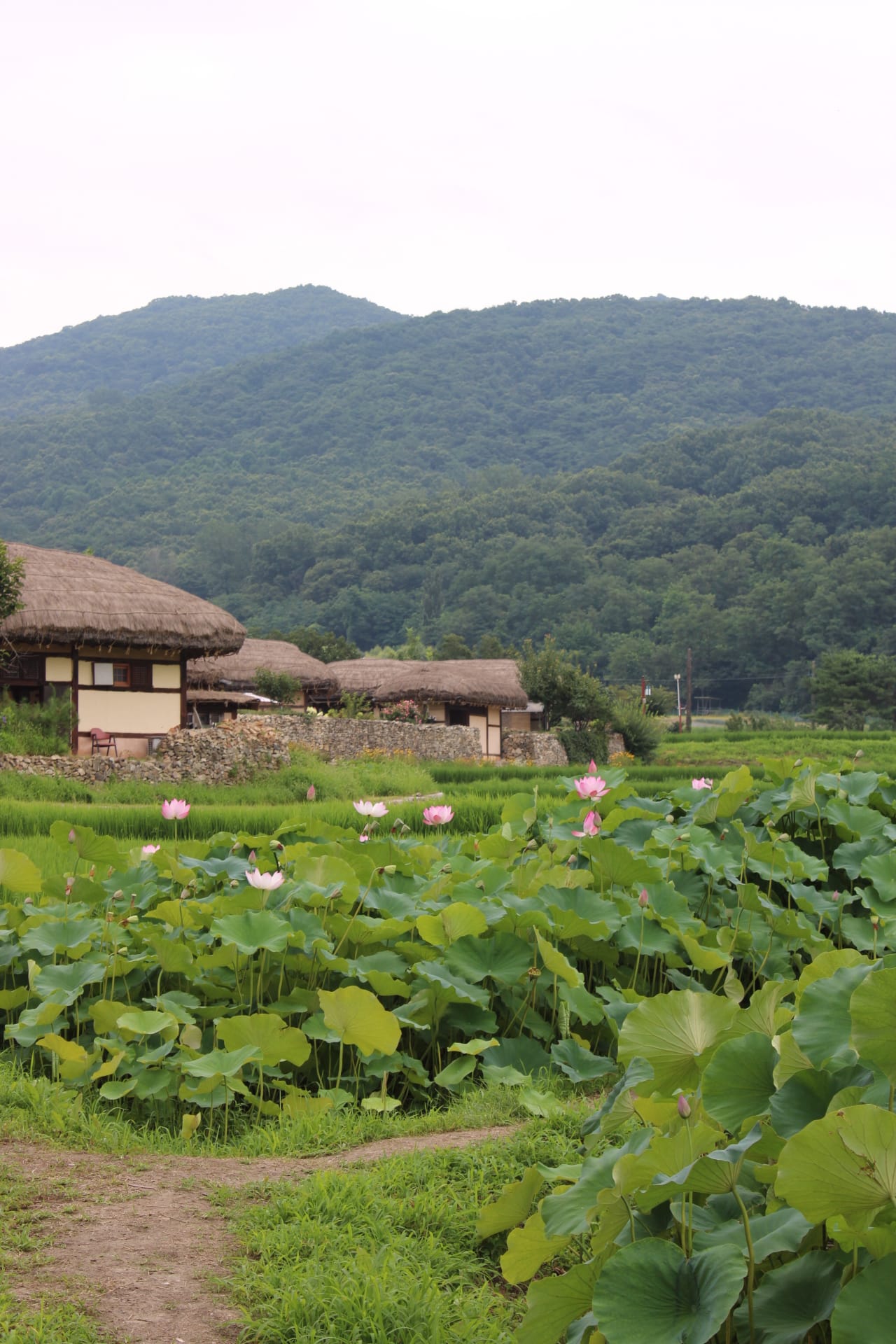
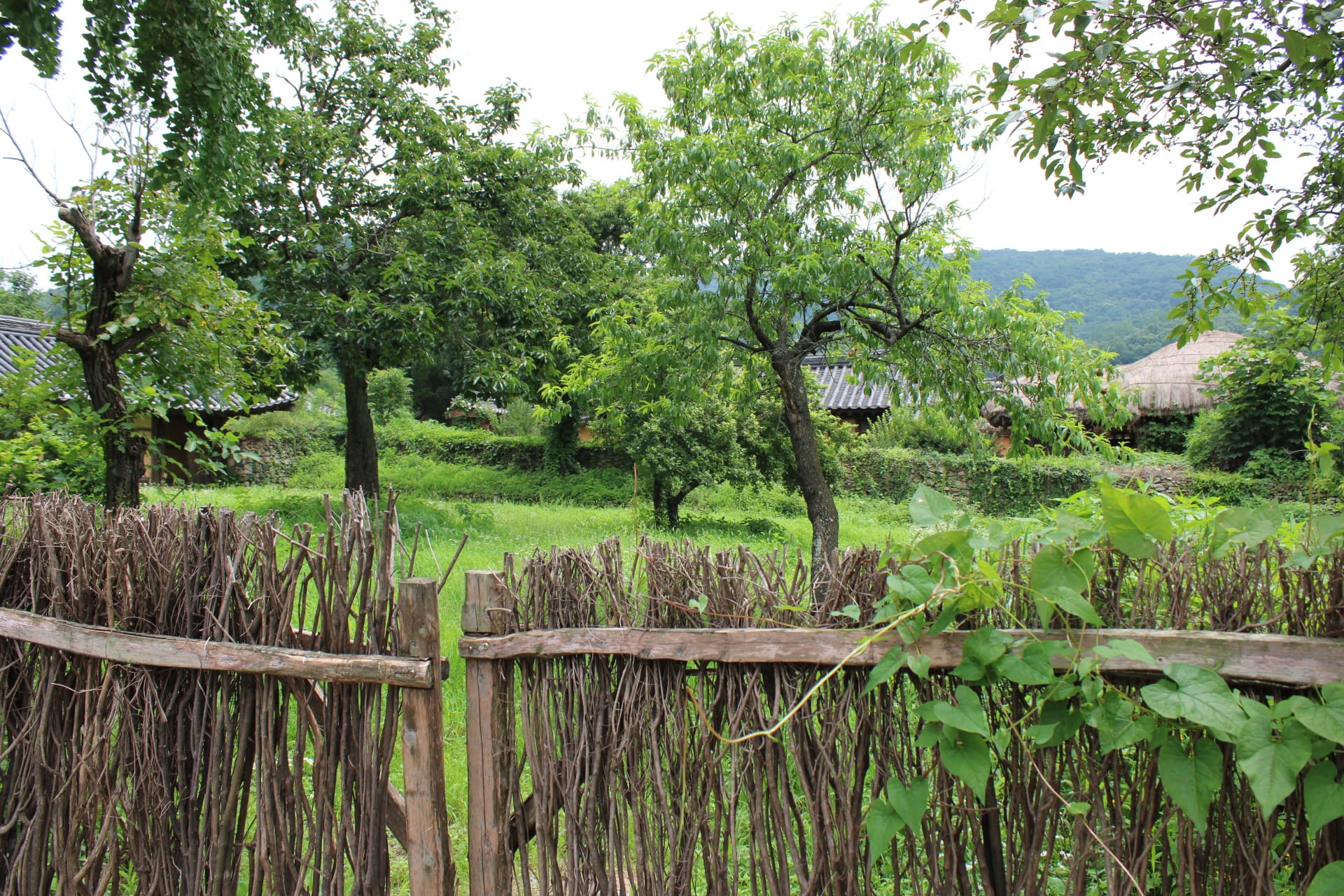
Thatched roofs and a lotus field, a woven fence — everyday scenes from the village. — © Ashley Whitten
Unlike a museum, Oeam is a living village: 38 of its 69 households are still engaged in farming today, and descendants of the founding family work the land as they have for generations. Visitors can stay with host families or take part in cooking classes. You learn how to make your own chili paste and pack it up to take home, followed by a short lesson in brewing lotus flower wine, before a home-cooked lunch is served. Along the way, at a small stall by the road, you try what might be the creamiest rice cakes in the country — almost like peanut butter, only lighter. And somewhere among the thatched-roof houses, easy to miss because it looks like an ordinary home from the outside, sits Sinchangdaeg: an old eatery serving cheonggukjang, a robustly fermented soybean stew, surrounded by a good dozen small side dishes. Notably, many recipes in the village have been passed down unchanged for 15 generations or more — you're essentially eating the way people once did in the kingdom.
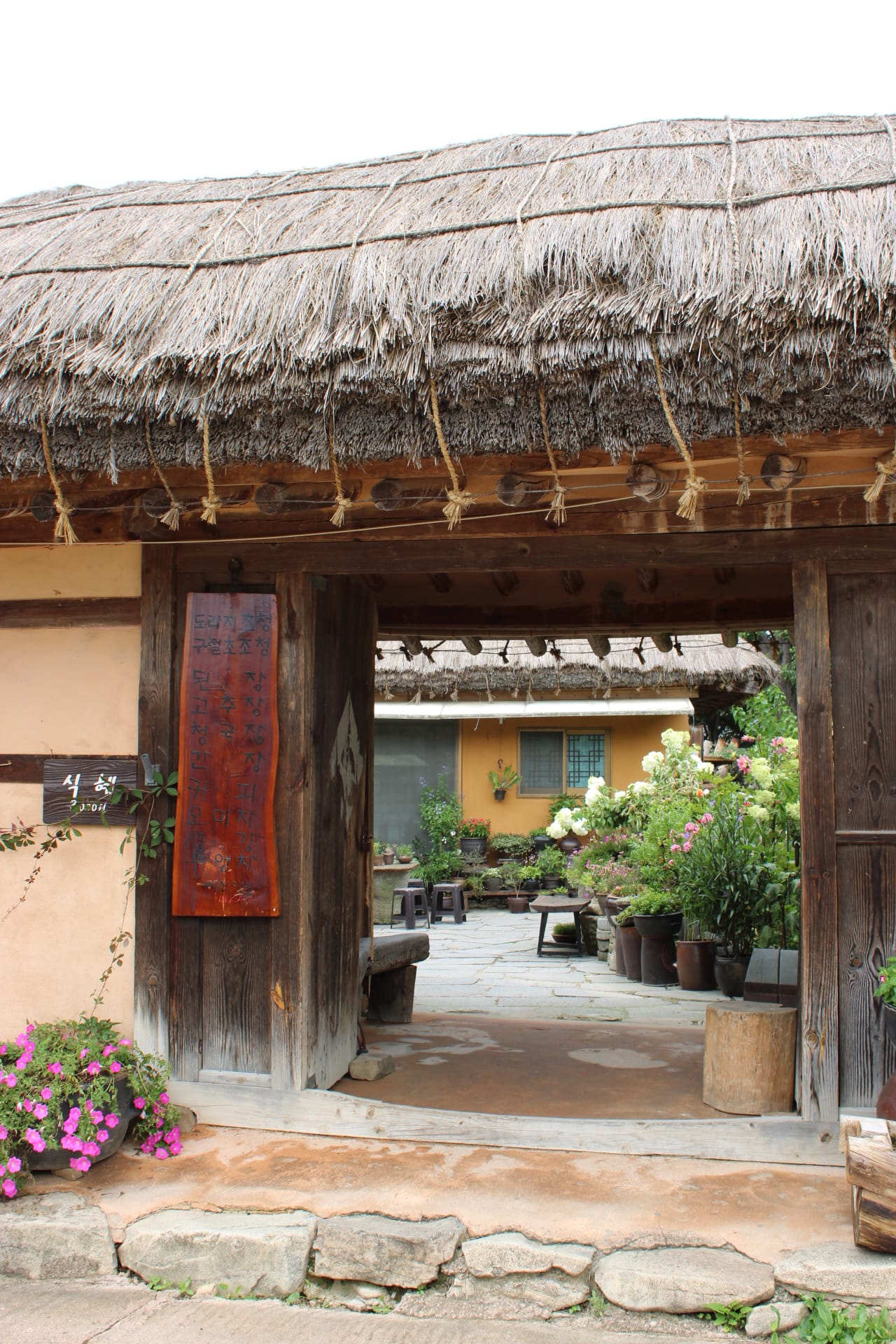
A gateway view into one of the village's courtyards. — © Ashley Whitten
"The amount of work it takes to just to upkeep the homes is incredible. It was very moving to see the care taken to preserve a very huge piece of Korean history."
— Ashley Whitten, @thewanderingwhittens
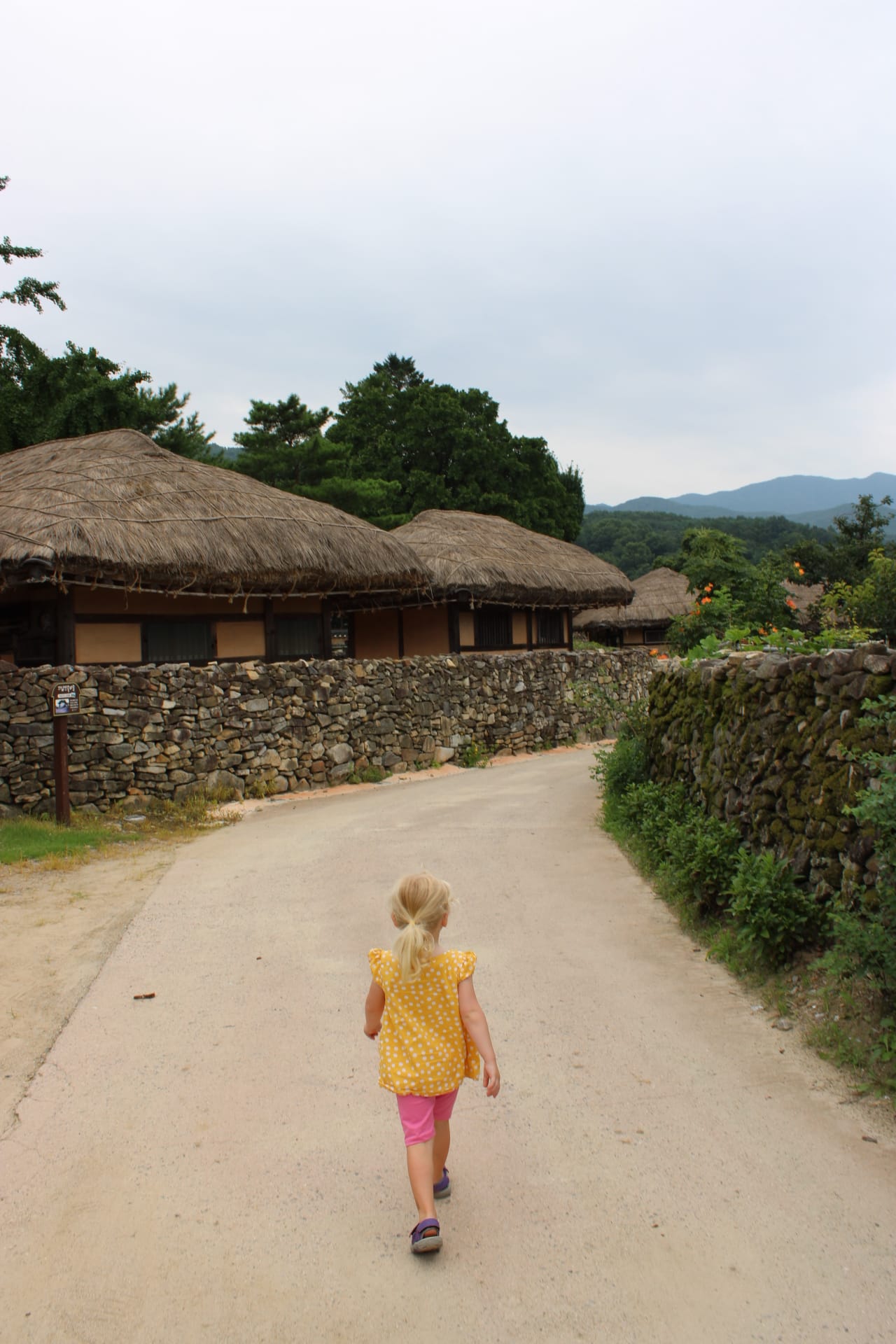
The quiet village road, much as visitors still experience it today. — © Ashley Whitten
Her advice for anyone thinking of visiting: read up a little on the Joseon era beforehand, and it becomes clear why this village is more than just pretty old houses. "It feels like stepping back in time."
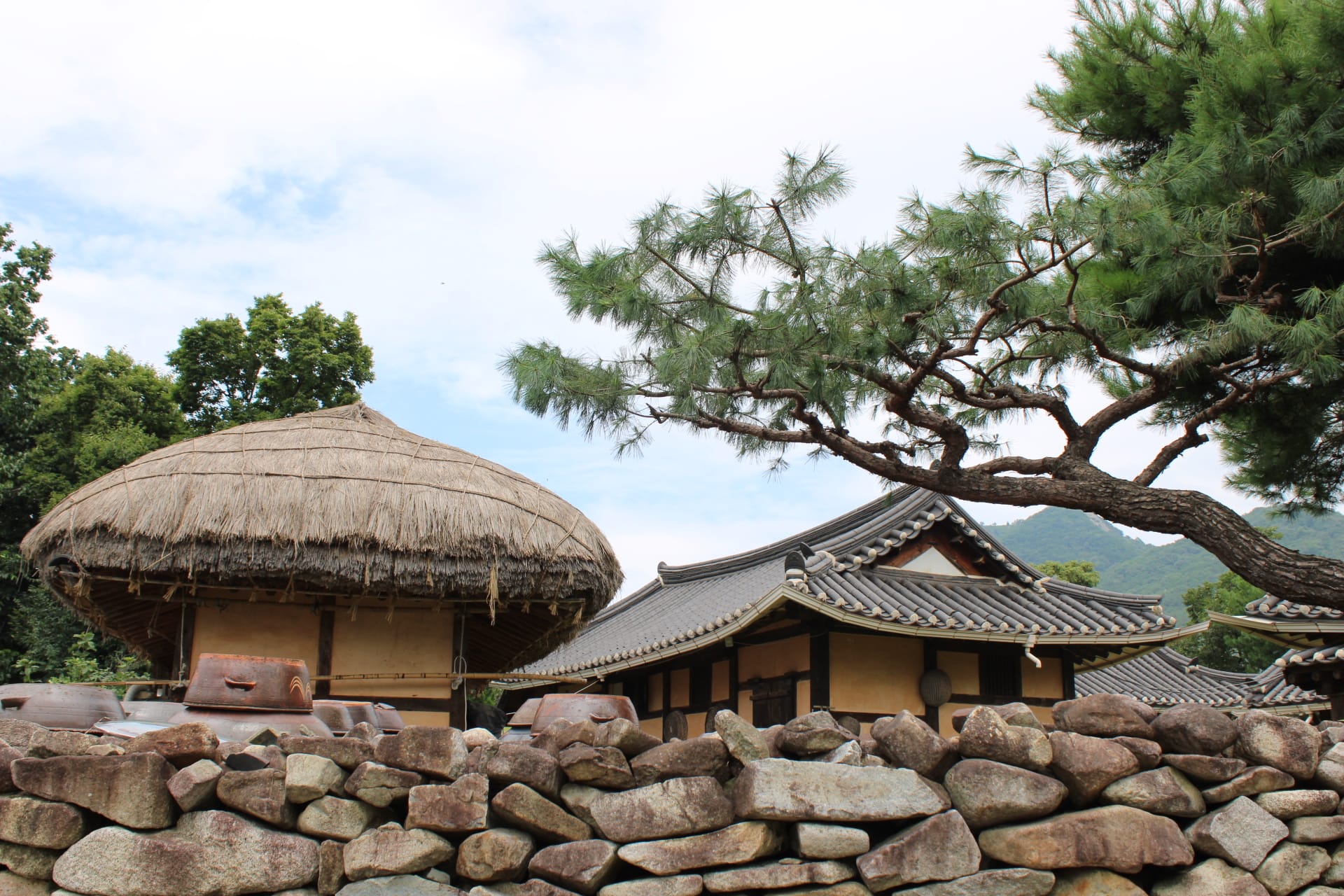
Thatched roof and clay jars (jangdokdae) — details that have outlasted the years. — © Ashley Whitten
Reachable by KTX — South Korea's high-speed train — or express bus to Asan, followed by a short taxi ride to the village.
I have been to neither place. But both stories, at their core, circle around the same thing: Korean culture and its history — and how people live there, and have lived there for a long time.
Naksansa moves me through its contradiction — a place where buses arrive every day, and which still, if you stay, holds on to something sublime: the wind over the cliff, the sea, audible all night long, a path through nature before sunrise. I picture sitting on the beach, listening to the waves, while someone gently guides a meditation — and how quickly that brings you back closer to yourself.
Oeam forms a strong contrast to the temple — not its opposite, but an entirely different view of South Korea. Here, too, it's about culture and history, but about a completely different way people live and have lived: no program, no staging, just a village with real work and recipes passed down for fifteen generations. Both places ask the same thing of you: to slow down more than you're used to — and that's exactly what I take away from both stories.
— Claudia