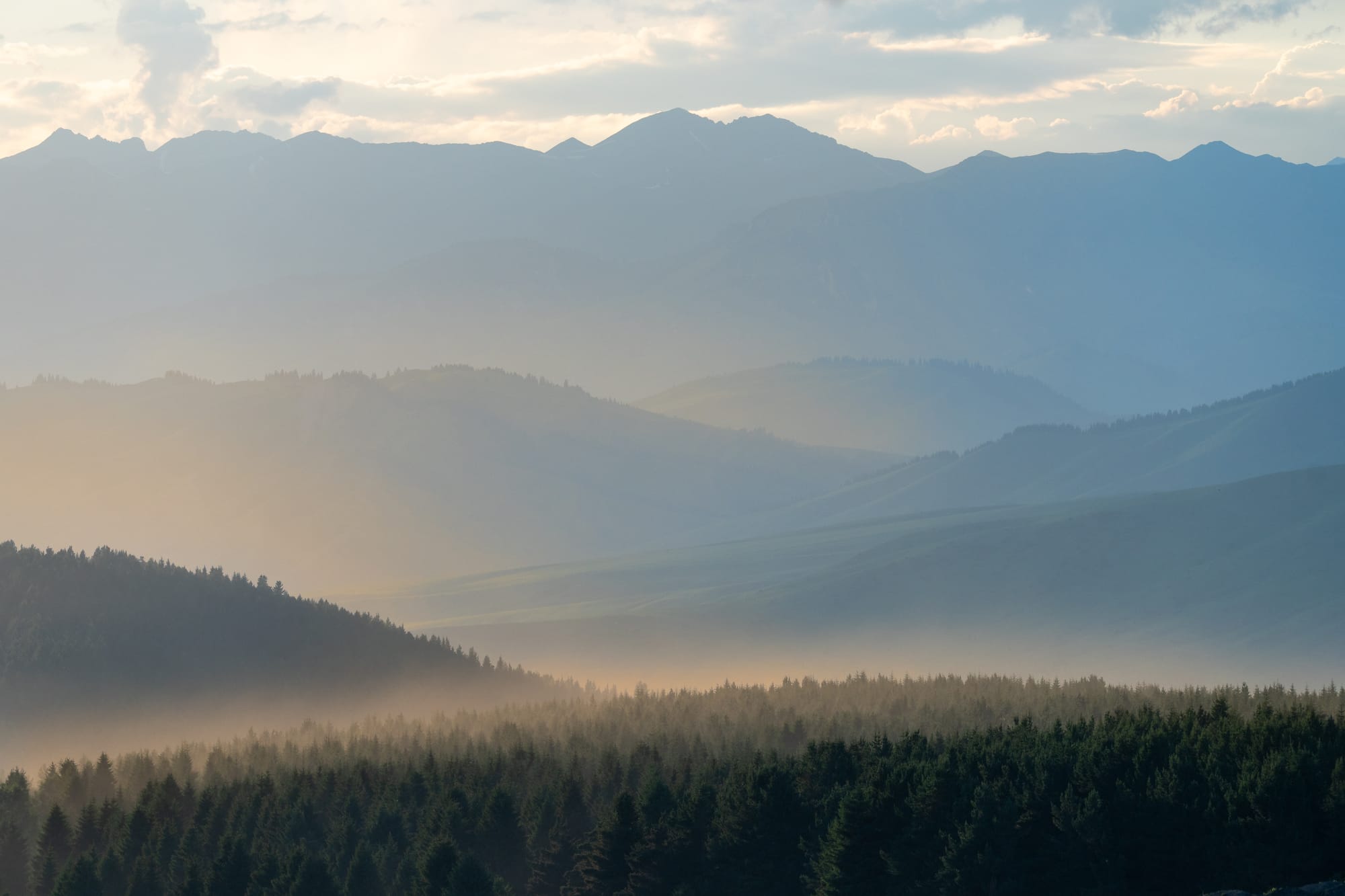
Jyrgalan
Between grazing horses, powder snow, and a village that never gave up
Where it all began
Sometimes a good story begins with an ending. When the coal beneath Jyrgalan lost its value, nothing here should have grown again. That things look different today is no given — it's the result of two people who didn't turn away from a dying village, but built something remarkable for visitors instead.
Their names are Emil and Gulmira. What their courage grew into is best experienced today right where it all began: in the valley itself.
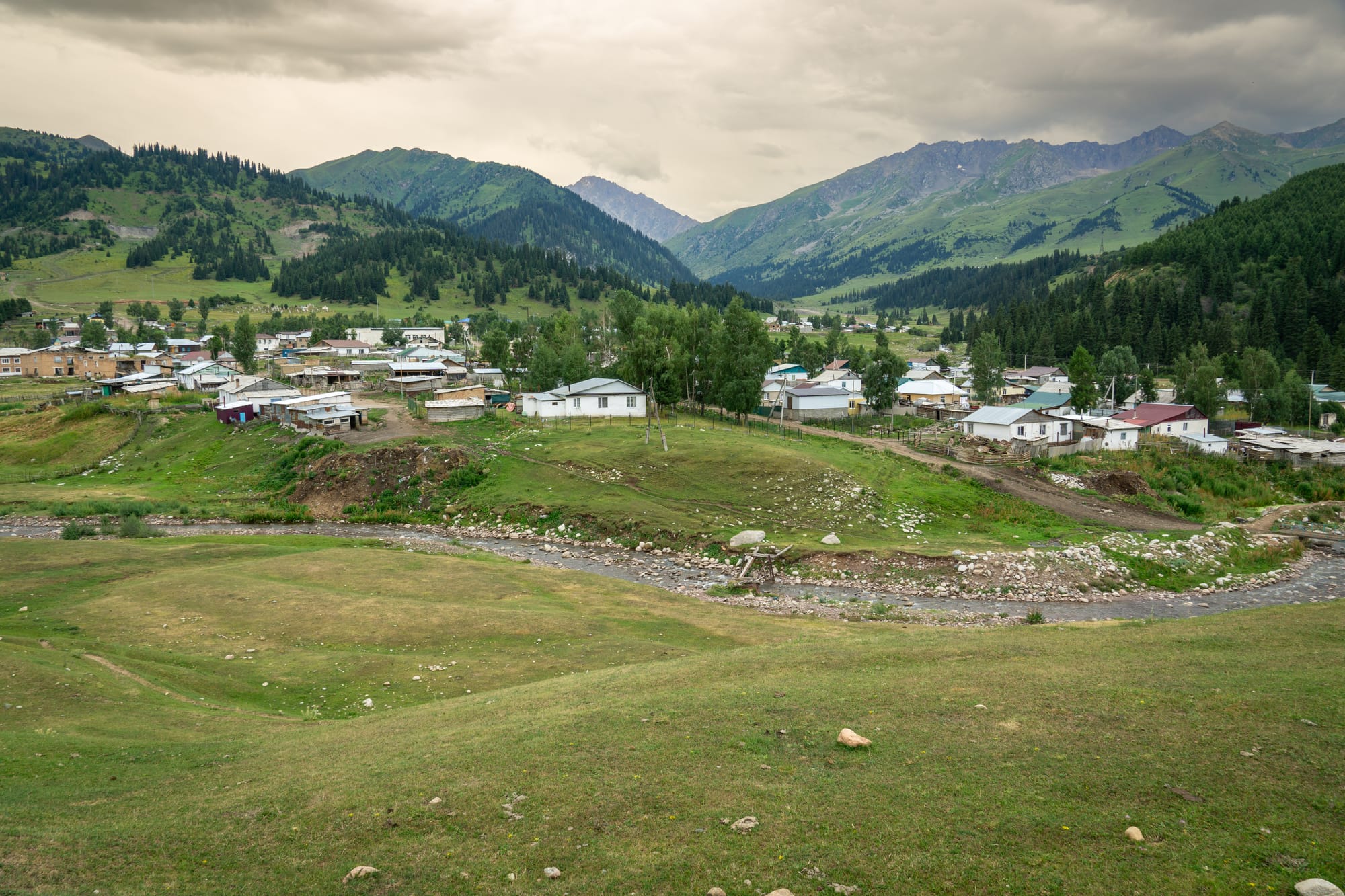
The village of Jyrgalan in the valley — © unpardenomadas

A lot of courage, a bit of madness
It took some courage and, honestly, a bit of madness too — and out of both grew something that today far exceeds what Emil and Gulmira once dreamed of.
Until the early 1990s, Jyrgalan lived off coal mining. Then, with the collapse of the Soviet Union, the village's economic foundation disappeared. It looked as though this remote place in the far east of Kyrgyzstan might vanish — until 2016, when a young couple decided to leave the city and move back to this remote valley at the foot of the Tian Shan, opening the first guesthouse there.
"We knew that this area was very special in terms of the nature and what it could offer people in terms of outdoor activities. This gave us confidence that if we could provide a good service people would be interested in visiting the area and then recommend it to others."
— GULMIRA, ALAKOL-JYRGALAN GUESTHOUSE
But the truly special part comes only now: Emil and Gulmira didn't just build something for themselves. They brought the whole village on board. Together with five other families, they founded an organization to coordinate tourism in the valley — and gradually, more and more joined, until the original idea grew into a real community. Every family, every guesthouse, every guide has worked toward the same goal ever since: creating an extraordinary experience for visitors. Together, they've achieved what no one could have built alone. Today, around nine guesthouses carry this network forward.
What you experience there
In the morning, a calf stands at the door, curious, undisturbed. Outside, horses and cows graze without fences, just as they have for generations. "We love the nature and feel closer to it, when we wild camp away from the villages," say the people behind @lessismorememories — they wanted to watch the sunset and spend a quiet night under the stars, far from streetlights and barking dogs.
A day in Jyrgalan follows a simple rhythm: breakfast around eight, then off you go — on foot, by horse or mountain bike, in winter on skis. Oscar and Tatiana remember their mornings with a host family: "Our host would serve us Kyrgyz bread with fresh cheese, eggs, tomato and cucumber salad, and dried fruit for breakfast." A packed lunch comes along, eaten somewhere in the mountains while horses and sheep graze nearby, tended by shepherds. In the afternoon it's back to the garden, dinner is served at seven, and afterwards things turn sociable: cards, sometimes a guitar, and in winter the traditional sauna.
What surprises guests most, according to Gulmira, isn't the landscape but the comfort found in this remoteness: "Some assume that everything will be quite basic and maybe a little unprofessional. They are surprised when they see comfortable ensuite rooms and get served tasty three-course meals with lots of fresh fruit and vegetables." At over 2,400 meters, far from any larger town, the food here is genuinely excellent, with plenty of local specialties.
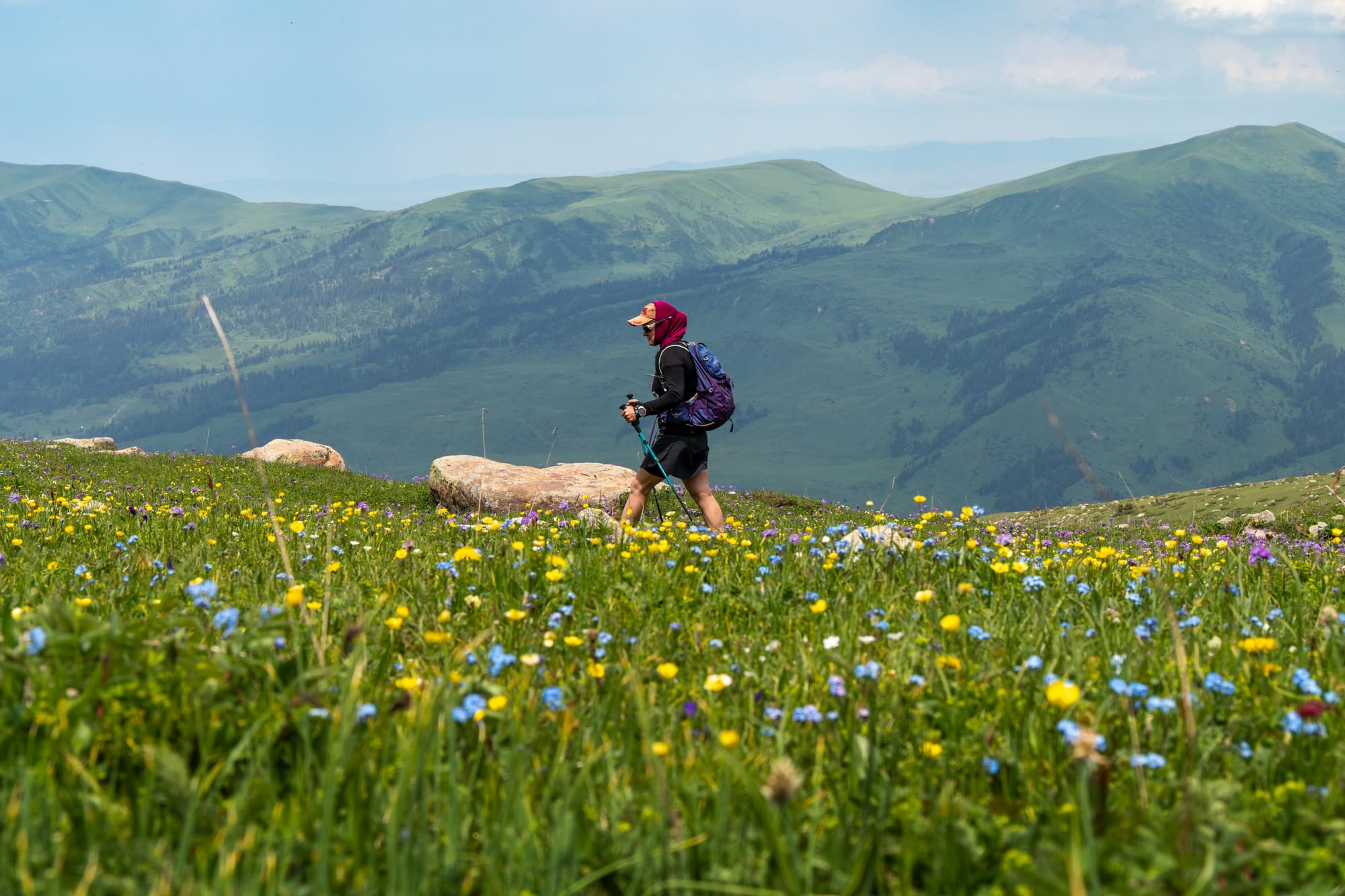
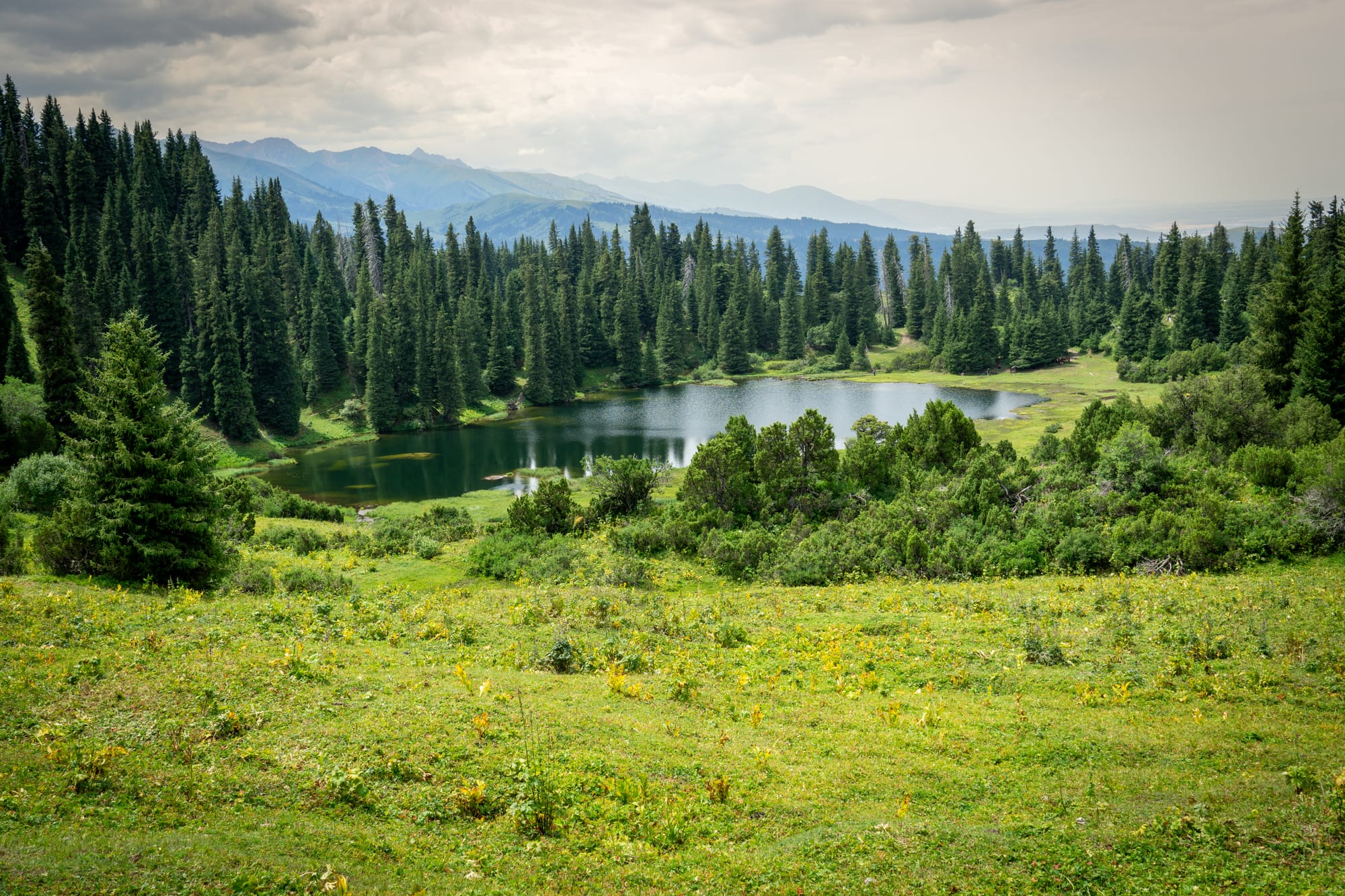
For those who want to venture further, there's a rich choice of multi-day tours — to the Boz-Uchuk twin lakes, over the Kok-Bel pass, or along the nine-day Ak-Suu Traverse, all fully bookable. @lessismorememories describe the way to one of the lakes: through blooming spring meadows, past grazing horses, until suddenly, beyond a ridge, the lake appears, breathtaking in its stillness — cows at the shore, and on the way back a yurt, whose resident turns out to own the cattle.
Along the way, you often meet children on horseback. "First they don't dare to get close, but as we wave them closer, their shy faces start to smile," say @lessismorememories. A few English words exchanged, names, a glance at the world map in the car — the world is bigger than one's own valley, and sometimes that's enough.
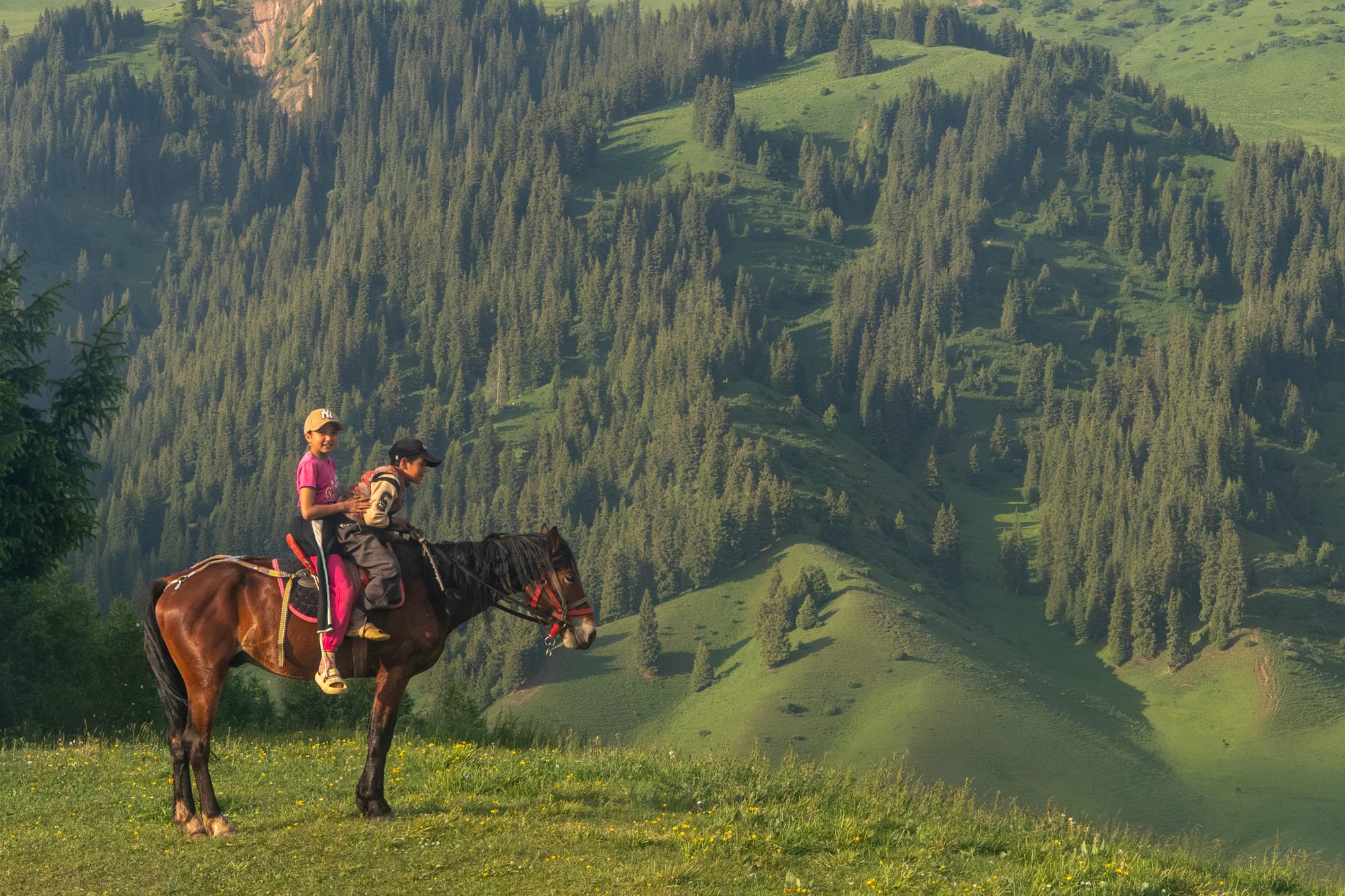
Just how remote the valley truly is became clear to Oscar and Tatiana too, who spent three weeks traveling the country: to continue their journey, they had to hitchhike — which, they say, is exactly what makes the place so special: few tourists, a tightly-knit village. About the people of the country, they say: "They are reserved people who might seem serious at first glance, but they have big hearts and a remarkably fun sense of humor. On top of that, they are incredibly generous and always ready to share their food with you, no matter how much or how little they have." Their magical moment: children in the mountains, playing around with their horses — "pure magic."

In winter, the valley turns into a destination for ski touring — and this is where things get genuinely exciting. The microclimate around the nearby Issyk-Kul Lake produces an unusual amount of bottomless, powdery snow that draws backcountry skiers from around the world. Those traveling for several days often don't stay in the village at all, but in one of the heated yurt camps in the Ak-Suu or Boz-Uchuk valley — reachable only on foot, by ski, or by snowmobile. In the middle of nowhere stands a yurt with a Russian banya, a traditional sauna: after the last descent of the day, a snack, a hot shower or the banya itself, then dinner together while the snow outside buries everything beneath it.
A valley in transition
Jyrgalan has changed relatively slowly since then — until now: just a few kilometers away, a new ski resort is being built, opening for the first time this winter, along with a road upgrade. It's neither visible from nor does it affect the existing trails — Gulmira sees it as a complement rather than a threat: new options for guests who don't want to ski tour but still want to get into the mountains.
"Skiing down untouched snow to our backcountry yurt deep in the mountains to enjoy the sauna, dinner, and then if the sky is clear have views of all the stars and milky way with nobody else around."
— GULMIRA, ALAKOL-JYRGALAN GUESTHOUSE
Asked about a magical moment, Gulmira doesn't find it easy to answer — recently, a guest used a light trap to collect 29 moth species in a single night. A descent, a banya, a starlit sky, not another soul for miles — that image carries the whole character of the valley within it.
Who is this for
Gulmira and the local guides are happy to help with planning — a guide will sometimes sit down with guests in the evening to map out the route together. If you're looking for a place with barely any connectivity set against a stunning backdrop, this is exactly right for you. You settle into the rhythm of the valley — and into the people who live here. "It is for people that love the outdoors and want to do activities in pristine nature," Gulmira sums it up herself. Oscar and Tatiana put it in strikingly similar terms from a guest's perspective: Jyrgalan, they say, is for anyone who wants to "genuinely experience the authentic essence of Kyrgyzstan, without seeking luxury or fancy amenities."
Practical Info
Getting there
From Karakol by shared taxi or private transfer, roughly 45–60 minutes on a partly unpaved road (currently being upgraded).
Cost
Guesthouses from around USD 15–25 per night for a double room with breakfast, full board available for an extra fee.
Best time to visit
June to September for hiking and horseback riding, December to March for ski touring.
Booking
Directly through the Alakol-Jyrgalan Guesthouse, the central hub of the village network.
Tours & Activities
Multi-day hikes to the Boz-Uchuk twin lakes, over the Kok-Bel pass, or along the nine-day Ak-Suu Traverse. For those with only a few days, Oscar and Tatiana especially recommend the hike to the Kok-Bel waterfall and Turnaluu-Kol lake — "though in reality, Jyrgalan is more about the experience than the specific places you visit." Horse trekking through the side valleys with local shepherds. In winter, ski touring on deep, powdery snow, with overnight stays in heated yurt camps complete with a banya, and snowmobile or piste-basher transfers available on request for larger groups.
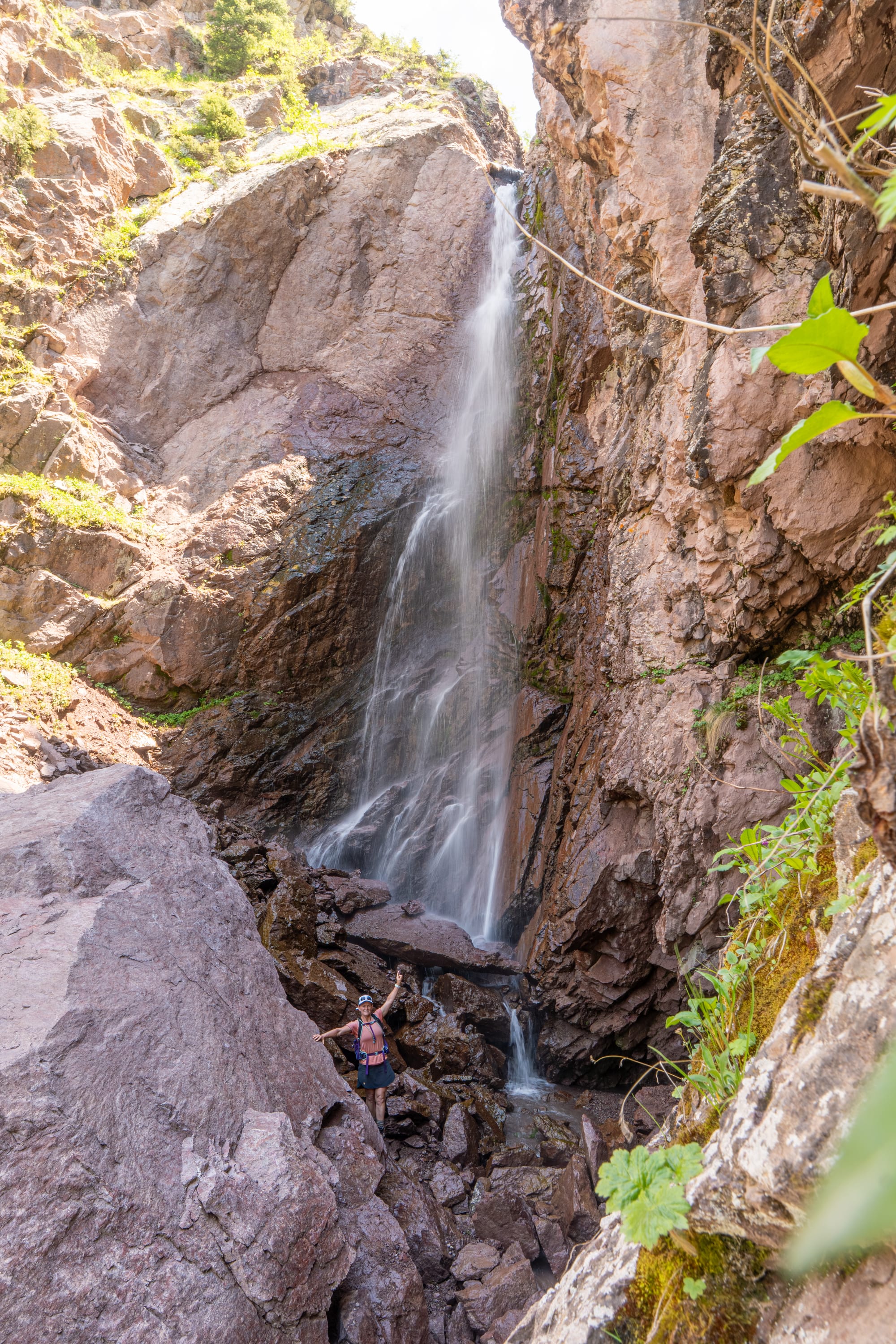
Hike to the Kok-Bel waterfall — © lessismorememories
Until a few weeks ago, Kyrgyzstan was little more than a name on a map to me. The closer I looked into this country, the faster I realized: it's the people, above all, who make you want to stay — the ones who, with their whole heart, try to give travelers something truly special.
I wasn't in Jyrgalan. I write that as openly as I always do. But the longer I researched this article, the more I fell in love with this valley — with the story of two people who refused to give up on a dying village, and with the images @lessismorememories described to me from their time wild camping there: a calf at the door, children on horseback slowly working up the courage to come closer, a sauna in the middle of nowhere. What moved me most was how honestly Gulmira talks about what's changing — including a new ski resort nearby that she easily could have left unmentioned. I truly hope this growing attention doesn't tip into mass tourism. But that this valley's potential is finally being recognized, that people like Emil and Gulmira are getting the credit they deserve — that alone is simply wonderful.
— The Curator