Umah Bé –
House of the Fish
And Dapur Bali Mula, the kitchen of original Bali · Desa Les, Tejakula, North Bali
Off the coast of Les, a reef is growing, colourful and alive. Corals sit on concrete domes and on figures that look like a crocodile made of bread – the fishers call them roti buaya, after the traditional Indonesian bread baked in the shape of a crocodile. Schools of bright fish drift through them, and turtles glide past as if they had never been away. The fishers have a dream: their bay should become an umah bé, a house of the fish. A good part of that dream has already come true.
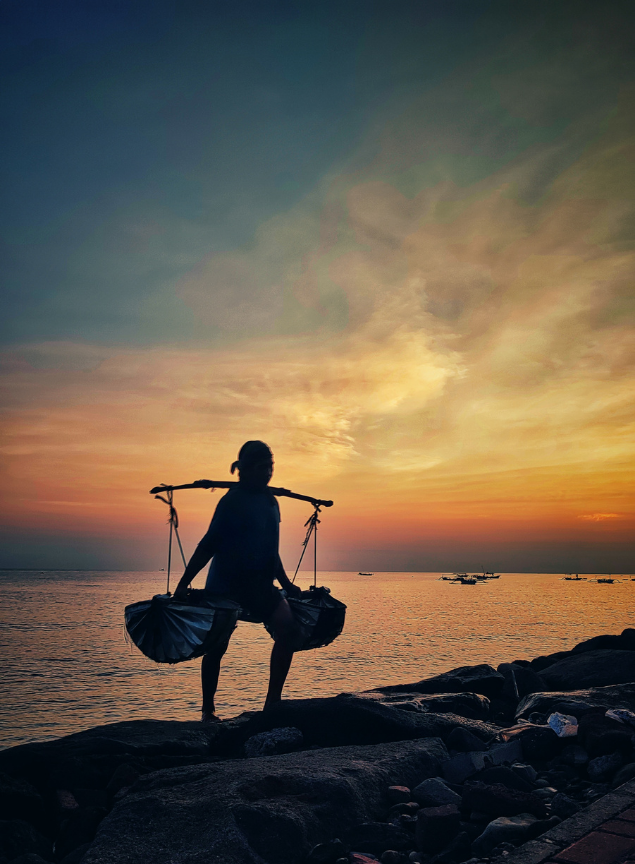
A few hills further up, a temple priest cooks dishes over a wood fire that must not be lost. With the fish the fishers bring ashore in the morning, and with the salt from the coast in front of the village. From the sea to the table, from one generation to the next: a cycle that could hardly be more beautiful.
Les lies on the quiet north-east coast of Bali, between volcanic slopes and the sea. The soil is dry, there are hardly any rice fields. People here have always lived from what the sea and the land give them. That is exactly what makes this village special: what nature offers is used, and no more. It wasn't always like that. But it has become so again.
How a village of fishers destroyed its own reef, then brought it back with their own hands – and why a temple priest now cooks what the sea gives again.