Tamezret · Matmata Mountains · Tunisia
A door in the rock.
Behind it: 1,000 years.
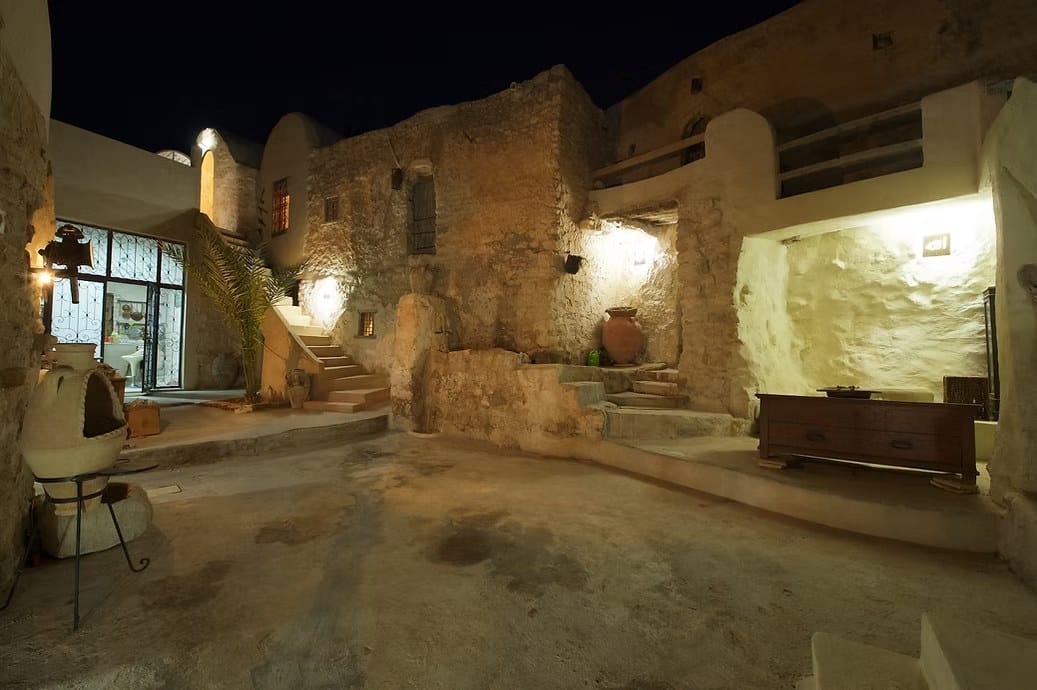
L'Auberge de Tamezret is not a hotel. It is a Berber farmhouse where centuries sleep in stone, stories are told at the table and dinner is shared with laughter.
© Stefan Offermann / L'Auberge de Tamezret
The door is small. It looks like every other door in Tamezret — an old wooden door, set into a mud wall, in an alley, in a village that most maps have forgotten. No sign. No number. You search, you find, you knock — and suddenly you are standing inside one of the most extraordinary houses in North Africa.
A houch carved from rock
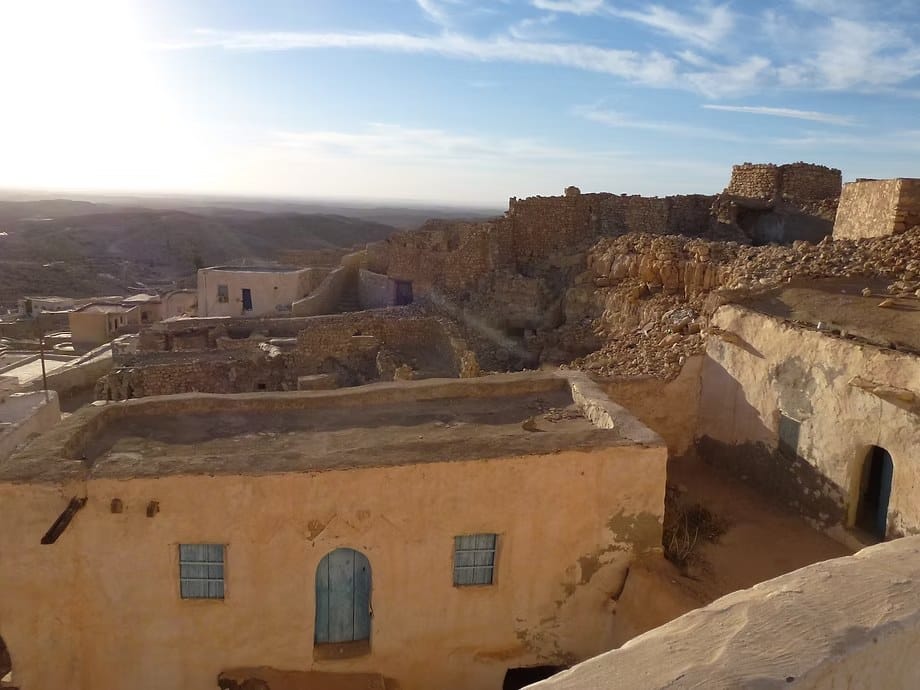
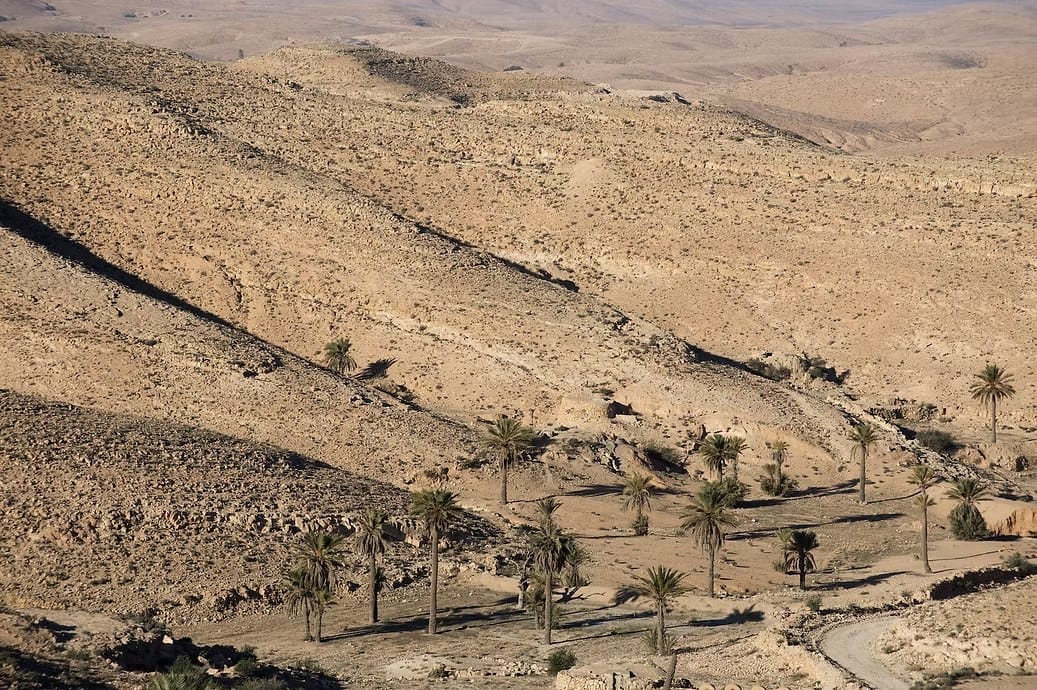
Tamezret means Ath Mizret in Berber — "children of Mizret". The village sits in the Matmata Mountains, twelve kilometres west of Matmata, fifty kilometres from Gabès. On the way here, you pass no hotels. No souvenir market. Only rock, olive trees and silence.
L'Auberge de Tamezret was built from the ruins of a crumbling houch — a traditional Berber farmhouse with ten rooms and three caves, partly hewn into the limestone. Patrick Bourseaux, a trained hotelier from Belgium, discovered the house in 2012 and began restoring it in 2013. "We inspired the house to get a new life," he says.
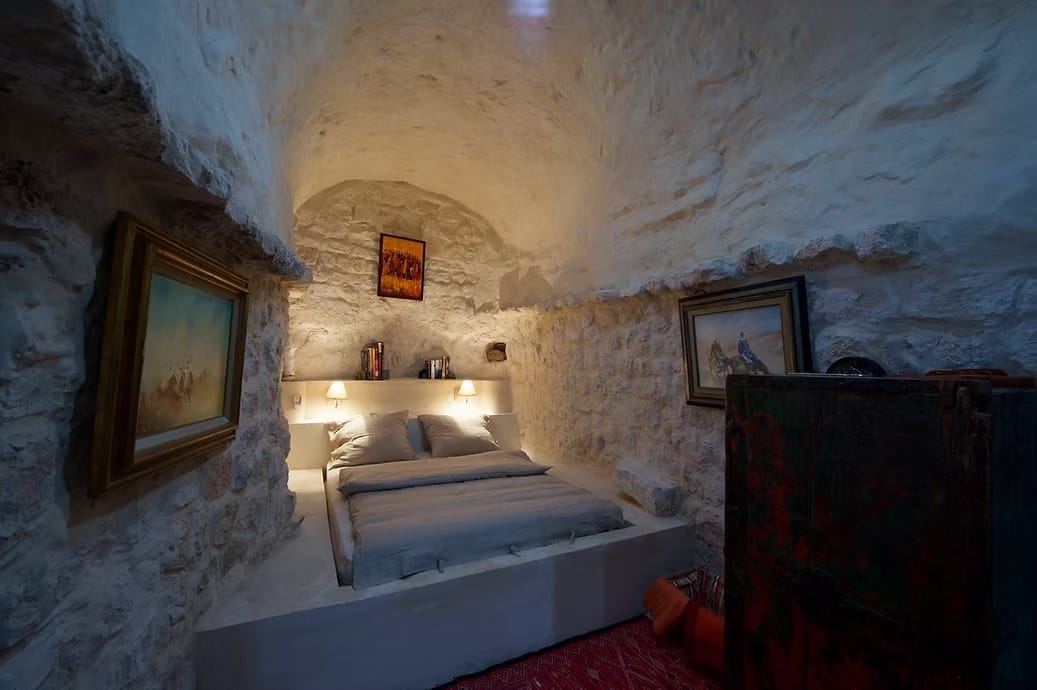
Today there are three rooms: Dahya, Oumema, Toumadir. Each one different, each with original doors and wooden-beam ceilings. One of them has the bed set into a rock alcove — you crawl in, lie still, and hear nothing but the wind above the village.
Dinner in the cave
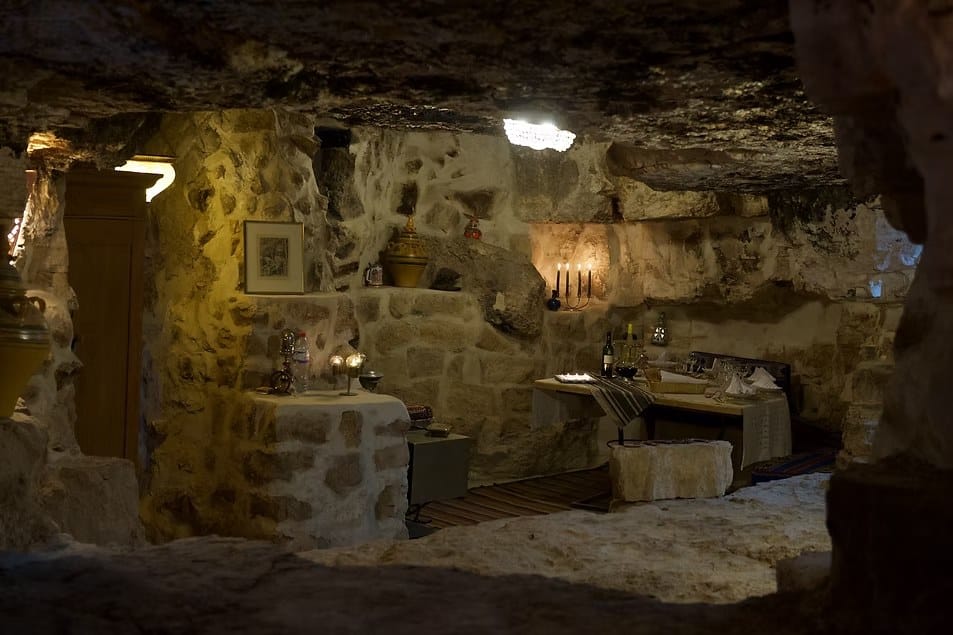
Every evening you sit down at a shared table. You don't know in advance who else will be there — motorcyclists from Austria, a couple from England who arrived by train, a group from France. Patrick pours wine. Tunisian wine, from a well-stocked cellar that leads into a rock cave someone carved into the mountain 2,000 years ago.
"Dinner is served in our cave — Tunisia's oldest dining room."
— Patrick Bourseaux, L'Auberge de Tamezret
Sabrine cooks. She starts with the kemia — small Tunisian starters, four or five different ones, each seasoned differently. Then comes the main course — you get what the month offers, not what a menu says. No orange juice for three months now. Pomegranate coming soon. And to finish, a homemade dessert, sometimes Om Ali — an Egyptian pudding that shows how naturally Middle Eastern flavours belong in Tunisian cooking.
The nearest restaurant is fifteen kilometres away — after a few days, you understand why you'd rather come back here.
Patrick, Sabrine — and their neighbours
Patrick has lived in Tunisia since 2005. After the 2011 revolution, he stayed — and instead of looking for a new job, he looked for a house.
Sabrine cooks what is available. And she cooks it in a way that lets guests experience Tunisian culture while still being seduced by something unexpected.
Ten minutes on foot up the hill stands the Café Ben Jemaa — founded in 1932, today run by Kawther. She returned from Tunis in 1999 and completely renovated her family's café. Today she explains the history of the village and the Berbers in English. The café has oriented itself towards visitors — and the locals still come. Because Kawther is one of them.
And there is Mongi Bouras. IT professional, formerly in Tunis, returned to the village twenty years ago. He took over the family house and created a museum — a verbal museum with small objects and a great deal of knowledge. Travel agencies bring groups to him. He explains Berber culture and the Christian, Jewish and Muslim history of Tunisia.
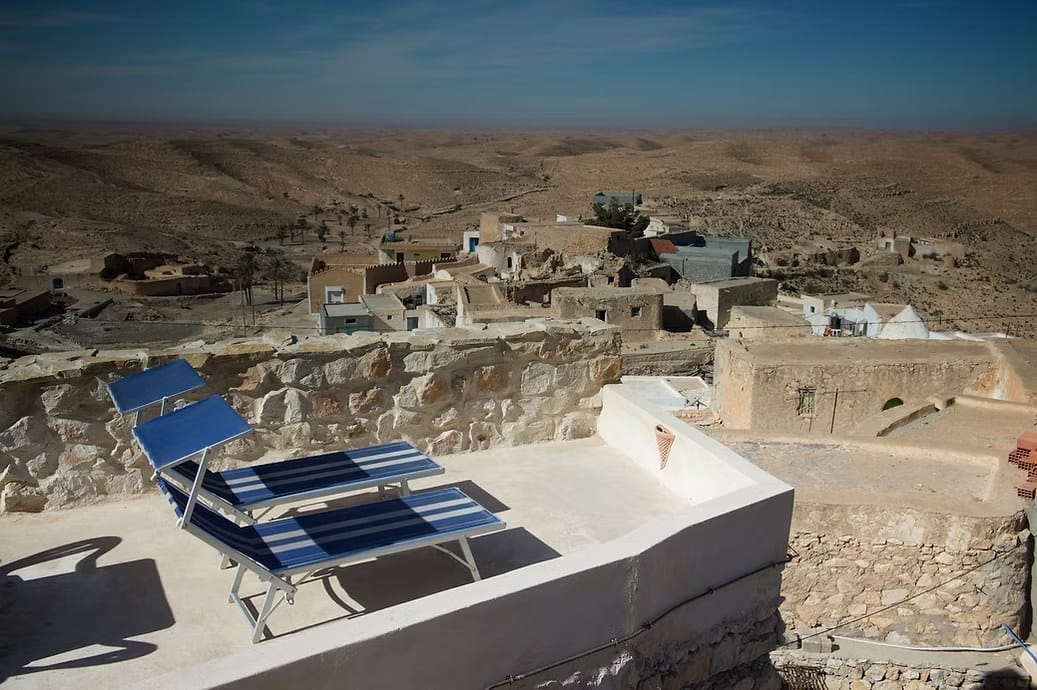
Simple, special and comfortable.
The bathroom doors are low. The stairs are steep. The beds lie in rock alcoves without side access. This is not a flaw — this is the house. If you have always wanted to know what it feels like to sleep in a 2,000-year-old cave, here is your answer.
Three rooms means: you arrive, you know the other guests by name at the first dinner, and you share breakfast the next morning with someone you would never otherwise have met.
Patrick's guests come from Austria, Switzerland, Belgium, England. Motorcyclists who take the ferry from Genoa. Couples who no longer want to fly and travel by train to Marseille. Travellers who know Djerba and understand: the interior is a different Tunisia.
Practical Information
Getting there
From Djerba approx. 1.5–2 hrs by rental car or private transfer. From Tunis approx. 5–6 hrs by car.
Best time to visit
March to May & October to November. Mild, sunny, no extreme heat. Ideal for hikes and desert tours. Summer (May–September) too hot for excursions.
Cost
Approx. €100–115 per night. Double room on half-board — breakfast and dinner included. Three rooms only.
Booking
tamezret.com · +216 75 244 026 · Booking.com. Book early — only three rooms.
On the ground
No taxis in the village. Arrive by rental car or private transfer. Three shared taxis daily to Matmata and Gabès.
Safety
Tamezret and the entire route are within the safe tourist corridor. Desert excursions only with a local guide — exactly what Patrick arranges.
Excursions from Tamezret
Patrick arranges all excursions on request — your driver picks you up directly at the Auberge.
Half day · on foot — Village & Museum
Mongi Bouras introduces the history of Tamezret at his Berber museum. Ten minutes uphill: Kawther and Café Ben Jemaa, open since 1932. Spiced tea and panoramic views.
Full day · by car — Berber Villages & Ksour
Toujane (30 min), Chenini and Douiret (1.5–2 hrs), Ksar Ouled Soltane — the most complete multi-storey ghorfa citadel in the region. La Grande Traversée du Dahar: 200 km trek. Km-0 is right outside the Auberge. Guides: destinationdahar.com
1–2 nights · 4x4 — Desert Night at Ksar Ghilane
One hour south: Grand Erg Oriental. Camp Zmela, away from the main oasis — private tents, hot spring (34°C), sunrise over the dunes. Return directly to the Auberge.
Part II — Lasfar, Terguil and the open sand
A méharée is not a tourist attraction. It is a different pace. A different way of arriving.
No quad. No 4x4. Just camels.
A méharée is a caravan through the Sahara — on foot and on camelback, with a chamelier as your companion, a bivouac tent as your shelter, and nothing to disturb you. No pool. No generator. No buffet. You sleep in the sand. You wake up when the sky begins to lighten.
In Tunisia, a méharée can be experienced between Douz and Ksar Ghilane — and combined with a stay at L'Auberge de Tamezret. You travel to Douz by 4x4, find a chamelier, and set off.
"I went to the café where the camel guides gather and simply asked around. That's how I met Omar."
— Pierre Lafont
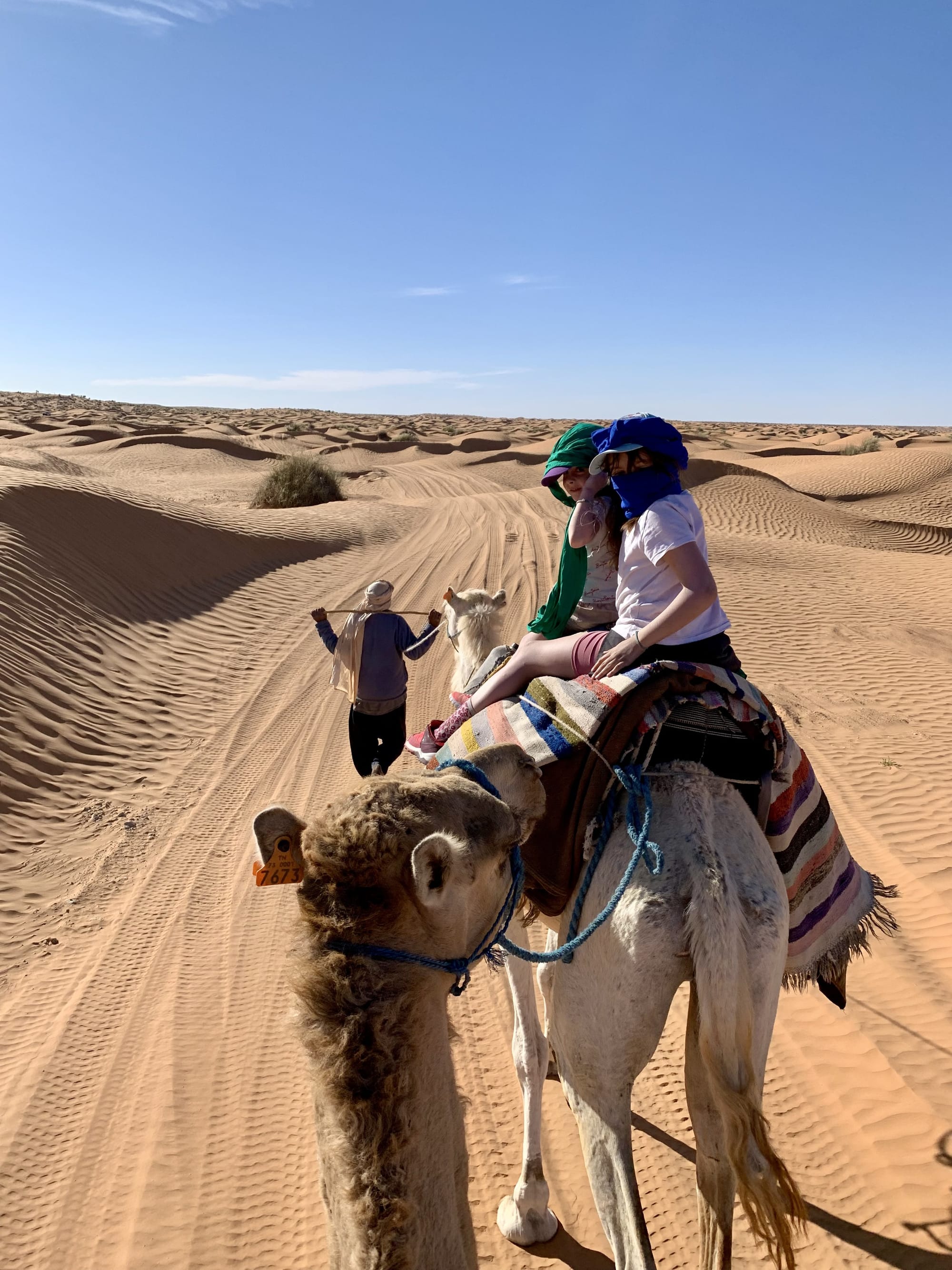
Omar, Lasfar and Terguil
Pierre is not an adventurer. He is a father, travelling with his family. He didn't book a large tour operator. He walked into the café, asked around, and found Omar.
A few hours later they were buying food together and preparing the camels: Lasfar and Terguil. Then they set off — Omar, the family, and the open horizon.
"What made the experience so special wasn't just the desert — it was sharing it with Omar. He wasn't simply guiding us through the Sahara; for one evening and one night, he invited us into his way of life."
— Pierre Lafont, méharée with Alam Voyages
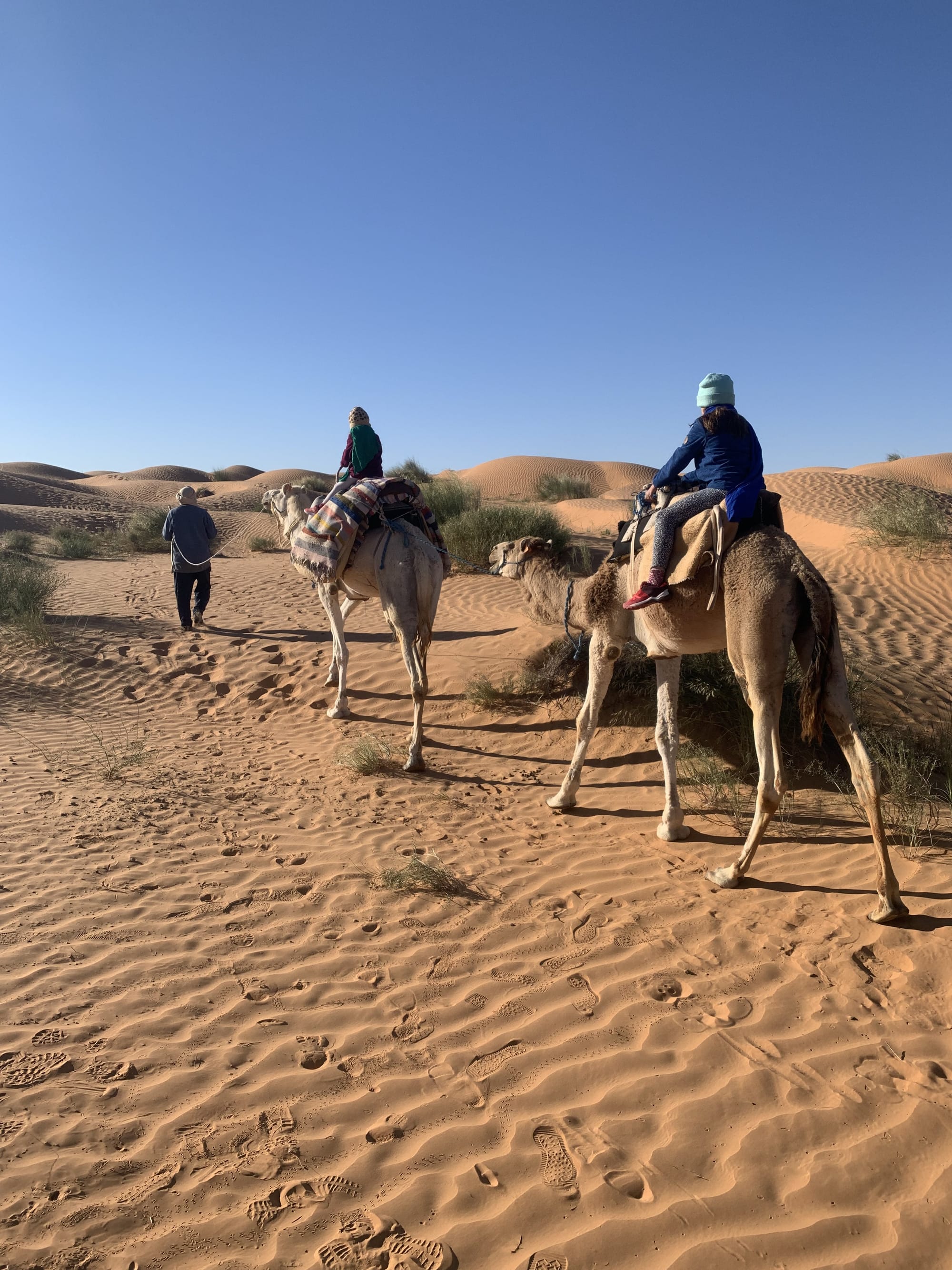
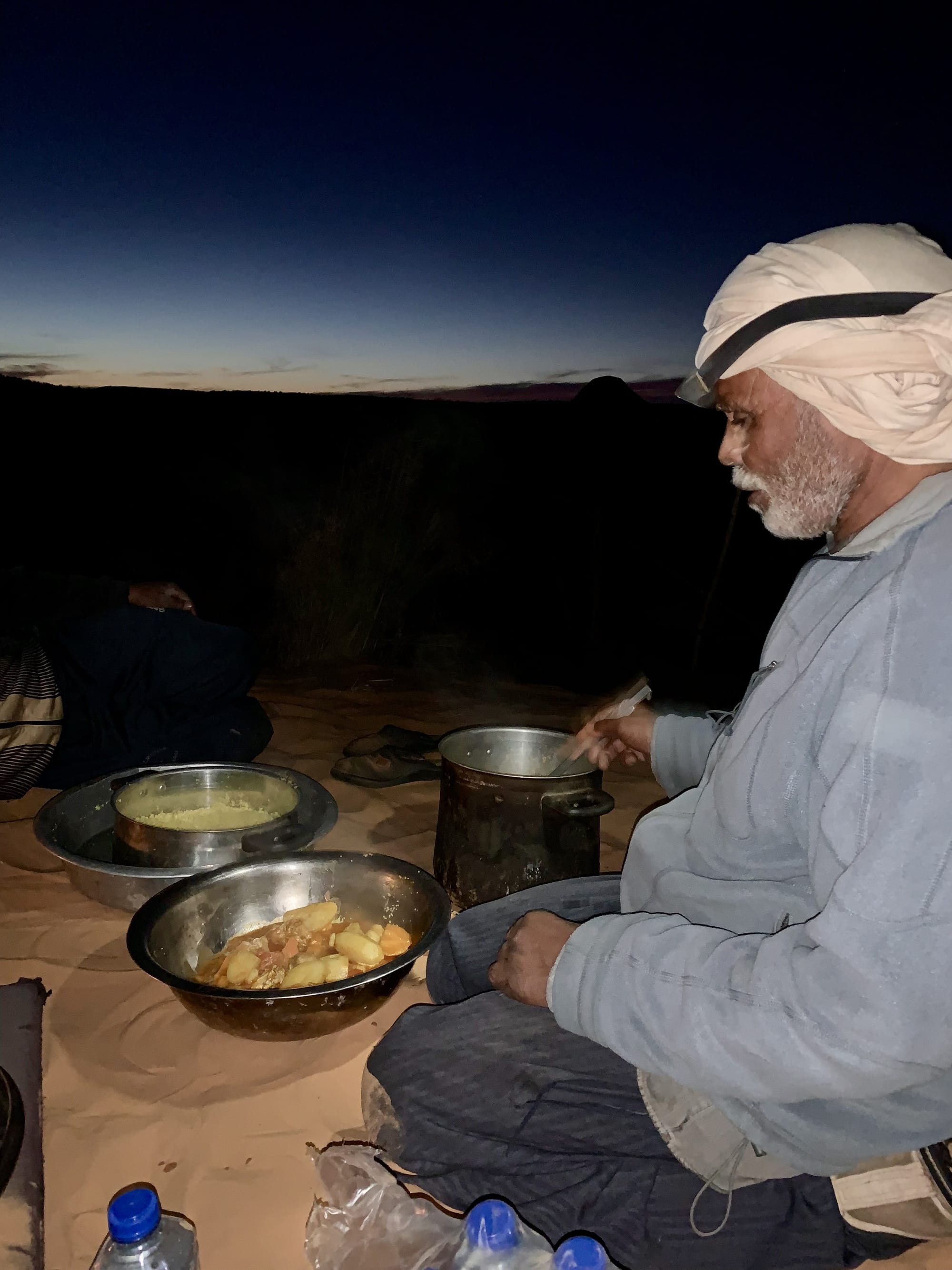
"It certainly feels like an adventure, but you don't need to be an adventurer. You just need to be curious. The less you try to control the experience, the more you'll enjoy it. Let the desert set the pace."
There is almost nothing to see.
Pierre writes: "Travelling isn't always about seeing more. Literally, there's almost nothing to see in the desert. Sometimes it's about slowing down enough to truly notice where you are."
His family won't remember every kilometre they drove across Tunisia. But they will remember the night in the Sahara — riding camels, eating couscous around a fire, sleeping beneath a sky full of stars, waking to sunrise over the dunes.
That is the méharée. Not an experience for everyone. But an experience that stays.
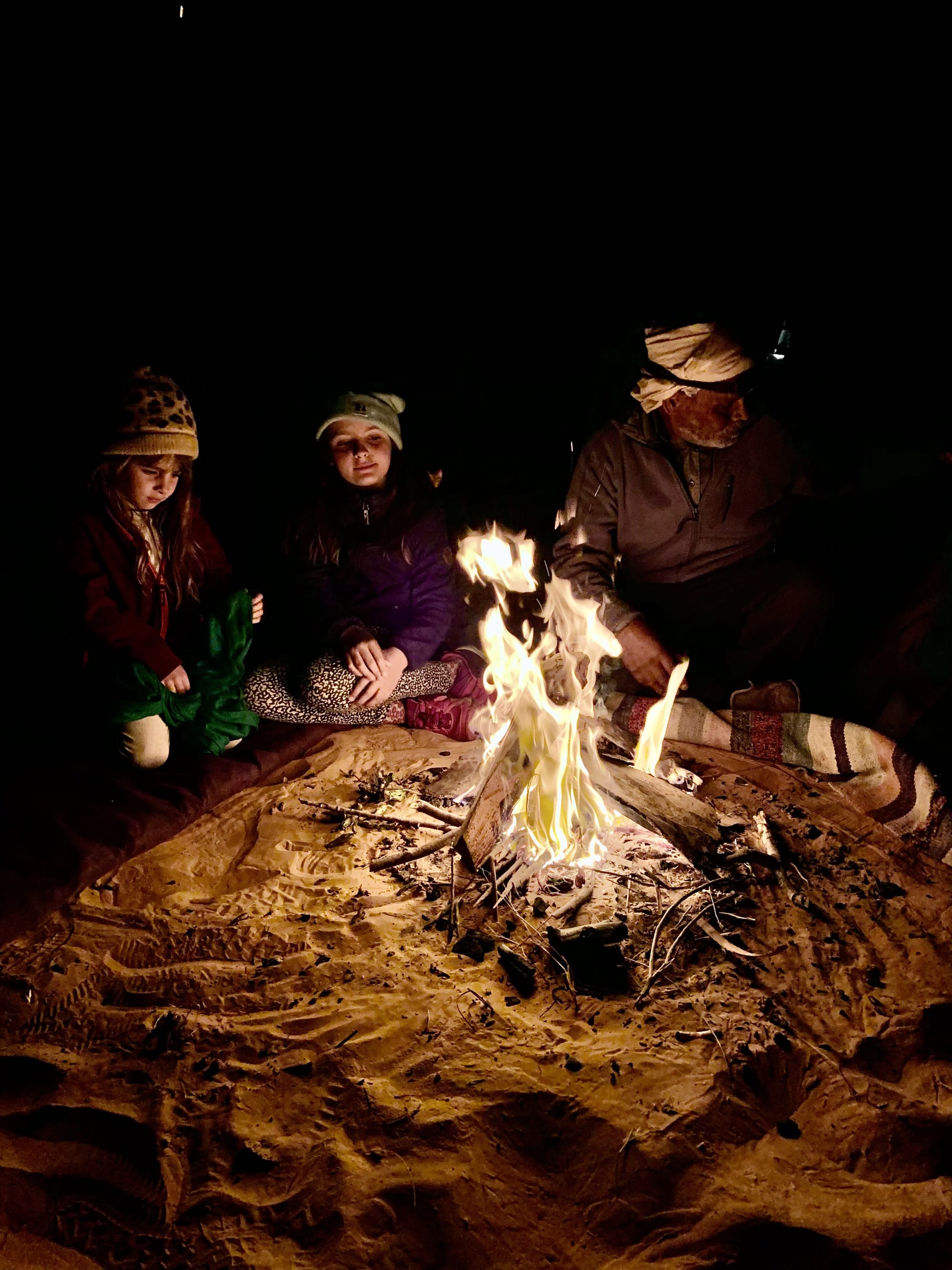
How to book a méharée
Operator: Alam Voyages · Contact: Hatem · alam-voyages.com · Based in Douz
Route: From Douz towards Ksar Ghilane · Bivouac, no fixed camp · Can be combined with Auberge stay
Who it suits: Families, couples, the curious · No fitness level required
Best time: October to April · Summer too hot
Editor's Note
I have not been to Tamezret. And right now, I regret that deeply. What keeps drawing me back to this place is the surprise — I had expected little and received so much.
The south of Tunisia is an entirely different world. But not an empty one. The desert is alive — in centuries-old cave villages, in the traces of the Berbers, in the silence between two dunes. You experience little, and at the same time a great deal. A méharée on camelback. A walk into the vastness. And in the evening, after a long day in the heat, you sit at Café Ben Jemaa, drink a coffee and listen to Kawther — stories about a people who were here long before anyone thought of tourism.
That is Tamezret.
Auberge photos: © Stefan Offermann — courtesy of L'Auberge de Tamezret. Méharée photos: © Pierre Lafont.