Earth, Water
and Stars
An estate that has waited for the same family for 200 years. A lake beneath which a village lies. A sky you will never forget.
Sometimes you find a place that stops you — and you wonder why it took you so long.
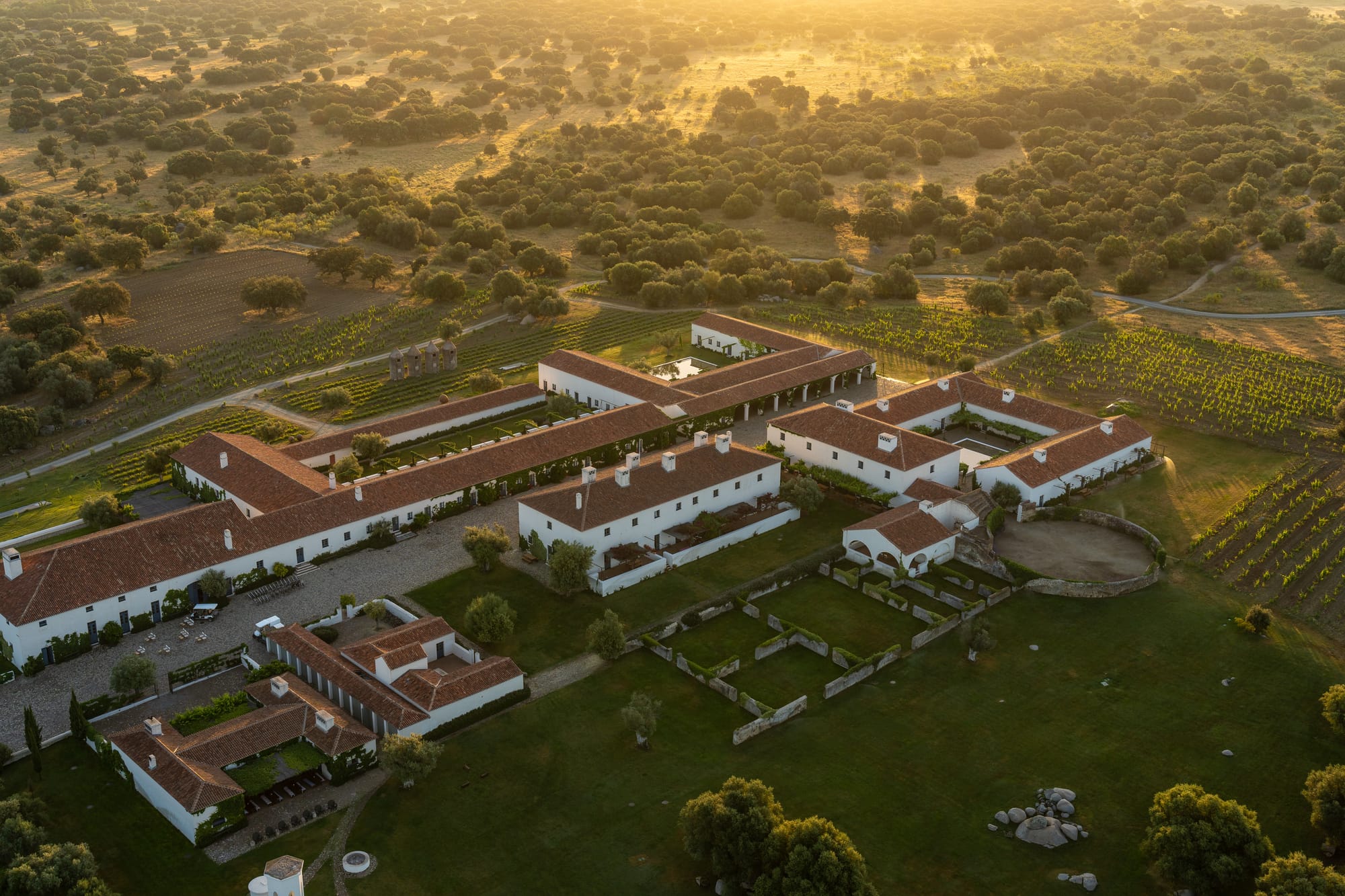
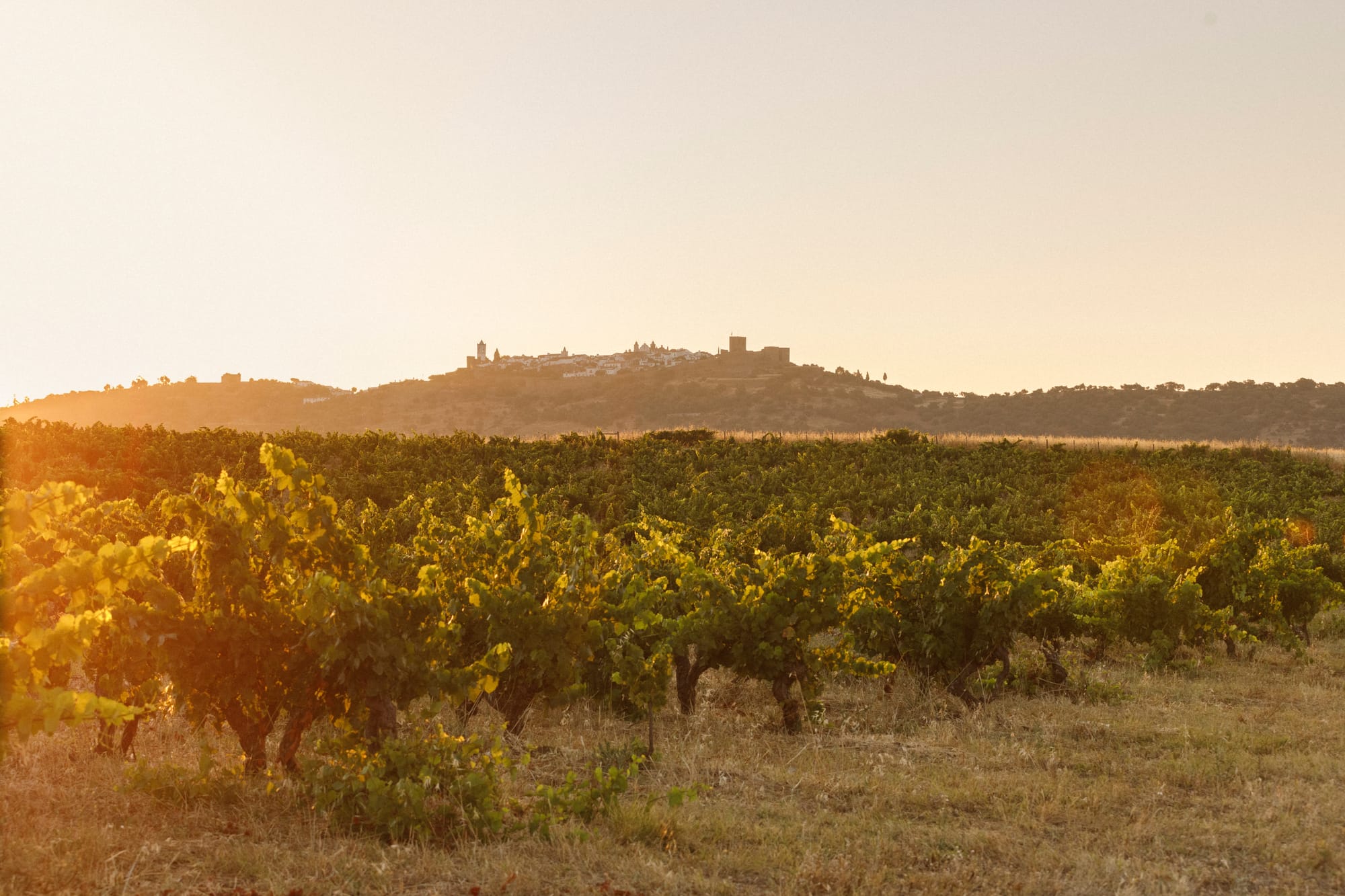
São Lourenço do Barrocal is one of those places. A former farming village founded in 1820 — white walls, terracotta rooftops, vineyards stretching to the horizon and, on the hill above it all, the medieval village of Monsaraz. You arrive and are immediately welcomed. Not checked in. Welcomed.
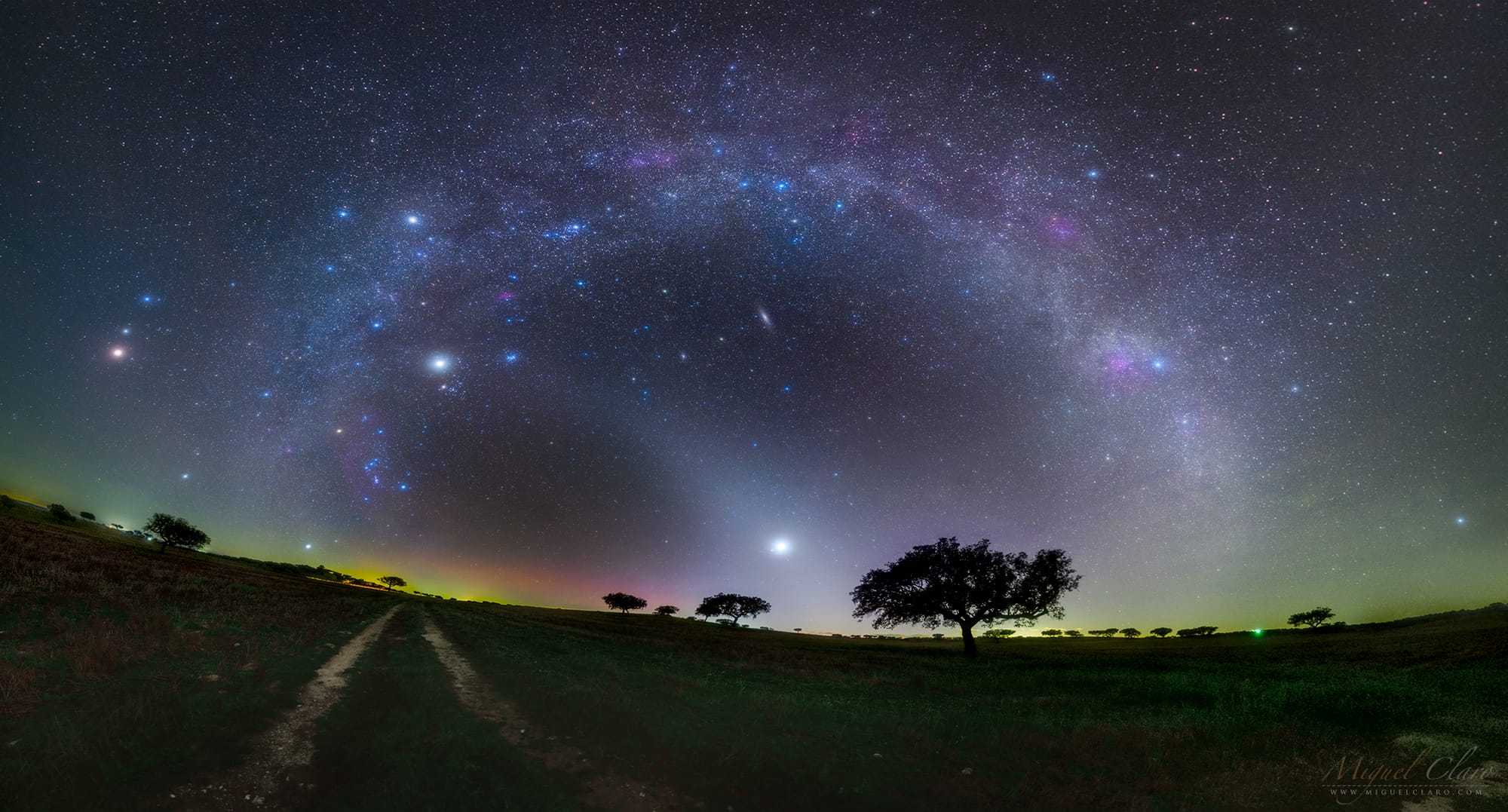
A few kilometres further, a lake waits — Europe's largest. Beneath its surface lies a submerged village. Above it, at night, the Milky Way unfolds — so vast, so still, that you stop breathing and simply look.
The Alentejo takes its time. And somewhere along the way — after a long breakfast, after a quiet night on the water — so do you.
I — The Earth
São Lourenço do Barrocal
© Jorge Vieira / São Lourenço do Barrocal
© Ash James / São Lourenço do Barrocal
The estate was founded in 1820 as a Monte Alentejano — a self-sufficient farming community with its own bakery, blacksmith and school, home to 50 families who lived and worked the land together. The Uva family has owned it ever since, across eight unbroken generations — except for a brief period after the Carnation Revolution of 1974, when the property was nationalised and occupied. When José António Uva reclaimed it, he spent two years living on the land before making a single decision. He wanted to understand the place first.
He then commissioned Eduardo Souto de Moura — Pritzker Prize laureate 2011 — for a 14-year restoration undertaken with the utmost care. Not one of the 250,000 roof tiles on the entire estate is new. Every tile was either preserved from the original buildings or sourced from across the Alentejo and Algarve — so that the patina of the place, its age, its lived-in quality, would remain.
What emerged is not a hotel. It is a village that breathes again. Over 90 percent of the team comes from the region. The cushions in the rooms are from Monsaraz. The clay plates from São Pedro do Corval. The rugs from Arraiolos. Turn a cup upside down and you will find the name of the workshop that made it — a few kilometres away.
"If your idea of elegance is flash and gold trim, São Lourenço do Barrocal isn't for you. But if you define elegance as thoughtful preservation, immense open space, and quiet luxury that doesn't need to shout to be noticed — this Alentejo estate is entirely exceptional."
— Booking.com
Arrive. Linger. Wonder.
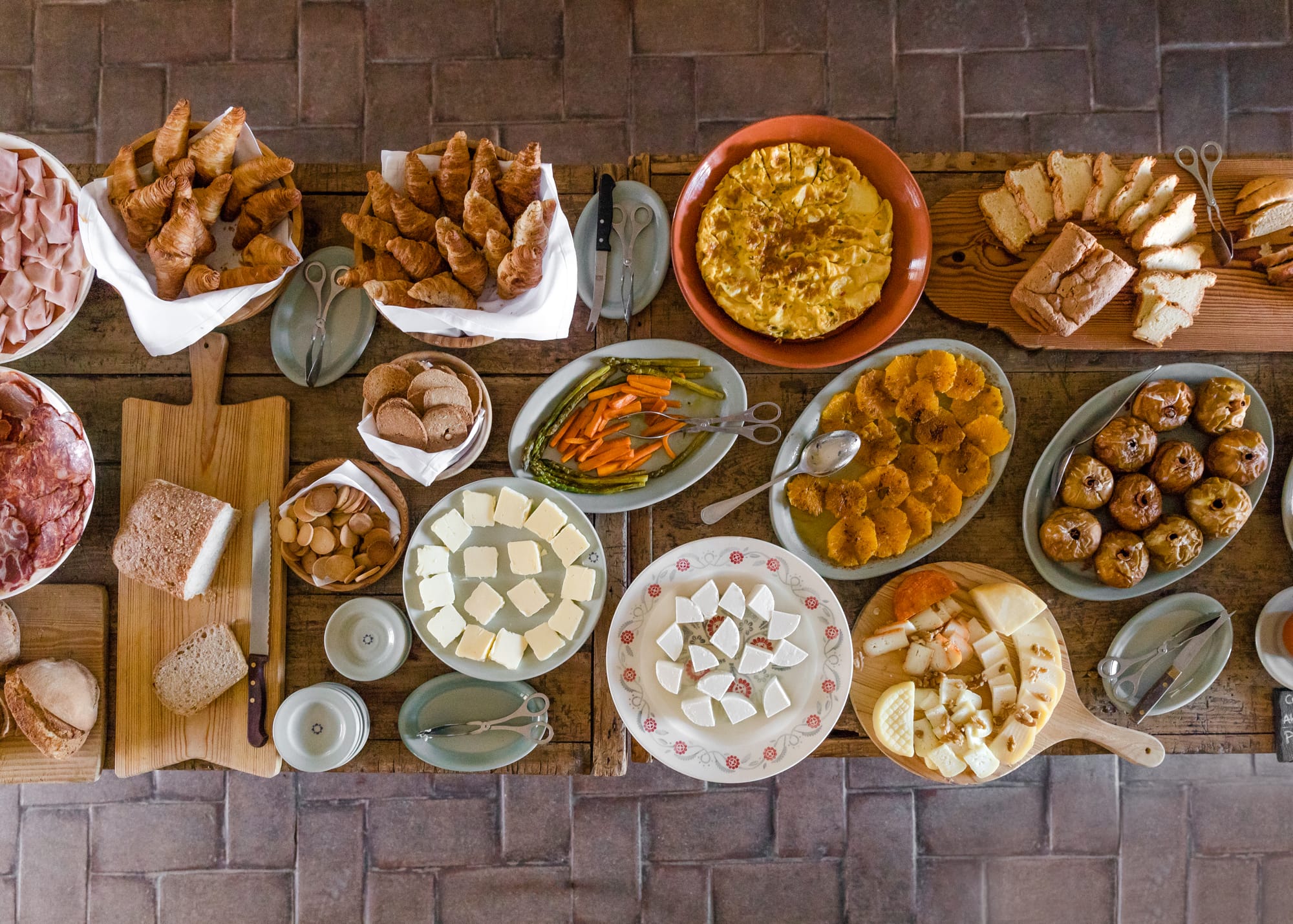
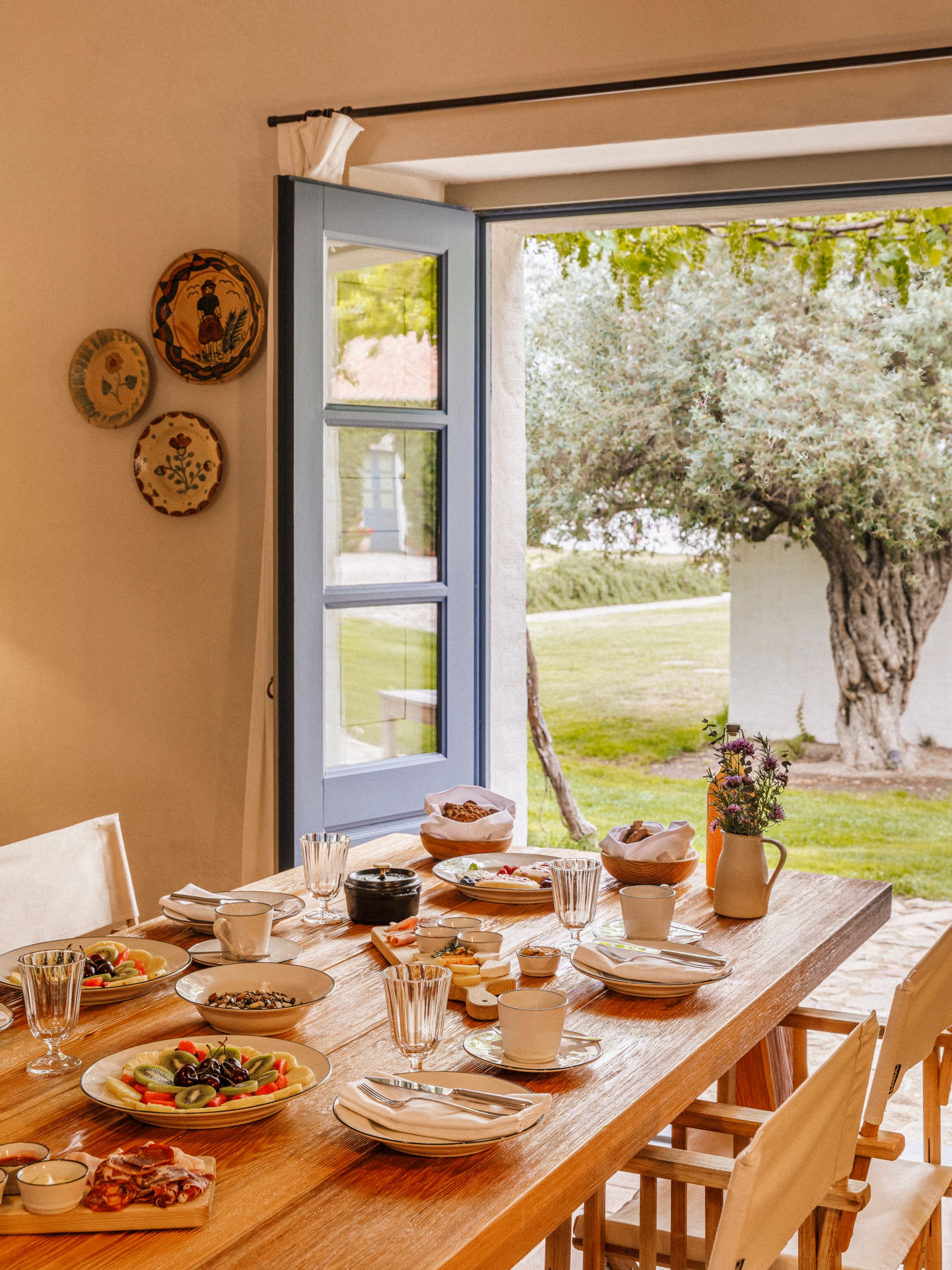
Breakfast is served at long wooden tables outdoors, beneath vines that trail across the whitewashed walls. Olive oil, wine, vegetables, herbs, meat from free-ranging cattle on the estate, honey straight from the hives. What is not produced here comes from within 30 kilometres. You look out over the vineyards, across the dry expanse of the Alentejo, up to Monsaraz on the hill — and you stay. An hour, two hours.
© Ash James / São Lourenço do Barrocal
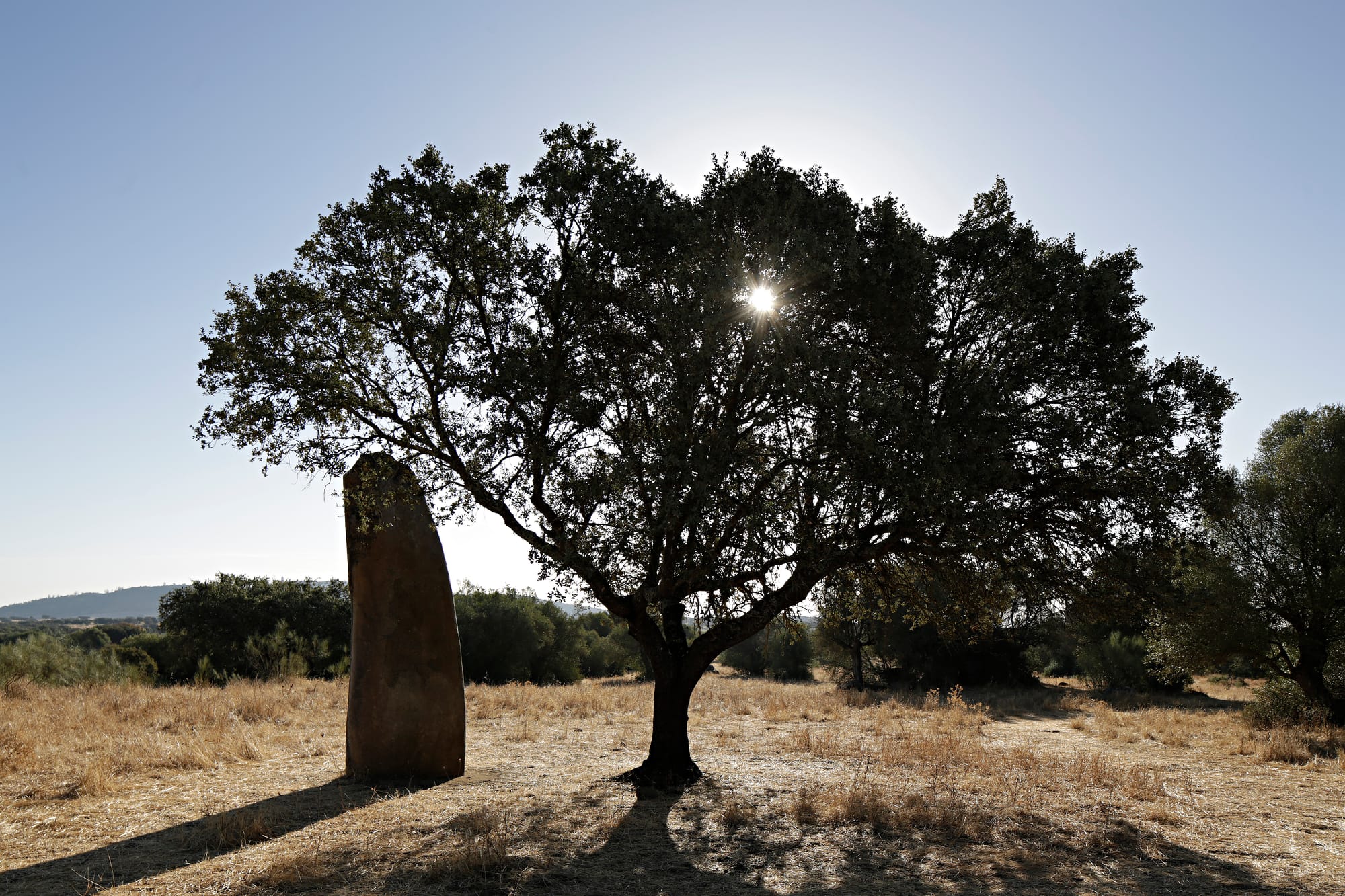
Those who wish can wander through vineyards and olive groves on foot or by bicycle. Ride Lusitano horses through cork oak forests. Go for a morning walk and watch hot air balloons rising through the mist. Visit the beekeeper. And then: the pool. The water. The stillness. And beside the pool, where it has stood for thousands of years: the Barrocal menhir — Portugal's tallest standing stone, 5,000 years old.
"Pause for a moment. You can almost hear the church bells of Monsaraz drifting across the hill."
— Barrocal, on the menhir on the estate
© Nelson Garrido / São Lourenço do Barrocal
In the restaurant, partridge escabeche is served to José's grandmother's recipe. And the olive oil cake, baked to the recipe of the pastry chef's grandmother. The food here is not a menu. It is a family history.
Francisco José, Fabio and Jerónimo
Francisco José oversees the estate's agriculture. He remembers running through these grounds as a child — his father was the foreman, the farm was his playground. He remembers men coming from outside the region just to gather thistles — dried thistles, used in cheesemaking. He remembers the hunting. The horses. Today he manages the same land his father once did.
Then there is Fabio, the beekeeper. He calls the bees "so cute" — and his enthusiasm, as guests report, is infectious. He even designed a special dish so that not a single drop of honey goes to waste.
And then there is Jerónimo. Many guests write back after they have gone home — not to ask whether the room is still available. They ask how Jerónimo is doing. Whether the foals have been born. What is happening on the estate. Who Jerónimo is? That is best discovered for yourself. "Everyone leaves feeling like they're part of its story."
"In just three days, we learned the names of at least ten staff members — because they were that present, that engaged, and that authentically kind."
— Tripadvisor, December 2024
An honest note on price: Barrocal is expensive — from around €490 per night. For those who consider that almost everything comes from the estate's own organic production, that local craftspeople and producers are actively supported, and that over 90 percent of the team comes from the region — the price makes sense. Wander Wonders thinks so too.
II — The Water
Lake Alqueva — and the village that disappeared
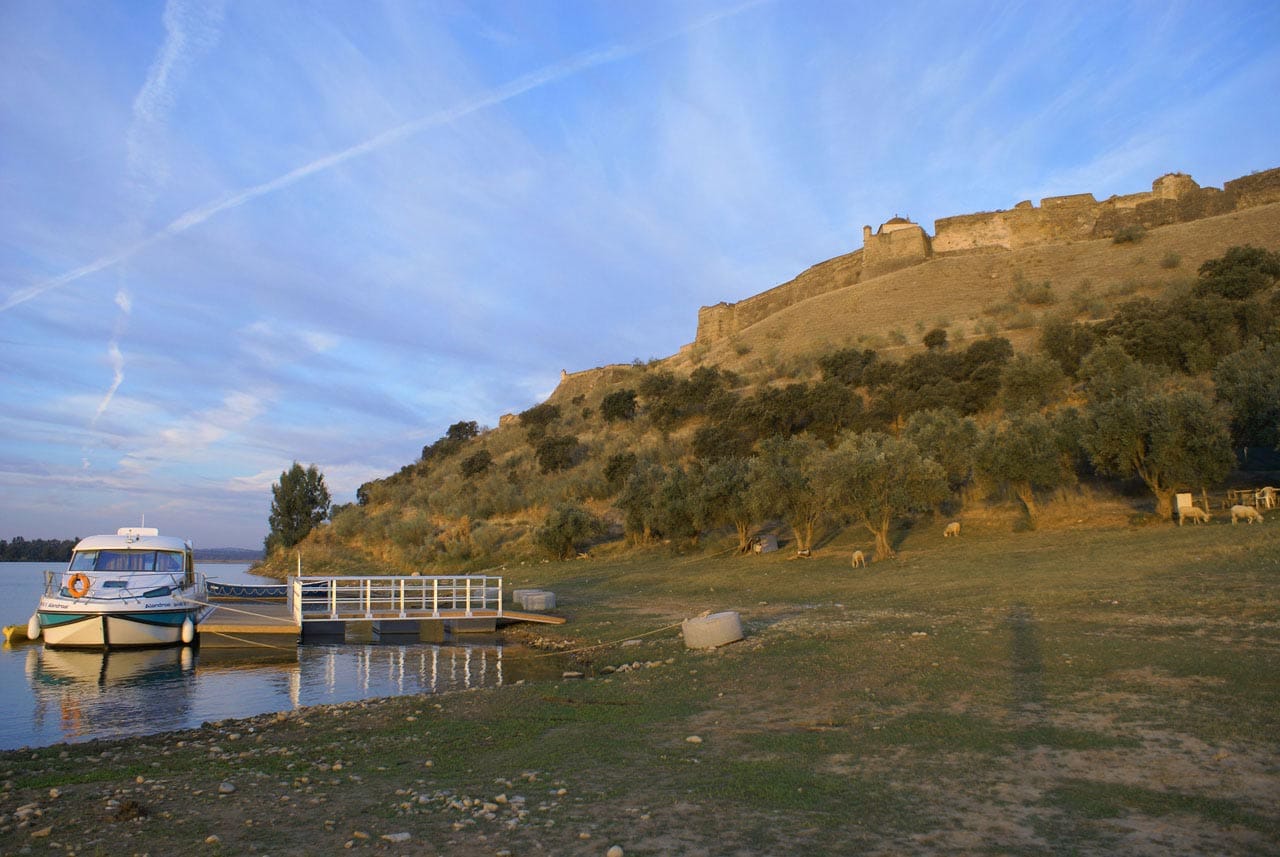
Lake Alqueva, at around 250 square kilometres, is Europe's largest artificial lake. The dam was completed in 2002 and the water rose — slowly, over weeks. And with it, Luz disappeared.
Luz was a village. With a church, a cemetery, houses in which families had lived for generations. The residents made an extraordinary decision: their village would be rebuilt — house by house, neighbour by neighbour. 373 people moved into the new Luz. The old Luz sank beneath the water. Below the surface lie the remains of Roman roads and the walls of the old Lousa castle. In the new Luz, the Museu da Luz keeps the memory alive. And at the water's edge hangs a swing — directly above the place where the old village once stood.
Chug along. Drop anchor. Drift.
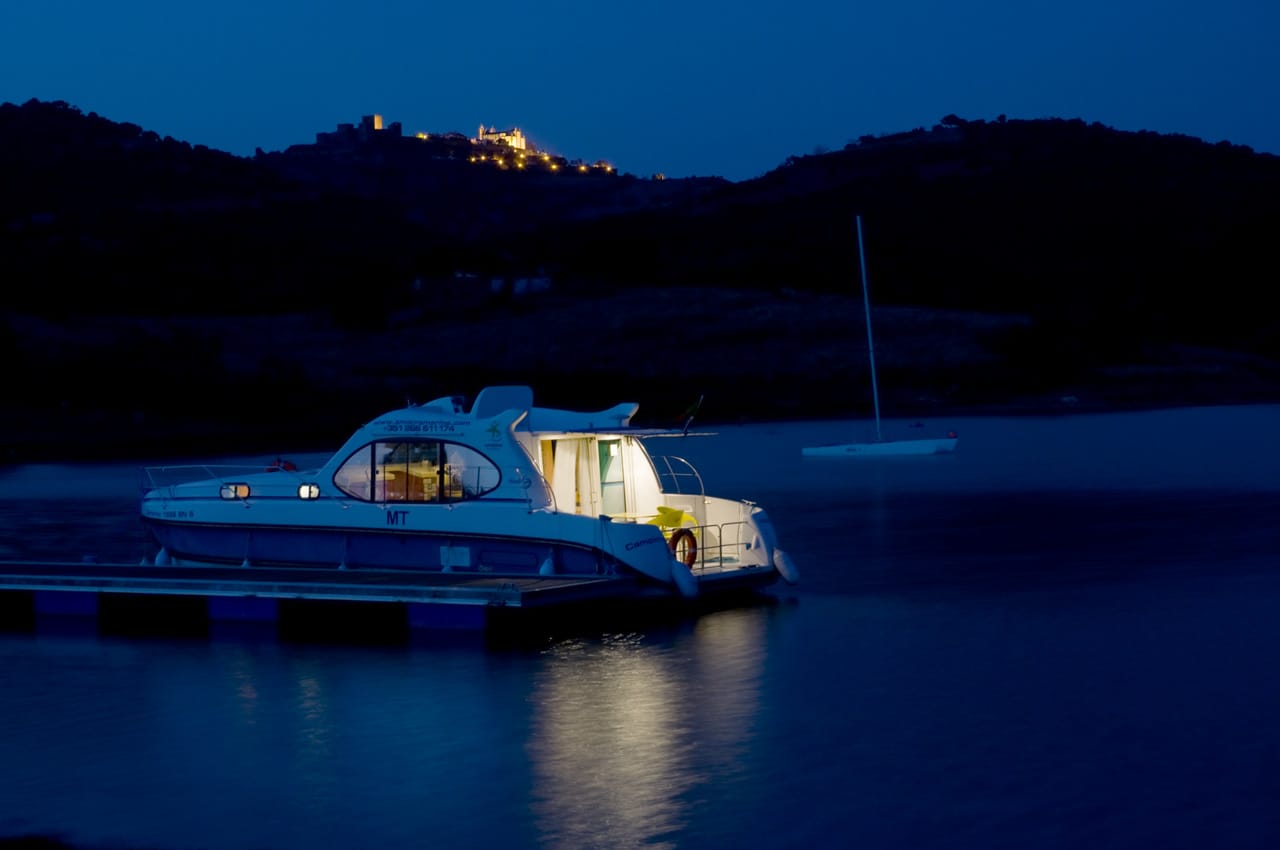
From Amieira Marina you set out onto the lake. No boating licence required. After two hours of instruction, you take the helm yourself. The boat travels at ten kilometres an hour — barely faster than a walk. The fleet ranges from two-person boats to twelve-person vessels. On board: a small kitchen, a bathroom, a sun deck, a canoe.
"Many guests are surprised by the sense of peace and freedom they experience once they leave the marina. They often don't expect how quiet the lake is, how easy it is to navigate, or how quickly they disconnect from everyday life."
— Tiago, Amieira Marina
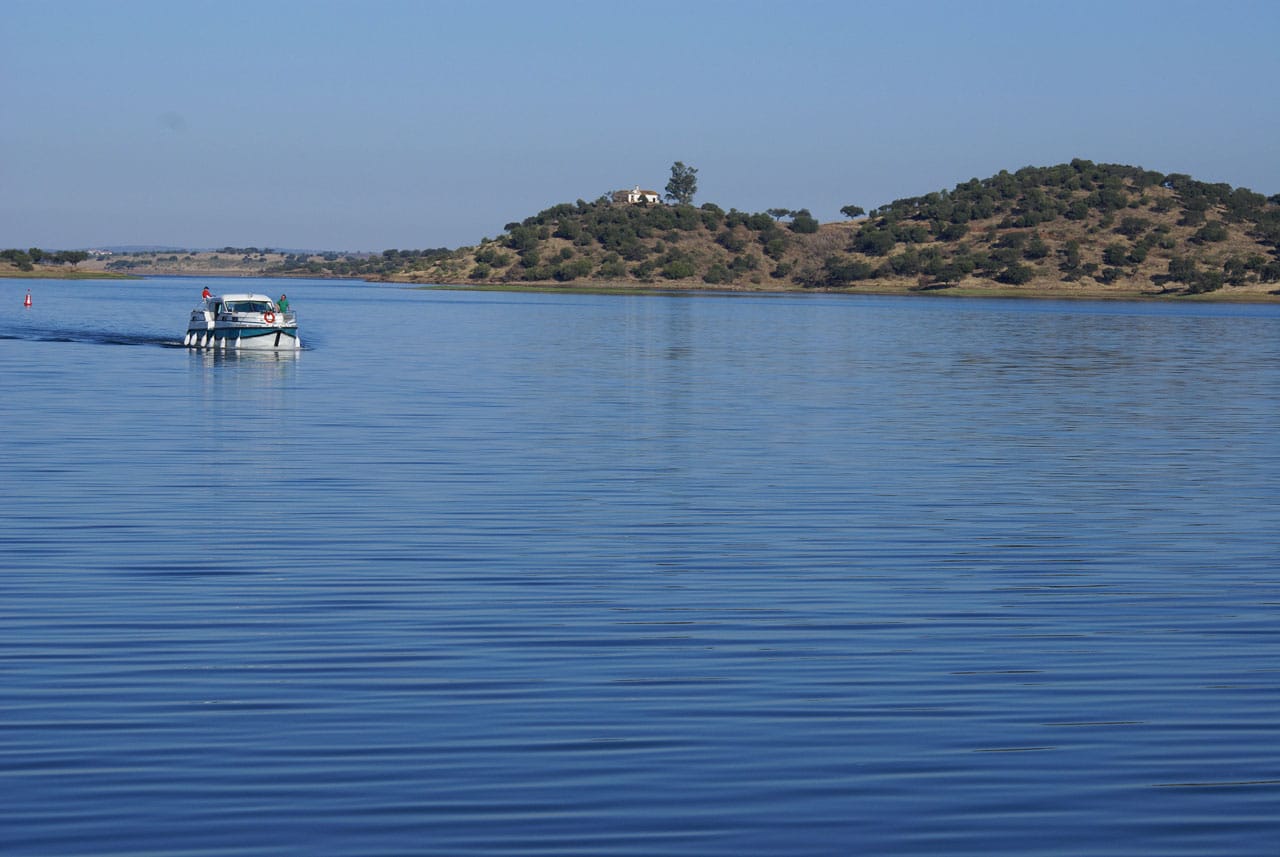
During the day you moor at small riverside villages. You walk up to Monsaraz — the medieval walled hilltop town, car-free, explorable on foot, with panoramic views across the entire lake. You visit the Museu da Luz. Moor at Mourão. This is a feeling of total freedom, with no obligation to arrive anywhere.
III — The Sky
Dark Sky® Alqueva
© Miguel Claro — courtesy of Dark Sky® Alqueva
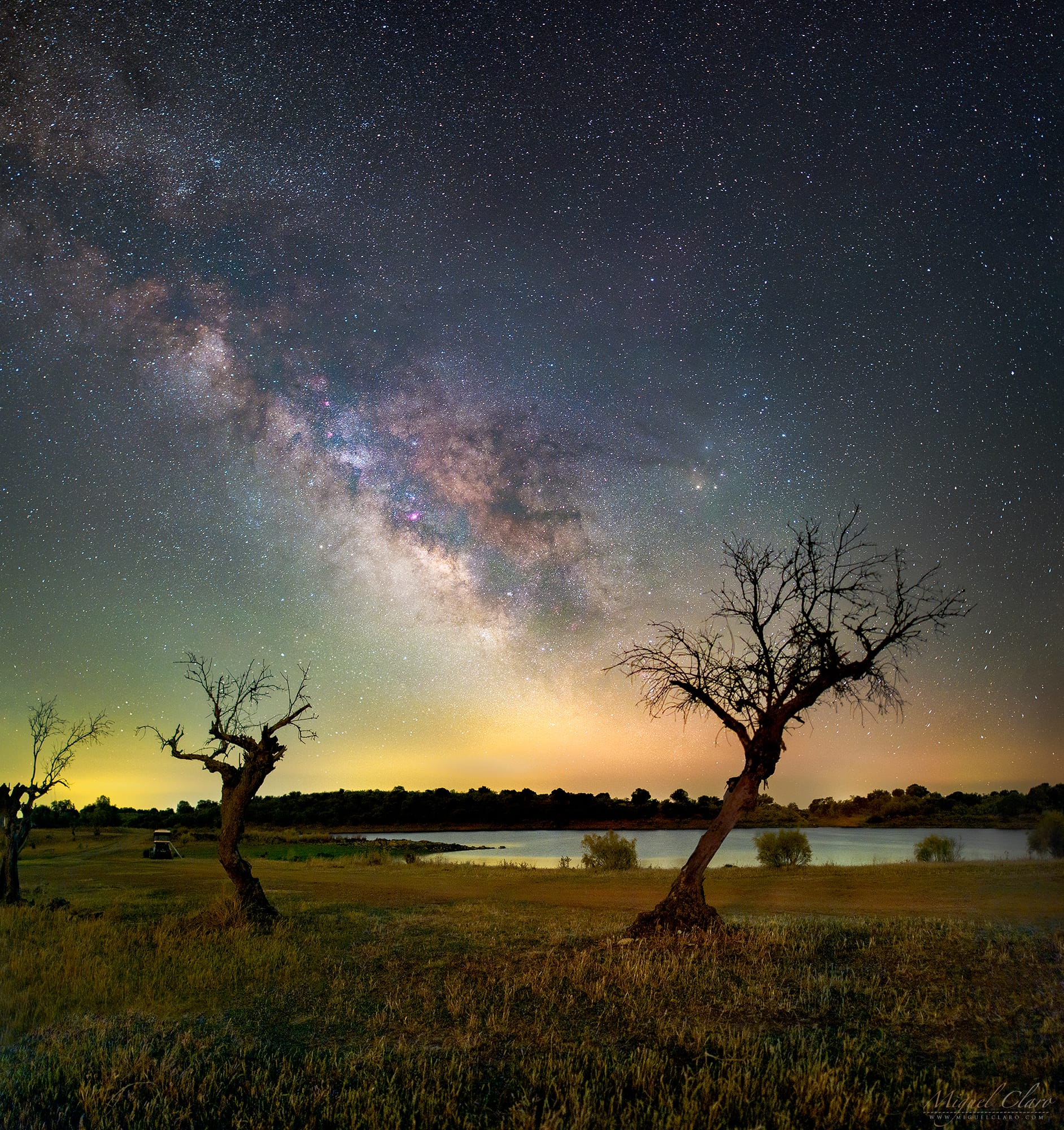
In the evening, when the boat lies somewhere in a quiet cove and the engine has long since fallen silent, the real wonder begins. No street lights. No glow of a city on the horizon. Only water and sky — both black, both full of light.
In 2007, Apolónia Rodrigues founded the Dark Sky® Alqueva initiative. What followed was years of persuasion: ten municipalities around the lake reduced their public lighting. The result is measurable — over 286 clear nights per year. The world's first cross-border Starlight destination, certified by the Starlight Foundation, UNESCO and the UN World Tourism Organisation.
"It is not only about seeing more stars. It is about recovering perspective. It is when visitors look up, become completely silent and simply stop thinking about everything else. For a few minutes, they disconnect from their daily lives and reconnect with nature, with the people beside them and often with themselves."
— Apolónia Rodrigues, founder of Dark Sky® Alqueva
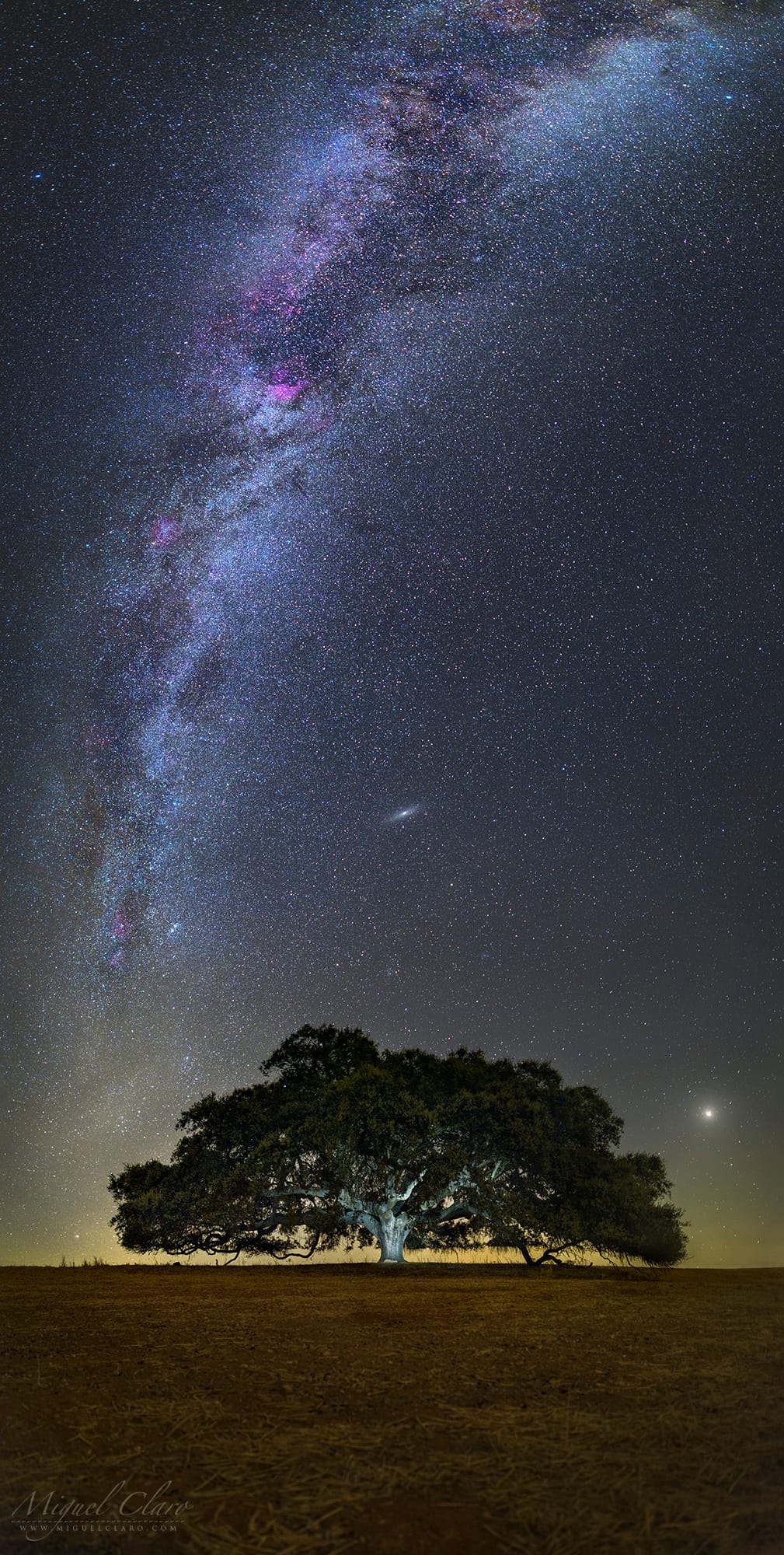
"Most people who live in cities and then come here have never seen the Milky Way with the naked eye," says Rodrigues. "They hardly believe it is possible to see all these stars. They think they simply don't exist."
The Dark Sky® Alqueva Observatory in Cumeada offers guided stargazing sessions, night canoe tours and astrophotography workshops. Those staying on a houseboat need not book any of it. The deck is enough.
© Miguel Claro — courtesy of Dark Sky® Alqueva
Who this is for
Barrocal is for those who appreciate luxury when it explains itself. When every restored stone has a story. When the partridge comes from the grandmother's recipe, the beekeeper calls bees "so cute", and you find yourself asking about Jerónimo long after you've gone home.
The houseboat on the Alqueva is for couples who understand that silence is a luxury. For families with older children who want to navigate together and swim in hidden coves. For people who come looking for a starlit sky and find a submerged village along the way.
Those who come in October will find the Alqueva at its most tranquil: mild temperatures between 20 and 24 degrees, autumn colours on the vineyards, barely another boat on the water. At Barrocal, the scent of distant bonfires drifts through the cool evening air — and wherever you find yourself on the estate, there is always a blanket within reach.
Practical Information
Getting There
Nearest airport: Lisbon (LIS) — approx. 2 hrs 15 min by rental car to Barrocal, approx. 2 hrs to Amieira Marina. Alternative: Faro (FAO) — approx. 2 hrs 30 min to Amieira Marina. A rental car is essential.
Best Time to Visit
October: mild (20–24°C), clear nights, autumn colours, few visitors. Spring (March–May): wildflowers, comfortable temperatures, excellent stargazing. Midsummer: hot, livelier, ideal water temperatures for swimming.
Costs
São Lourenço do Barrocal: from approx. €490 per night including breakfast. Amieira Marina — houseboat for 2: from approx. €150–220 per night. Canoe: from €11 (half day). Bicycles: approx. €27.50 per day.
Booking
Barrocal: barrocal.pt
Amieira Marina: amieiramarina.com
Dark Sky® Alqueva: darkskyalqueva.com
Museu da Luz: museudaluz.org.pt
Worth the Detour
Monsaraz (10 min from Barrocal) · Cromeleque do Xerez (stone circle, 5,000 years old) · Herdade do Esporão (organic winery, tastings) · São Pedro do Corval (pottery village) · Évora (UNESCO, approx. 50 min)
These places left me in a state of wonder I could not shake.
And I have never been there. That is the most honest thing I can say — because rarely has a research journey moved me the way this one did. An estate that has waited for the same family for centuries. A lake beneath which a village lies. A sky so dark it was awarded a certification — because you can see the Milky Way with the naked eye.
I imagine lying on the deck of a houseboat, somewhere in a quiet cove, no other light for miles — and then that moment: when you look up at the sky and understand how small you really are. How vast everything else is. That is magic. Real magic.
And then Barrocal. Cycling through the wide Alentejo landscape. Discovering Monsaraz on the hill. Experiencing life as it has been lived there for centuries — and feeling, just for a while, that you truly belong.
I want to go. And until I do, I am glad to have experienced it for you — through the words of Tiago, Apolónia, Francisco José, Fabio and the team at Barrocal.